
NWU Business School

NWU chancellor witnesses pilot barley harvest to unlock agricultural opportunities
The North-West University (NWU) chancellor, Dr Anna Mokgokong, has highlighted the potential of strategic partnerships between universities, traditional leadership, farmers and industry to strengthen agricultural production, create employment and connect local producers to commercial markets.
…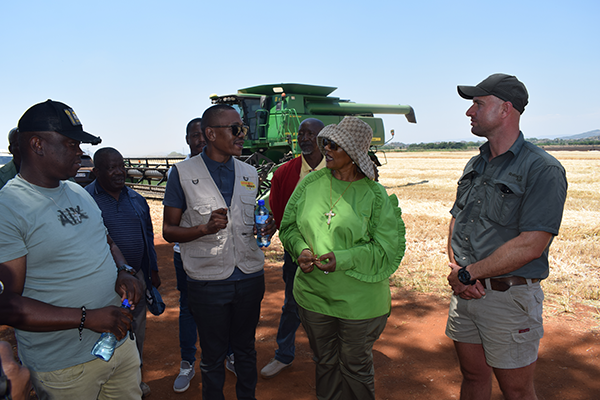
Dr Anna Mokgokong champions agriculture-led rural transformation
The chancellor of the North-West University (NWU) and professor of practice at the NWU Business School, Dr Anna Mokgokong, called for science, enterprise and partnership to convert rural potential into shared prosperity.
At an agriculture gathering outside Brits on 26 October 2026, Dr…

Medium-Term Budget builds confidence amid economic headwinds
Prof. Raymond Parsons
The 2026 Medium-Term Budget is a realistic, positive and credible approach to a still challenging economic and fiscal situation given the changed global and domestic economic circumstances since the beginning of 2026.
…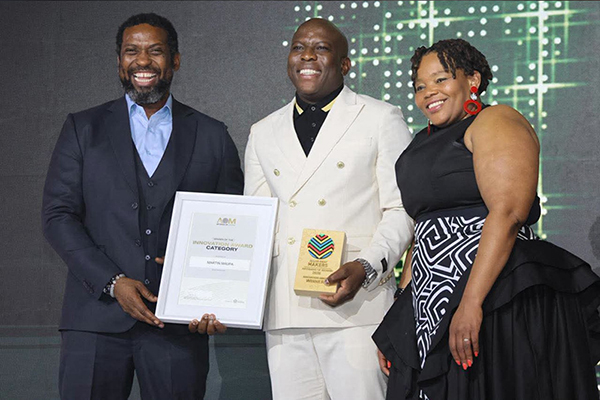
Student wins national innovation award for turning mining waste into bricks
The North-West University (NWU) continues to demonstrate how business education, innovation and entrepreneurial thinking can contribute to solving real-world challenges, with one of its students earning national recognition for turning mining waste into a potential resource for sustainable construction.
…
AI and the changing role of the university
When AI can produce a convincing answer in seconds, what does a university qualification actually certify? Prof. Joseph Sekhampu examines why judgement must become central to a graduate’s value.Universities produce the research, but AI increasingly controls how the public encounters it. What happens when platforms acquire power over knowledge…
When a country starts rationing its future
South Africa’s growing scrutiny of foreign academics may deliver quicker gains in representation while weakening the expertise needed to develop the country’s next generation of scholars.
Localisation determines who occupies existing opportunities. Development determines how many…
GDP setback highlights vulnerabilities in economic recovery
The negative gross domestic product (GDP) growth figures of -0,2% for the second quarter of 2026 confirm the bad knock the South African economy – together with many other economies – took as a result of the recent global energy shock. StatsSA released the latest figures on 8 September.
…
South Africa’s gender gap begins before the first payslip
Labour-market figures draw attention to a much larger group of women who are less visible in the transformation debate: those who have not entered sustained employment at all.
By Dr Lungile Ntsizwane, MBA programme leader and senior lecturer at the North-West University (NWU) Business…

July inflation figures offer welcome relief for consumers and business
The better-than-expected July figure for the consumer price index (CPI) is good news on the inflation front for business and consumers and helps to stabilise medium-term expectations.
In commenting on the CPI figures for July, Prof. Raymond Parsons, economist from the North-West…
What South Africa’s latest unemployment figures mean for a generation still waiting
Millions of young South Africans will vote in November without ever having held stable employment.
Persistent unemployment is delaying the point at which an entire generation can become economically independent.
Starting a career ten years…