
Young mothers in Temba are helping to shape research about their own lives, rather than being treated only as research subjects.
This approach is at the centre of “Her Voice, Her Strength”, a five-year community engagement and research programme led by Dr Lungisile Shange from the subject group Population Studies and Demography at the North-West University (NWU).
The first community dialogue was held at Sebothoma Hall in Temba, Hammanskraal, Gauteng, on 14 August 2026. It formed part of activities linked to World Population Day and Women’s Month.
The programme was held in partnership with the National Department of Social Development and the Gauteng Department of Social Development. Representatives from the Gauteng departments of Health and Education, as well as non-governmental organisations, also took part.
The initiative grew from a master’s-degree study titled “Perceptions and Lived Experiences of Young Mothers in Temba, Hammanskraal”. Bonolo Manana conducted the study under the supervision of Dr Shange, with Dr Karabo Mhele as co-supervisor.
The research examined the experiences of young mothers in Temba. It also showed that more engagement was needed after the research had been completed.
“The initiative was prompted by the need to create a platform where young mothers could share their experiences and engage in conversations about the issues affecting their lives,” says Dr Shange.
She says the programme aims to look beyond the challenges linked to early childbearing. It also seeks to understand the aspirations, strengths and support needs of young mothers.
During the first dialogue, research findings were presented to the community. Discussions also covered sexual and reproductive health and issues affecting young people and young parents.
Young mothers and other community members were invited to respond to the findings. They shared their experiences, raised concerns and discussed services available to young people and parents.
“The community welcomed the engagement and expressed appreciation for the opportunity to participate in the dialogue,” says Dr Shange.
Participants also asked for similar programmes to be taken to local high schools. This would allow young people to access information and discuss issues that affect them.
According to Dr Shange, the community will continue to help shape the programme.
“‘Her Voice, Her Strength’ is not a once-off event. It is a five-year programme, with engagements planned twice a year,” she says.
Ten community engagement series are planned over the five years. Future sessions will address issues identified through research and discussions with residents.
One of these is the role of fathers in parenting. From the second series, fathers will be included in the discussions. Their experiences and the factors that affect their involvement in their children’s lives will be explored.
“The aim is not to place blame, but to understand their experiences and promote greater shared responsibility for parenting, sexual and reproductive health and children’s well-being,” says Dr Shange.
Focus groups and other participatory research methods will also be used during future sessions. The findings are expected to contribute to research publications and other forms of knowledge sharing.
At the end of the five-year programme, the research team plans to return to Temba to share its findings with residents.
“The community is not simply a source of research data; community members are partners in the research and engagement process,” says Dr Shange.
Through the programme, the NWU aims to build a long-term relationship with the Temba community. It also seeks to ensure that research is shaped by people's lived experiences and that the knowledge produced is shared with those who helped create it.
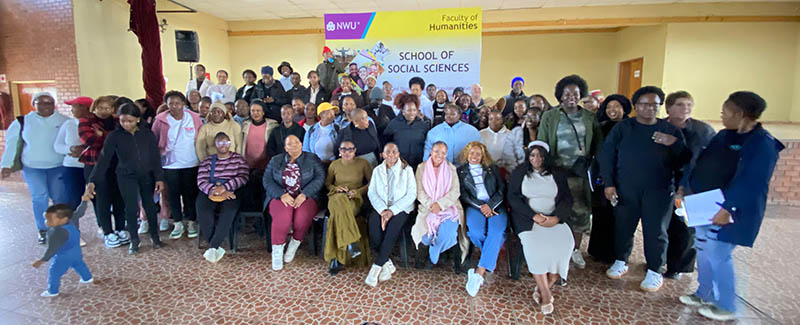
Young mothers and community members took part in the first “Her Voice, Her Strength” community dialogue at Sebothoma Hall in Temba, Hammanskraal.


