
“A world where inflation doesn't matter for you."
This was the vision shared by Fundi Tshazibana, South African Reserve Bank (SARB) deputy governor and CEO of the Prudential Authority, as she highlighted the importance of price stability and the role of monetary policy in protecting consumers during a guest lecture at North-West University's (NWU’s) Potchefstroom Campus on 22 October 2026.
Speaking to students and staff, Fundi explained that the Reserve Bank works towards an economic environment in which inflation is effectively managed, allowing consumers to make financial decisions without the constant concern of rising prices.
Drawing on her experience in monetary policy, financial regulation and central banking, she unpacked the role and functions of the SARB, explaining how its decisions influence the country's economic environment. She also highlighted the importance of maintaining price and financial stability, particularly in an economy shaped by both domestic and global developments.
The lecture gave students an opportunity to raise and explore policy tensions they had encountered throughout the module, drawing on their engagement with economic theory and empirical evidence, while gaining further insight into the practical considerations that shape economic policymaking.
The programme also featured presentations by students from the School of Economic Sciences, focusing on some of the key monetary policy challenges facing South Africa in an increasingly interconnected global economy. The presentations also examined how much policy space South Africa has during periods of economic crisis, considering the influence of global interest rates, capital flows and investor sentiment on domestic monetary policy decisions.
Fundi expressed her appreciation for the students' contributions and commended the quality of their presentations, creating an opportunity for academic discussion and engagement with the country's monetary policy realities.
Welcoming the SARB delegation, Prof. Mabutho Sibanda, the executive dean of the Faculty of Economic and Management Sciences, highlighted the NWU's ongoing academic developments and broader institutional ambitions, including plans for its upcoming medical school.
He emphasised the importance of exposing students to industry leaders and professionals who can broaden their understanding of the fields they are studying. Such engagements, he noted, allow students to connect classroom learning with real-world experience and gain valuable perspectives from people working at the forefront of their professions.
Prof. Sibanda also expressed his appreciation to Fundi and her delegation for accepting the university's invitation. He said he hoped the visit would mark the beginning of many more engagements between NWU and the SARB.
Prof. Precious Mncayi-Makhanya from the School of Economic Sciences thanked Fundi for sharing her knowledge and engaging with the university community. She encouraged students to imagine themselves working in institutions that help shape the country's future, reminding them that they, too, could become part of the conversations and decisions that influence society.
She added that such engagements deepen academic learning by exposing students to practical experiences and perspectives beyond the classroom. Prof. Gabila Nubong further described the interaction as valuable to the students and thanked the SARB delegation for taking the time to engage with them.
The guest lecture formed part of the Honours module ECOH622 in Monetary and Fiscal Policy, hosted by the School of Economic Sciences.
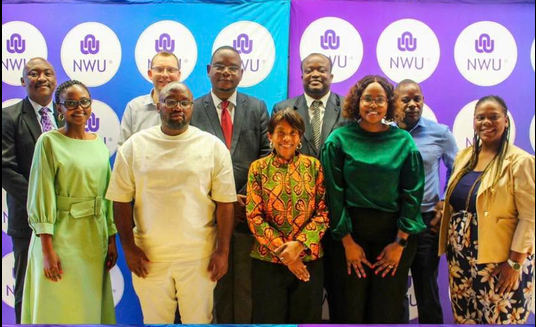
This insightful event provided Honours students in Monetary and Fiscal Policy (ECOH 622) and academic staff with a unique platform to present student research and engage directly with a senior policymaker on central banking, financial regulation, and monetary policy.


