
South Africa’s celebrated matric pass rates do not reflect the reality of a “leaking pipeline” that serves neither the country’s ailing economy nor the future prospects of matriculants.
At the centre of this dilemma is what might be called a pass-rate hostage crisis. Schools, under pressure to maintain high headline results, increasingly steer weaker learners away from gateway subjects, most notably Mathematics, to protect their overall performance figures.
The result is a system that rewards statistical success rather than substantive learning. High pass rates create the impression of progress, even as the pool of pupils equipped with the skills the country desperately needs continues to shrink.
According to Prof. Linda du Plessis, Senior Deputy Vice-Chancellor: Teaching and Learning at North-West University (NWU), pass rates have become an artificial measure of success, concealing deeper systemic and provincial failures.
“We must be honest: a high pass rate does not necessarily mean that learning has improved deeply and sustainably,” she says.
Prof. du Plessis notes that the reluctance to steer learners towards gateway subjects such as Mathematics, Accounting and Physical Science fails to address the scarce skills the country needs and the areas where job opportunities are most abundant.
“Fewer learners choose Mathematics, and this costs South Africa dearly. It also has serious long-term consequences for economic growth. In 2024, only 6.3% of the matriculation cohort achieved a quality pass in the subject. This places the future of STEM careers - science, technology, engineering and mathematics - under severe pressure.
“The causes are well known: weak foundation skills, low self-confidence, curriculum overload and limited support in overcrowded classrooms. By the time Mathematics becomes optional, many learners abandon it because it feels safer.
“In 2025, 464 public schools did not offer Mathematics at all. These challenges are not reflected in headline pass rates. Without earlier and more effective intervention by the Department of Basic Education, the system continues to deprive learners of future opportunities.”
She adds that subject-choice guidance itself is part of the problem. “As soon as a school comes under pressure, learners are encouraged to change subjects at the first sign of difficulty. This undermines self-esteem and has lasting consequences for post-school careers.”
South Africa’s youth unemployment sharpens the stakes.
“Among young people aged 15 to 24, unemployment stood at 50.3% in 2015. A decade later, it has risen to 62.4%, which is almost two out of every three young people,” Prof. du Plessis explains. “For those aged 25 to 34, the rate has increased from 31.4% to 40.4%, excluding even those who have already tried to gain a foothold in the labour market.”
In 2025, only 34% of candidates wrote Mathematics, with the majority opting for Mathematical Literacy. More learners took Mathematics, yet performance deteriorated: the pass rate fell from 69% in 2024 to 64% in 2025. Accounting declined from 81% to 78%, while Physical Science improved marginally to 77%.
“This confirms that weak foundations in the early grades continue to block access to key gateway subjects such as Mathematics, Physical Science and Accounting,” Prof. du Plessis says. “These subjects determine access to scarce skills and higher education.”
Basic Education Minister Siviwe Gwarube has echoed this diagnosis, arguing that the real crisis lies not in Grade 12, but in the early years of schooling. Only 42% of children aged four to five are developmentally “on track”, meaning most arrive in Grade 1 already behind.
Just 63,000 learners - less than 7% of the Grade 12 cohort - achieved more than 50% in Mathematics in the most recent year. Only a narrow slice of matriculants, in other words, emerges with strong performance in the subjects that matter most.
Nowhere is the gap between headline success and substantive achievement more visible than in the North West province. In Accounting, the overall pass rate remained superficially strong, yet the share of learners achieving marks above 40% - a more meaningful threshold for further study and workplace readiness - fell from 55.7% in 2024 to just 49.3% in 2025, dropping below the halfway mark. Physical Science tells a similar story: the proportion of candidates reaching 50% or more declined from 28.6% to 24.5% over the same period. Mathematics, the most critical gateway of all, shows the sharpest erosion. In 2024, nearly 30% of learners cleared the 50% threshold. A year later, only 24.8% of the 10,601 candidates who wrote the subject did so. The pattern is consistent across disciplines: pass rates hold, but quality collapses.
The province’s weak system throughput is also a warning sign. With a throughput rate of just 53.6% - the worst in the country - almost one in every two learners who entered Grade 1 in 2014 failed to reach Grade 12, underscoring an education system that is not merely underperforming, but structurally in crisis.
In the North West, the pipeline is not merely leaking, it is quietly emptying.
What, then, is the solution?
According to Prof. Bismark Tyobeka, Principal and Vice-Chancellor of NWU, there is a substantial and growing need for technical and skills-oriented education. Strengthening and elevating the status of Technical and Vocational Education and Training (TVET) colleges, he argues, is essential.
“These institutions play a central role in supporting economic growth and job creation. South Africa must focus on expanding and improving post-school education and training opportunities, strengthening skills development programmes, and ensuring closer alignment between school subject choices and post-school education and training pathways,” he says.
The post-school system, however, currently reflects what he describes as an “inverted pyramid”.
“A well-functioning system should have a broad base of vocational and technical learners in TVET and community colleges, with fewer students at the narrow peak in academic universities. Instead, South Africa’s universities enrol around 1.07 million students, while TVET colleges serve about 564,000 learners and Community Education and Training colleges around 120,000.
“Together, these vocational and community institutions enrol far fewer learners than the university sector alone.”
This imbalance carries significant labour-market consequences. TVET and vocational pathways are designed to produce the intermediate and technical skills the economy urgently needs. Yet the current distribution continues to favour academic study over practical training.
“Rebalancing the system is essential to address skills shortages, improve employment outcomes and support economic growth,” Prof. Tyobeka says. “Increasing TVET participation, elevating the status of technical education, and aligning learners’ subject choices more closely with labour-market needs would help correct this inverted pyramid. The malfunctioning of the TVET sector remains a major contributing factor.”
The late management theorist Eli Goldratt once observed: “Tell me how you will measure me, and I will tell you how I will behave.” South Africa’s Basic Education system has taken that lesson to heart, and learned the wrong one.
“As long as headline pass rates remain the dominant measure of success, schools will continue to optimise for appearances rather than outcomes. What should matter instead is how many learners emerge with strong performance in gateway subjects, how many progress through the system without falling behind, and how closely subject choices align with the skills the economy actually demands,” says Prof. Tyobeka.
Until those metrics change, the pipeline will continue to leak. The numbers will keep “adding up” on paper, even as the country’s supply of engineers, technicians and skilled professionals quietly runs dry.
South Africa does not suffer from a shortage of certificates. It suffers from a shortage of skills.
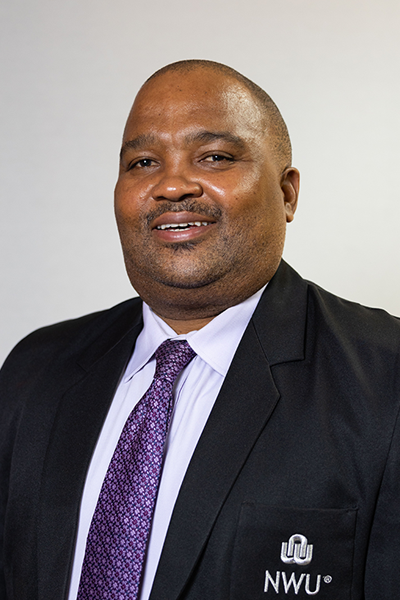
Prof. Bismark Tyobeka

Prof. Linda du Plessis


