
Artificial intelligence (AI) can help researchers write, analyse data and search vast amounts of information. But when the same technology begins to influence whether research deserves publication, a more difficult question emerges: who is actually making the scientific judgement?
Prof. Thembinkosi D Malevu, associate professor, material scientist and energy systems researcher at the North-West University’s (NWU’s) Mahikeng Campus, says the growing use of AI in academic publishing is forcing researchers, reviewers and journals to reconsider the meaning of peer review.
“When a manuscript is evaluated with AI assistance, we have to ask whether we are still dealing with human peer review or gradually moving towards machine-mediated academic judgement,” he says.
AI is already part of everyday academic work. Researchers use it to search literature, improve language, analyse data, generate code, organise references and prepare presentations. Used responsibly, these tools can save time and help academics manage large volumes of information.
Peer review is different, however, because it plays a central role in deciding what enters the scientific record.
Confidence versus scientific correctness
Traditionally, journal editors send manuscripts to experts who assess the methodology, results, interpretation and conclusions. Reviewers use their knowledge and experience to decide whether the evidence supports the claims.
Prof. Malevu says problems may arise when reviewers rely heavily on AI-generated criticism without checking whether it is scientifically correct.
AI can produce sophisticated comments about weaknesses in a manuscript. Its language may sound polished and convincing, even when the criticism is irrelevant or incorrect.
This creates an important distinction between AI-assisted and AI-driven peer review.
There is nothing inherently wrong with using AI as an additional tool where journal policies allow it and confidentiality is protected. It can help identify inconsistencies or highlight sections that need closer examination. The danger comes in when technology starts replacing the reviewer’s scientific judgement.
“AI can sound extremely confident, but confidence in language does not guarantee scientific correctness,” says Prof. Malevu.
This risk can be greater in specialised or interdisciplinary fields such as physics, chemistry, engineering, materials science and computational modelling. An AI system may recognise terminology and patterns without fully understanding the scientific context behind an experiment.
Unconventional research also presents a challenge
Science advances partly because researchers discover results that do not always match existing expectations. Unexpected findings may indicate mistakes, but they can also point to new discoveries.
If AI systems rely heavily on patterns in existing literature, they may find conventional research easier to evaluate than work that challenges established thinking.
Prof. Malevu gives the example of a researcher developing a new material from agricultural waste. If the material behaves differently from conventional materials, a good scientific review should assess whether the experimental evidence supports the proposed explanation. It should not reject the findings simply because they differ from earlier studies.
This issue is particularly important for researchers in Africa and other developing research environments. African scientists are investigating local challenges in renewable energy, waste utilisation, sustainable materials, climate adaptation, healthcare, agriculture and emerging technologies. Some of this work explores materials and problems that have received limited attention in established scientific literature.
Research should therefore not be considered less valuable simply because it falls outside familiar scientific patterns.
Questions about trust
Confidentiality presents another concern, he says. Unpublished manuscripts can contain years of research, new methods, postgraduate work, industrial collaborations, inventions and information that could support future patents.
Uploading such material to an external AI platform raises questions about where the information goes, whether it is retained, who may access it and whether the journal permits such use.
Consider a scenario in which a researcher submits a manuscript to a journal and, after waiting three months or more, receives a rejection. During the review process, the manuscript may have been uploaded to an external AI platform to assist with evaluating its scientific content, methodology or originality. What happens to that data once the manuscript is rejected? Does the platform permanently delete the uploaded document, retain it for a specified period, or store it in a way that could allow future access or use? Could sensitive research findings, unpublished methods or potentially patentable inventions remain on the platform long after the journal has closed the submission?
The researcher may subsequently submit the same work to another journal or pursue a patent based on the findings. Without clear policies on data retention, deletion, access and reuse, researchers may have little visibility into what happens to their work after it leaves their control.
“These are not simply technical questions. They are questions about trust,” says Prof. Malevu.
He argues that excluding AI from academic publishing is not the solution. Instead, journals need clear policies governing how reviewers and editors may use it. Researchers also remain responsible for checking references, numerical values, equations, methods and conclusions when using AI in their own work.
The principle, he says, should be simple: AI can serve as a second pair of eyes, but it should not become the person making the decision.
Peer review has never been perfect. Reviewers, editors and researchers make mistakes. AI adds another challenge because it can generate confident opinions at remarkable speed.
For Prof. Malevu, academia must ensure that speed does not replace judgement, fluency does not replace expertise and what is easy for an algorithm to recognise does not become the definition of good science.
The question is therefore not whether academia should embrace AI, but how much authority it should give it.
When deciding whether research deserves a place in the scientific record, human researchers, reviewers and editors must remain accountable for the final judgement, Prof. Malevu concludes. At the NWU, research quality ultimately depends on that human responsibility.
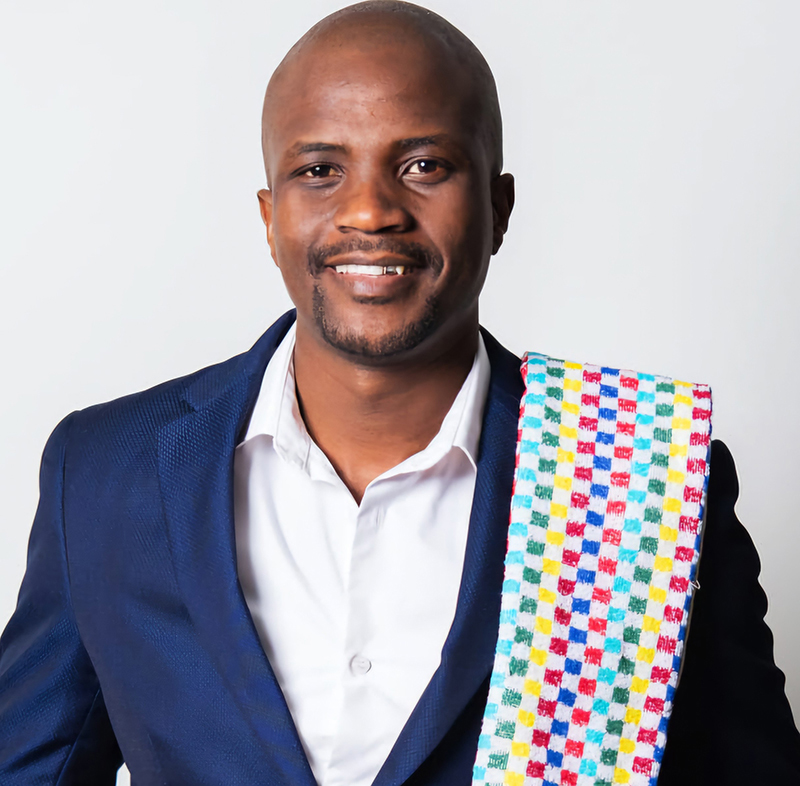
Prof. Thembinkosi D Malevu


