For many people, work is about earning a salary, meeting targets and building a career. But there is a bigger question that is often overlooked: does work give people the opportunity to grow, contribute, feel valued and live well?
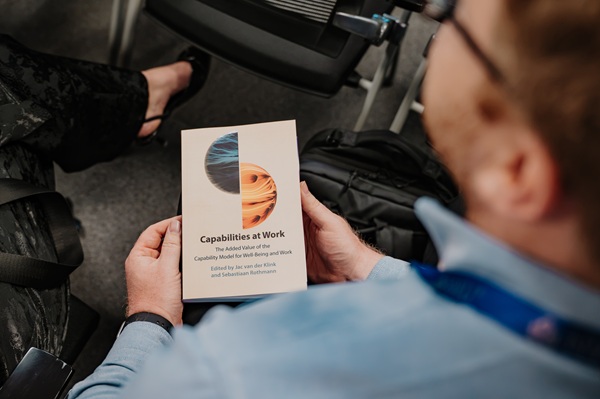
This is the question at the heart of Capabilities at Work: The Added Value of the Capability Model for Well-Being and Work, a new open-access book published by Cambridge University Press and edited by Prof. Jac van der Klink emeritus professor of mental health at work and sustainable employability at Tilburg University in the Netherlands and Extraordinary Professor at Optentia and Prof. Sebastiaan (Ian) Rothmann, research Professor in Industrial Psychology at North-West University’s Optentia Research Unit.
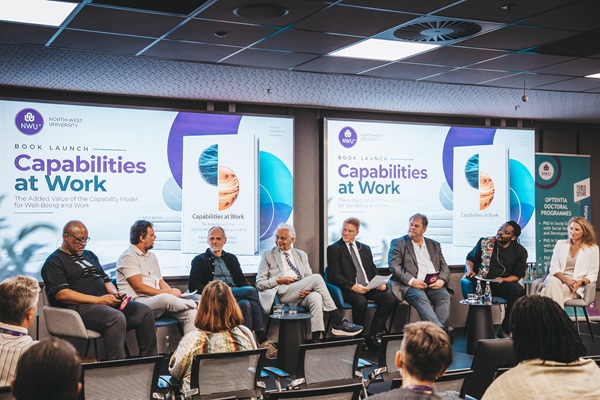
The book was officially launched on 23 September by the Optentia Research Unit at North-West University (NWU) during a hybrid event at Momentum in Centurion. Bringing together researchers, academics, practitioners and contributors from different parts of the world, the launch explored a different way of thinking about work, human potential and well-being.
Under the theme “Rethinking Human Potential, Performance & Well-Being”, the conversation moved beyond the familiar language of productivity and performance to ask what people are actually able to be and do through their work.
Across its 15 chapters, Capabilities at Work explores how organisations, leaders and wider systems can create conditions that allow people to flourish. At the core of the book is the capability approach, which turns the focus from simply asking what resources people have to asking what they are genuinely able to achieve with those resources.
Opening the launch, Prof. Jeffrey Mphahlele, the deputy vice-chancellor for research and innovation at NWU, positioned the book within the university’s broader research, innovation and postgraduate mission. “Unlike a single article, an edited scholarly book volume builds integrative, cumulative theory. It consolidates the field. Books like this deepen North-West University’s research profile in ways that metrics alone cannot capture,” he said.
Prof. Dumi Moyo, the executive dean of the Faculty of Humanities, reflected on the collaboration and relationships that helped bring the publication to life. For Prof. Moyo, the book represents more than an academic achievement. It also reflects what can happen when people from different countries, disciplines and backgrounds come together around shared questions.
“The story of this book is therefore not simply a story of publication, it is a story about encounters, a story of intellectual friendship and a story of people choosing to think together across borders, disciplines, cultures and experiences.”
Prof. van der Klink, one of the book’s editors and the originator of the Capability Set for Work, described the approach through two powerful ideas: connection and justice.
His contribution also highlighted the importance of context. While the capability approach has international relevance, it must still recognise the realities of different communities and workplaces.
That focus on context is particularly important in a country such as South Africa, where inequality, unemployment and different levels of access to opportunity continue to shape people's experience of work.
Prof. Rothmann took the conversation into the future with his contribution, Reimagining Work: Capabilities for an Uncertain Future. Rather than trying to predict exactly what the future of work will look like, he argued that the capability approach provides a way of asking whether changes in the workplace are expanding or limiting people's real freedoms.
“It is necessary to judge the future of work by real freedoms and make those freedoms secure.” This becomes particularly important as workplaces face growing uncertainty, precarious employment and rapid technological change.
Prof. Rothmann pointed to the rise of gig work and other forms of precarious employment, as well as the growing influence of artificial intelligence and algorithmic management.
Technology, he noted, can be a powerful tool for expanding people's capabilities, from learning and developing skills to increasing autonomy and participation. But it can also restrict those same freedoms.
“The real issue here from a capability perspective is not whether technology is adopted, but how it's designed and how it's governed.”
Prof. Rothmann emphasised preparing people for the future cannot simply mean giving them another set of technical skills. “What we need is capabilities,” he said.
One of the book's most important ideas is that employment alone does not necessarily mean that a person is thriving. A person may have a job but still experience insecurity, limited choices or an inability to develop their potential.
Another key point Prof. Rothmann highlighted was the importance of employment security, with the reminder that basic human needs such as health, housing, dignity and learning should not depend entirely on having a job. This raises difficult questions,
particularly in South Africa, where unemployment and inequality remain major challenges.
The capability approach asks us to look beyond whether people are employed and consider the quality of the opportunities available to them.
Two people may hold similar jobs, yet have very different levels of freedom, support and opportunity.
As Prof Rothmann put it: “People can be in the same job, but the one person might have very less freedom than what the other person probably has.”
The book does not remain at the level of theory. Contributors explored how the capability approach can be connected to established theories of work and well-being, including the Job Demands-Resources model, Self-Determination Theory and the International Classification of Functioning.
Other chapters examine inclusive employment and young workers, adaptive preferences and coloniality, and how the capability approach can be applied in real workplace settings.
The South African context also features strongly, particularly in discussions around young people, marginalised identities, leadership and inclusive employment.
A further contribution by Letshego Mokek, the Director for Career Development Services (CDS) at South Africa's Department of Higher Education and Training (DHET) brought a practitioner perspective to the discussion, focusing on the relationship between capability today and sustainable employability tomorrow.
Together, these perspectives show that the capability approach is not simply about changing how organisations talk about employees. It is about asking what workplaces actually enable people to do and become.
Capabilities at Work arrives at a time when the meaning of work is changing rapidly.
Digitalisation, artificial intelligence, globalisation, inequality and climate change are all reshaping workplaces and the opportunities available to people.
The book's three-part structure moves from the foundations of the capability model and questions of justice to organisational applications and work capabilities in different contexts. Its later chapters turn towards the future of work and the challenges created by a rapidly changing world. Importantly, the book is open access, making it freely available to researchers, students, practitioners, leaders and others interested in building healthier, fairer and more meaningful workplaces.
The book challenges us to see people as more than employees, skills or units of productivity. It asks us to consider their freedoms, their aspirations, their well-being and their potential. Access the book HERE. Watch the book launch HERE
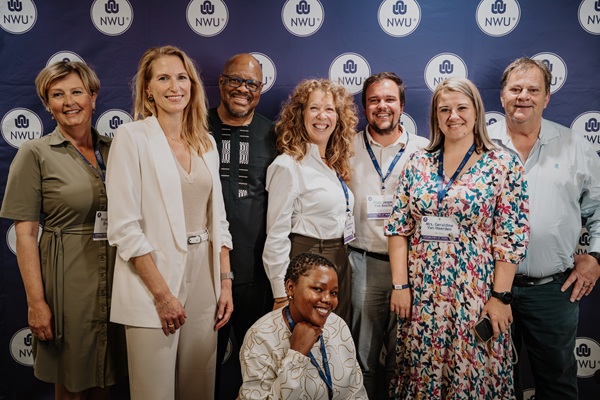
Photos: Academics, researchers and industry experts from South Africa, Belgium and the Netherlands gathered for discussions on mental health, sustainable employment and inclusive participation. This included delegates and experts from the NWU, the Department of Higher Education and Training, and international partner universities.