
Competition for water resources has become a reality in South Africa. With about 98% of South Africa’s available water resources already allocated, the country’s water challenge is no longer simply about finding new sources. It is increasingly about how the law protects, allocates and, when necessary, reallocates a scarce resource among competing users.
“Renewable does not mean unlimited,” said Prof. Germarié Viljoen of the North-West University’s (NWU’s) Faculty of Law during her inaugural lecture on 26 August 2026.
Titled “The covenant of water: Public trusteeship, property and the tradability of water use entitlements in South Africa”, the lecture drew together more than a decade of Prof. Viljoen’s scholarship and examined how water law must balance economic security, constitutional justice, transformation and environmental protection.
Her work addresses one of the central questions in contemporary South African water law: how can the law provide water users with sufficient security to invest and plan, while ensuring that a scarce public resource remains available for equitable redistribution, environmental protection and future generations?
Prof. Viljoen said South Africa’s limited water makes this question urgent. The country faces uneven rainfall, growing demand, urbanisation, pollution, ageing infrastructure and increasing pressure from droughts, floods and changing rainfall patterns.
The country’s remaining unallocated water cannot simply be distributed among economic users because some must be reserved for basic human needs and ecological protection.
Under South African water law, a legally protected quantity of water, known as the Reserve, takes priority before other allocations are made. The Reserve includes water for basic human needs, with a minimum of 25 litres per person per day, as well as water required to sustain rivers, wetlands and ecosystems.
Only after these needs are met can other sectors compete for available water.
Agriculture is the biggest user and illustrates the legal dilemma
Agriculture highlights the difficult balance between public trusteeship (‘public ownership’ in the public law sense) and individual economic interests. About 62% of South Africa’s water supplies are used by irrigated agriculture. Secure water access enables farmers to plant, obtain finance, employ workers and plan their operations. Yet transfers of water-use entitlements can involve substantial private compensation, potentially excluding historically disadvantaged and emerging farmers.
Prof. Viljoen argued that water itself remains a public resource, while individual users need enough security to invest and plan. This creates what she described as the “public-trusteeship property puzzle”: how an entitlement can have economic value without becoming a permanent private property right over a public resource.
Her research offers a framework for reconciling investment security with the constitutional imperative to reform historically unequal patterns of water access. She proposed moving beyond a simple choice between unrestricted markets and complete state control, advocating for “covenanted transferability”. This would combine public trusteeship with carefully regulated movement of water-use entitlements.
Prof. Viljoen summed up the challenge facing South Africans: “We cannot choose the condition we inherit. But we can choose our response.”
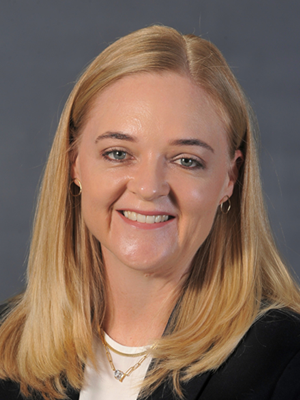
Prof. Germarié Viljoen


