
Dr Moleboheng Mokhele never planned to become a CEO. Her journey into entrepreneurship did not start with a business plan or a dream of running a company. It started at home, with her two young sons, Wavhudi and Rivhavhudi.
When her sons experienced speech and language delays during early childhood, Dr Mokhele wanted to understand how they learnt and communicated. As both a scientist and a mother, she began exploring how children make sense of the world through play, images and everyday experiences.
“I never imagined that my journey as a scientist would lead me here,” she says.
Those early questions would change the direction of her career. Dr Mokhele trained in plant pathology and microbiology before moving into education. She later completed a PhD in natural sciences education.
Today, she is a senior lecturer and researcher at the North-West University (NWU). Her work focuses on innovative ways to make science, technology, engineering and mathematics (STEM) more accessible to young children.
Her personal experience also helped inspire Renewable Rangers, an educational game that introduces children to STEM, renewable energy, sustainability and problem-solving through play.
What started as an academic innovation is now moving towards commercialisation.
For Dr Mokhele, this has meant entering unfamiliar territory. Academic life prepared her to conduct research, publish findings and teach students. Entrepreneurship has brought new questions about markets, intellectual property, manufacturing, pricing and sustainable business models.
“I know science. I know research. I know education. But I am still learning business,” she says.
That learning journey has led to the establishment of WARINOVA (Pty) Ltd, an innovation company with the vision of “Innovating Africa’s sustainable future”.
Renewable Rangers is also expanding. Plans include Renewable Rangers Africa, a digital version that could make the educational concept accessible to more children across the continent.
Dr Mokhele says the transition shows that university research can have an impact beyond academic publications. An idea developed through research can become a practical solution. With the right support, that solution can also grow into an enterprise.
The NWU supports this shift through its entrepreneurship and innovation ecosystem. Initiatives such as Entrepreneurship@NWU and the bhive Enterprise Development Centre help researchers, students and innovators explore ways to develop sustainable ventures.
Dr Mokhele’s entrepreneurial journey gained further momentum when she attended the 2026 Standard Bank Top Women Conference in Johannesburg. The event brought together women entrepreneurs, business leaders and innovators.
A conversation at the conference opened another door. Shiphra Chisha, CEO of the Graça Machel Trust, invited Dr Mokhele to join the next cohort of its Women Creating Wealth programme.
The invitation came outside the normal application process and encouraged her to think more seriously about the business potential of her work. She is now considering further business training to strengthen her entrepreneurial skills.
However, entrepreneurship has not replaced her identity as a scientist, researcher or teacher. Instead, it has added another dimension to it.
At the heart of the journey are still Wavhudi and Rivhavhudi.
Their childhood experiences encouraged their mother to ask different questions about learning. Those questions led to research, which helped shape an educational innovation, which is now developing into a business with ambitions beyond the university.
For Dr Mokhele, the goal is bigger than becoming a CEO. “It is about building a legacy,” she says.
That legacy could include children who encounter STEM from an early age, teachers with access to new learning tools, and young people who see sustainability and innovation as part of everyday life.
Dr Mokhele did not set out to become an entrepreneur. She set out to understand and support her children. That search took her from science to education, from research to innovation, and now from academic to CEO. Her story shows that powerful ideas do not always begin in laboratories or boardrooms. Sometimes they begin at home, with a parent asking a simple question: How can I help my children learn?
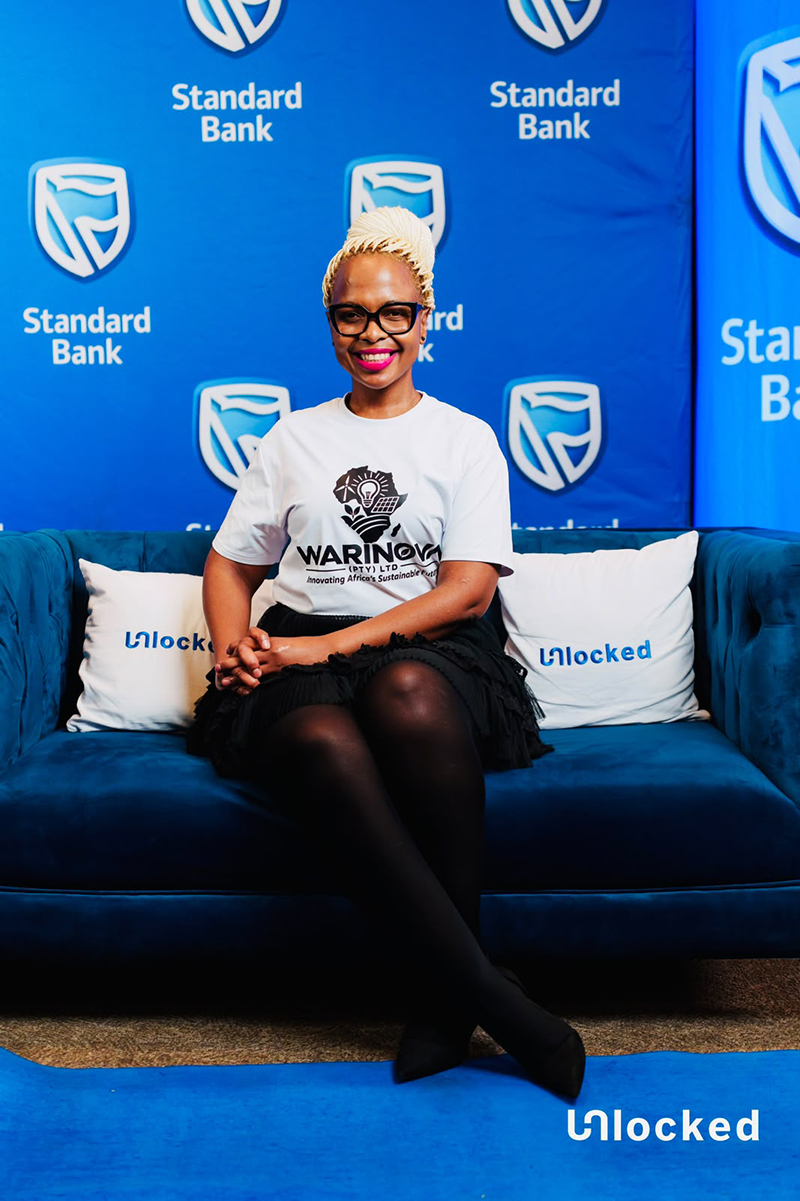 Photo: Dr Moleboheng Mokhele’s journey from scientist and academic to entrepreneur.


