
The School of Industrial Psychology and Human Resource Management at the North-West University (NWU) recently hosted its third annual Master’s Research Retreat, bringing together more than 30 first-year master’s degree students for an intensive two-day academic experience. The retreat took place at Woodlands Country Lodge in Parys.
The Master’s Research Retreat 2026 was designed to strengthen research readiness, sharpen critical thinking and equip students in industrial psychology, human resource management, labour Relations and human resource development with the mindset and skills required for a successful postgraduate research journey.
The primary aim of the retreat was to prepare students for the realities of master’s degree-level research by clarifying expectations, exposing them to academic possibilities and developing their research capabilities.
Dr Thapelo ChaaCha, director of the School of Industrial Psychology and Human Resource Management, said the initiative aimed to prepare students for research by setting expectations, showing possibilities and fostering critical thinking.
“The aim of this retreat was to ready students for the research journey by helping them understand what to expect, exposing them to what is possible, and equipping them with the ability to think critically. Research requires adaptability, curiosity and resilience and cultivating a growth mindset.”
The retreat featured a rich and diverse academic programme facilitated by experienced academics and researchers from the NWU.
Dr Neil Barnard, who was also one of the leading organisers of the retreat, opened the programme with sessions on developing a growth mindset and later guided students on academic writing and the ethical and responsible use of artificial intelligence in research. Prof. Crizelle Els highlighted the critical role of research in shaping individuals, organisations and society, while Prof. Marissa Brouwers guided students through the process of selecting and refining a meaningful and feasible research topic. Prof. Melissa Jacobs provided clarity on the role of the Scientific Committee and the ethical and scientific requirements for research approval.
The programme further introduced students to key theoretical frameworks relevant to research in the world of work. Prof. Ian Rothmann presented the capability approach as a socially responsive framework for understanding human well-being and workplace functioning, while Dr Lynelle Coxen explored the application of the self-determination theory in understanding motivation, behaviour and psychological well-being in organisational contexts.
Dr Kelebogile Paadi shared insights from the GROW Project, demonstrating how research can be designed to create tangible social impact. Prof. Bennie Linde provided a detailed walkthrough of the structure of a master’s degree research proposal, offering practical guidance on developing coherent and academically rigorous proposals.
In addition to academic input, the retreat included a reflective session by Franché Kruger, a master’s degree student who is busy with her research project. She shared honest reflections on her research journey, challenges, personal growth, lessons learned, and some tips for first-year master’s degree students.
A defining feature of the retreat was its strong emphasis on collaboration and dialogue. Through facilitated group discussions and a formal research colloquium, students presented their emerging research ideas, received constructive feedback and refined their research questions and theoretical lenses in a supportive academic environment. NWU staff played a central role in these discussions, sharing their research insights and advising and challenging the students in their thinking.
The retreat was attended by more than 30 master’s degree students, fostering a vibrant and supportive research community. One of the participants, Inga Sakwe, described the experience as incredibly enriching and eye-opening. He said it helped him understand what the research journey really looks like, beyond just theory.
“Engaging with lecturers and fellow students challenged my thinking, strengthened my confidence and encouraged me to adopt a growth mindset. I now feel more prepared and motivated to move forward with my research,” Inga added.
Reflecting on the success of the retreat, Dr Barnard noted that the level of engagement, openness and critical thinking demonstrated by the students was exceptional. He remarked that creating a space where emerging researchers feel supported, challenged and inspired is essential for developing confident and capable scholars.
While celebrating the success of the third annual retreat, the school also acknowledged the challenges associated with organising an initiative of this scale. Prof. Brouwers noted that pulling off a retreat of this nature is not easy, as it requires extensive planning and coordination, and adequate financial resources. She expressed deep gratitude to the sponsors who made the event possible.
“We extend our sincere appreciation to the Optentia and the WorkWell research units and the office of the deputy dean for research and innovation in the Faculty of Economic and Management Sciences for their sponsorship and partnership. We also extend our appreciation to all academic and support staff, presenters and facilitators whose expertise and dedication contributed to the success of the retreat. Most importantly, the school thanks the master’s-degree students whose enthusiasm, commitment and active participation made the third annual Master’s Research Retreat 2026 a meaningful and impactful academic success,” she said.
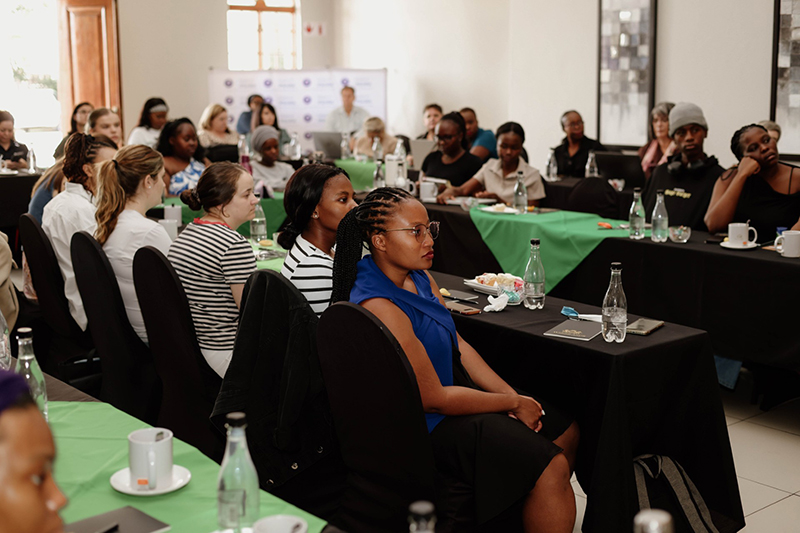
The third annual Master’s Research Retreat was attended by more than 30 master’s degree students, fostering a vibrant and supportive research community.


