Sunflowers stretching towards the sky and rows of green maize plants swaying in the breeze set the tone for a day rooted in growth, learning and possibility at Pienaarskamp Farm.
Just a day earlier, the farm had already made an impression. Prof. Bismark Tyobeka, principal and vice-chancellor of the North-West University (NWU), had taken members of the NWU Council on a tour of Pienaarskamp. They left inspired by what they saw, a space where vision is not only imagined, but actively lived out.
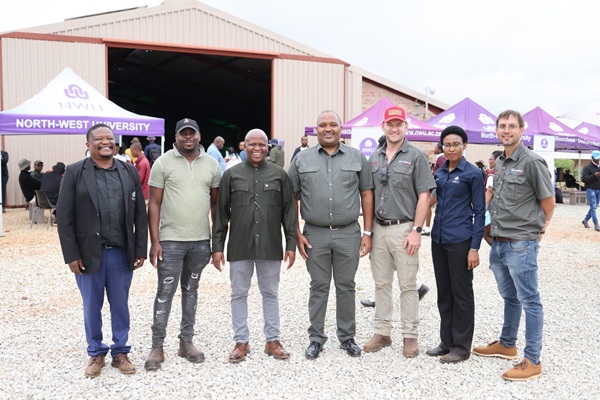
That same sense of purpose carried into 12 March 2026, as the NWU Agriculture Farmers’ Day unfolded on the Potchefstroom campus, bringing together farmers, traditional leaders, industry partners, government representatives, researchers, staff, students and learners.
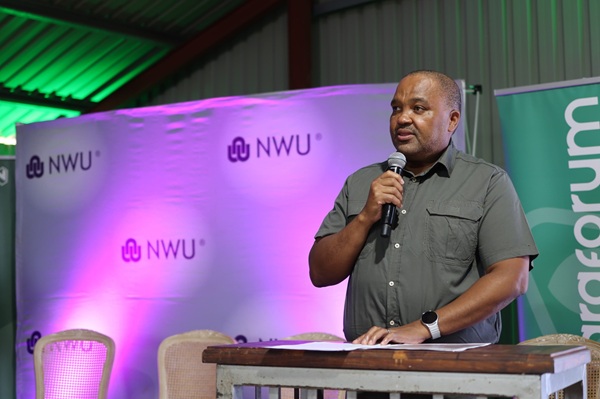
“What we are witnessing here today is more than a Farmers’ Day,” said Prof. Tyobeka. “It is a demonstration of what becomes possible when universities, farmers, traditional leadership, industry partners and government work together in pursuit of a shared purpose.”
His words echoed across the fields, capturing the spirit of a day that felt less like a formal event and more like a shared commitment to the future of agriculture.
Hosted by the Agriculture Subject Group within the Faculty of Natural and Agricultural Sciences under the theme “Sustainable agriculture: crossing boundaries,” the event created space for collaboration, learning and meaningful connection.
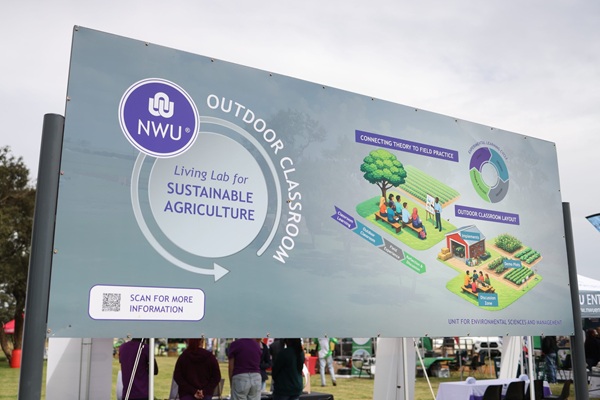
From the early morning registration and tea, there was a quiet sense of anticipation. In his welcome address, executive dean of the Faculty of Natural and Agricultural Sciences Francois van der Westhuizen described Pienaarskamp as a “living classroom”, a place where knowledge is not only taught, but lived, tested and shared.
Throughout the day, that idea came to life. The programme moved naturally between thoughtful discussions and practical demonstrations, reflecting the balance between theory and practice that shapes modern agriculture.
Dr Hendrik Smith introduced the concepts of regenerative and conservation agriculture in a keynote address that set the tone for the conversations that followed. This was followed by Prof. Gerhard du Preez, Agriculture Subject Chair, who shared how Pienaarskamp has become the NWU Living Lab for Sustainable Agriculture in just 18 months. It is a space where students, researchers and farmers work side by side, finding solutions that respond to real challenges.
Adding to this, programme director Prof. Nomali Ngobese described Pienaarskamp as a living centre of learning for the entire agricultural ecosystem. She emphasised that the true impact of the day lies in turning knowledge into action and collaboration into meaningful change for farmers and communities.
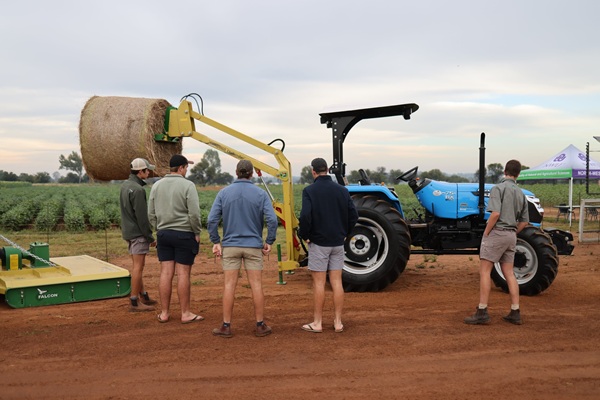
Out in the fields, these ideas took on practical form. Conversations unfolded alongside demonstrations on precision agriculture, soil health, conservation practices and climate-smart farming. It was in these moments, where knowledge met lived experience, that the purpose of the day became most clear.
The afternoon sessions deepened this exchange. During the farmers’ knowledge sharing session, practical insights were shared across generations and sectors. The stakeholder panel discussion brought together voices from the Agricultural Research Council, the provincial Department of Agriculture and LandBank, all focused on building a more sustainable agricultural future.
North West MEC for Agriculture and Rural Development, Madoda Sambatha, addressed farmers and expressed his appreciation for the work being done at NWU. He noted that farmers cannot succeed without access to shared knowledge, highlighting the importance of initiatives such as Farmers’ Day.
Yet beyond the discussions and demonstrations, it was the people who gave the day its meaning.
The presence of traditional leaders reflected the deep connection between land, heritage and responsibility. Farmers spoke from experience shaped by both challenge and resilience. Students and learners walked the fields with curiosity, seeing not only crops, but the possibilities they represent.
As Prof. Tyobeka reflected, agriculture is not only about production, but about people, communities and the future being built together. He also expressed his appreciation to Pienaarskamp farm manager Robert Bierman and his wife, Norah Bierman, for their dedication to maintaining the farm as a space for learning and innovation.
The day concluded with industry exhibitions, where innovation and opportunity came together, reinforcing the importance of partnerships that extend beyond institutional boundaries.