
Students from five schools in the Faculty of Humanities at the North-West University (NWU) Mahikeng Campus joined forces to find practical ways to improve access to university support services.
The students took part in the Faculty of Humanities Teaching and Learning Interdisciplinary Student Challenge on 26 October 2026. The event gave students a platform to raise concerns, share ideas and propose solutions to challenges affecting their academic experience.
The challenge brought together 15 students from the five schools of the faculty: Languages, Communication, Social Sciences, Government Studies, and Philosophy and Global Futures. Each school nominated three students to take part. The initiative aimed to strengthen student participation in faculty decisions and ensure that their views help shape teaching and learning plans for 2027.
The School of Social Sciences emerged as the winner after presenting a well-researched and practical solution to improve students' access to support services. The team also developed a demonstration model to show how its proposed solution could work.
Prof. Gilbert Motsaathebe, deputy dean for teaching and learning, supported and funded the initiative, recognising the value of involving students in decisions that affect their academic journey.
Speaking on behalf of Prof. Motsaathebe, Sesina Thobakgale from the School of Languages welcomed participants and highlighted the commitment of the faculty to listening to students.
The event reinforced a key message: students should not only receive support but also help shape the services designed to meet their needs.
At the heart of the challenge was a scenario involving a university that had invested heavily in academic, financial and psychological support services. Despite this investment, few students were using the available services.
Participants had to develop innovative, inclusive and sustainable solutions to improve students' awareness, access and trust in these services.
Working across disciplines, students examined the problem from different academic perspectives. They discussed possible barriers, shared ideas and developed presentations outlining their proposed solutions. The challenge showed how different fields in the humanities can work together to address common problems. Students also gained experience in research, critical thinking, public speaking, teamwork and problem-solving. They presented their recommendations to lecturers and faculty representatives and responded to questions from the audience.
Two lecturers from each school served as judges. They assessed the presentations and selected the winning school based on the quality and practicality of its proposed solution.
The School of Social Sciences impressed the judges with its research, realistic recommendations and demonstration model. Its presentation showed how the proposed solution could be put into practice to benefit students.
Dr Reoikantse Lucrucia Shuping, Sesina Thobakgale and Sanele Mukhari presented the awards. Other participants also received prizes in recognition of their efforts and willingness to represent their schools. All participating students will receive certificates from the Centre for Teaching and Learning.
Beyond the competition, the event created an opportunity for students and lecturers to exchange ideas on improving the university experience. It also highlighted the importance of including student perspectives in academic planning. The faculty will consider the recommendations made during the challenge as part of its planning for the 2027 academic year. The initiative demonstrated that students could make meaningful contributions when given opportunities to engage with challenges affecting their education.
With continued support from the faculty leadership, the challenge could become a regular platform for student engagement, interdisciplinary learning and practical problem-solving.
Its success also reinforced the commitment of the faculty to building a learning environment in which students feel heard, valued and involved in shaping their academic future.
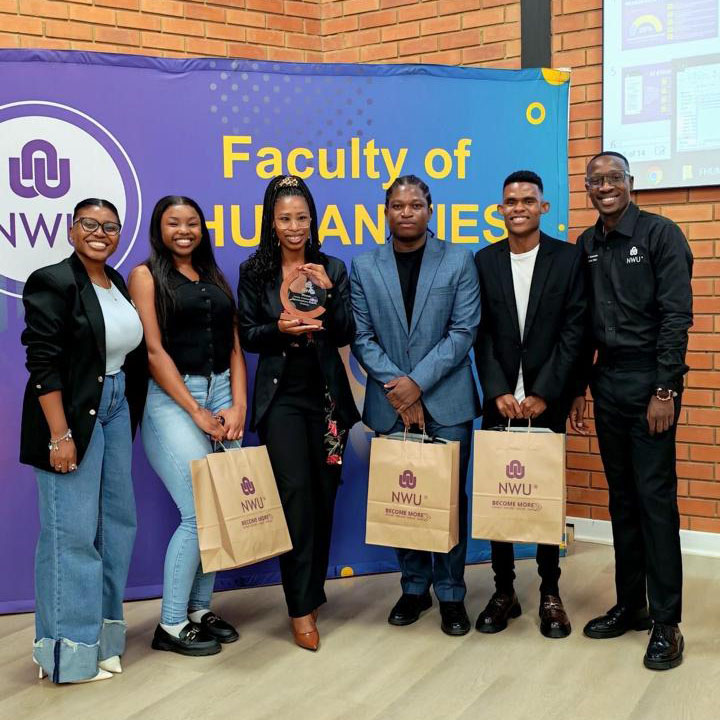
Students and staff from the Faculty of Humanities at the NWU’s Mahikeng Campus shared ideas and proposed practical solutions to improve access to university support services.


