
Returning research findings to the communities that shaped them took centre stage as two North-West University (NWU) postgraduate students led feedback sessions across North West, turning academic work into shared knowledge and practical application.
Keamogela Innocentia Nko and Tswelelopele Gobitsaone Mpolokeng, affiliated with the Centre of Excellence in Indigenous Knowledge Systems (CEIKS) and SARChI IK-Medplants4HAC at the NWU, recently participated in community feedback sessions held in Madibeng, Zeerust and Mahikeng.
The sessions followed the completion of their master’s degree studies under Prof. Adeyemi Oladepo Aremu. Keamogela’s research examined the nutritional value of wild edible plants, while Tswelelopele focused on medicinal plants used in managing livestock diseases. Their work contributes to an ongoing collaborative project with the Agricultural Research Council in Pretoria.
“These sessions are important because the knowledge we used does not belong to us alone,” said Keamogela. “It comes from the community, and it is our responsibility to return it in a way that is useful and accessible.”
The engagements aimed to return research findings to the communities that contributed indigenous knowledge, ensuring transparency and shared ownership of the outcomes. Community members participated in discussions around the findings, creating a platform for direct knowledge exchange between researchers and local knowledge holders.
In addition to presenting their research, the team from the NWU and Agricultural Research Council demonstrated products developed from indigenous plants. One of the key activities included a practical demonstration on preparing a warm beverage using a wild edible plant identified during the study.
Tswelelopele said the interaction with communities strengthened the relevance of their work. “Engaging directly with community members allows us to see how this knowledge is applied in real contexts. It also helps us refine our research to better support their needs, especially in areas like livestock health.”
Training sessions were also conducted to equip participants with practical skills to use locally available plant resources. These sessions focused on applying research findings in ways that can support daily practices and community needs.
The feedback sessions form part of broader efforts to integrate indigenous knowledge systems with scientific research, in line with the Indigenous Knowledge Act. By returning findings and fostering engagement, the initiative strengthens collaboration between researchers and indigenous knowledge holders while supporting sustainable livelihoods and food security.
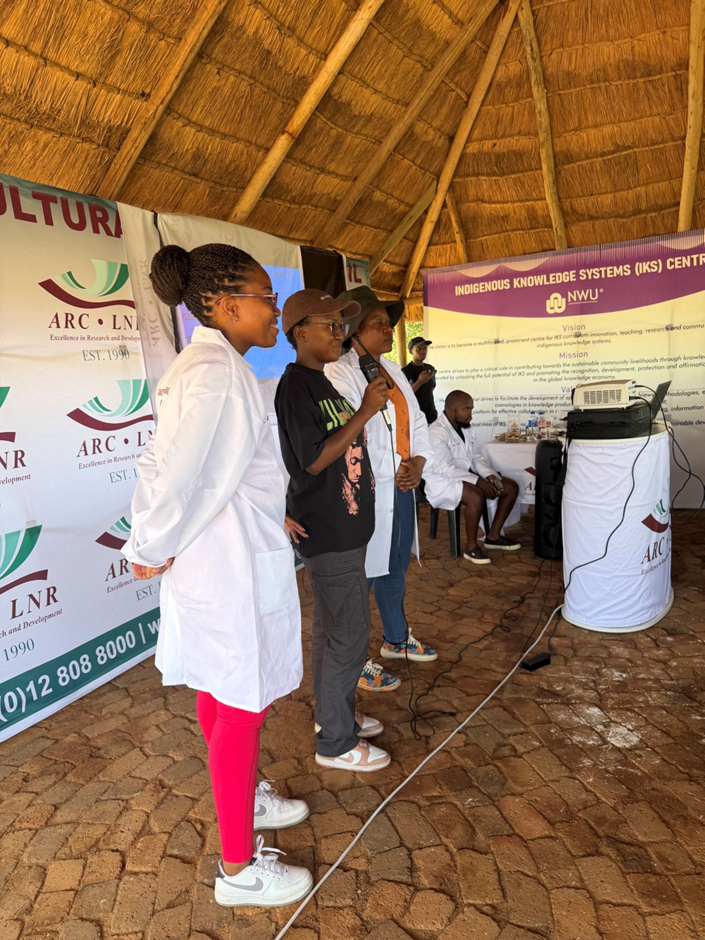
NWU students Keamogela Innocentia Nko (white coat) and Tswelelopele Gobitsaone Mpolokeng (holding the microphone) share their research findings.


