
Postgraduate students from the North-West University (NWU) are gaining valuable international experience in Brazil. They are exploring how communities and government institutions prepare for natural hazards and respond to the growing effects of climate change.
The students from the Disaster Risk Science, Climate and Impact programme are participating in fieldwork under the National Research Foundation (NRF)-funded BRICS project, Building Resilience through Multilevel Efforts. The project brings together researchers from South Africa, Brazil and China to explore ways of strengthening disaster preparedness and resilience.
Prof. Dewald van Niekerk from the subject group Geography and Environmental Studies says the visit allows students to connect classroom learning with real-world challenges.
“The primary objective is to provide postgraduate students with practical exposure to disaster risk reduction, climate change adaptation and resilience building, while advancing international research collaboration,” he says.
The team visited the communities of Areião, Lobo-Guará and Vila Sahy in São Sebastião, areas affected by devastating rainfall and landslides in February 2023.
The disaster caused widespread flooding, damaged infrastructure and disrupted essential services. By engaging with affected communities, students gained insight into how residents experience disasters and the challenges they face when rebuilding their lives.
The delegation also visited the Centro de Operações Integradas in São Sebastião, where officials demonstrated how local authorities coordinate emergency responses and protect coastal communities.
Prof. Van Niekerk says the visit highlighted the importance of effective communication, strong leadership and cooperation between government institutions.
“Successful disaster risk management depends not only on monitoring hazards but also on the ability of institutions to interpret information, coordinate decisions and mobilise appropriate responses,” he explains.
He adds that disaster preparedness must consider the circumstances of communities, particularly those living in vulnerable settlements. “Effective disaster risk governance requires clear responsibilities, trusted communication channels and meaningful community participation before, during and after hazardous events.”
Lessons for South African coastal communities
According to Prof. Van Niekerk, the experience in Brazil offers valuable lessons for South Africa, where coastal communities face similar threats from extreme weather, poor infrastructure and socioeconomic inequality.
One important lesson is the need to improve early-warning systems so that communities receive timely information about possible disasters.
The students travelled to São José dos Campos, where they visited the National Centre for Monitoring and Early Warning of Natural Hazards (CEMADEN). They also participated in the BRIC-BAC and SAGE/WWRP Subseasonal Applications in Warning Systems research workshop. The workshop explored forecasting methods that could help authorities prepare for extreme weather events two to six weeks in advance.
Prof. Van Niekerk says these forecasts could support earlier decisions about emergency resources, infrastructure protection and community safety. However, their usefulness depends on accuracy and the ability of institutions to interpret the information. He also stressed the importance of considering disaster risks when planning settlements and developing infrastructure.
“The intention is not to replicate Brazilian systems directly, but to identify transferable principles and adapt them to the institutional, environmental and developmental circumstances in South Africa,” he says.
He believes South African municipalities could benefit from involving residents more closely in disaster planning. Local knowledge can help authorities identify risks and develop practical solutions that meet community needs.
Building the next generation of disaster researchers
Beyond fieldwork, the international collaboration provides students with opportunities to share their research and learn from leading scientists. During the visit, students had opportunities to present their findings to researchers associated with the Graduate Programme on Disasters at São Paulo State University, CEMADEN and the National Institute for Space Research. These engagements help students improve their research communication skills, gain confidence and build international academic networks.
Prof. Van Niekerk said the partnership also encourages cooperation between physical and social scientists. Understanding weather patterns is important, but so is understanding how people and institutions respond to warnings.
“One of the greatest values of this international collaboration is that our students experience disaster risk science from multiple perspectives,” he says.
“They engage with communities affected by disasters, examine how institutions prepare for and respond to emergencies, and participate in scientific discussions on advances in climate forecasting and early warning.”
The collaboration could also lead to joint publications, postgraduate exchanges and research projects that inform disaster risk management policies. For the NWU, the initiative strengthens international partnerships while preparing researchers to address complex environmental challenges.
Prof. Van Niekerk believes combining scientific knowledge with practical experience will help develop professionals capable of protecting vulnerable communities. “This combination of practical experience and scientific exchange is essential for developing the next generation of disaster risk researchers and practitioners,” he concludes.
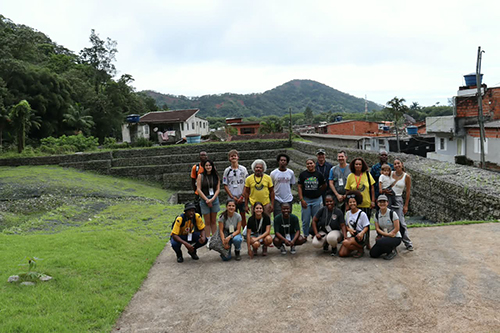
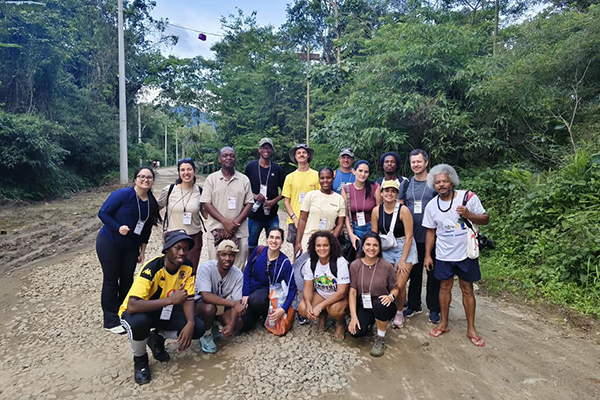
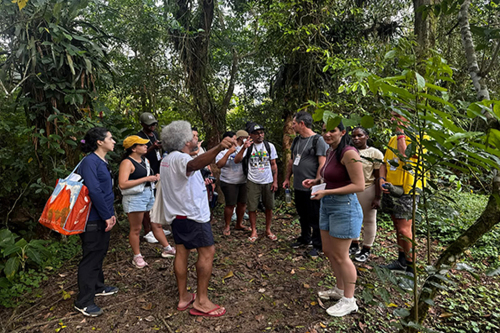
Photos: Postgraduate students in Disaster Risk Science, Climate and Impact at the NWU gain practical experience in disaster preparedness, climate adaptation and community resilience during a research visit to Brazil.


