
- South Africa’s schools have not collapsed — but “not collapsed” must never become our standard for success.
- A child who cannot read for meaning by Grade 4 is not merely behind at school; that child faces a narrowed future.
- A country cannot build an innovation economy when hundreds of its schools do not even offer Mathematics.
- Education cannot solve unemployment alone, but weak education almost guarantees that unemployment becomes hereditary.
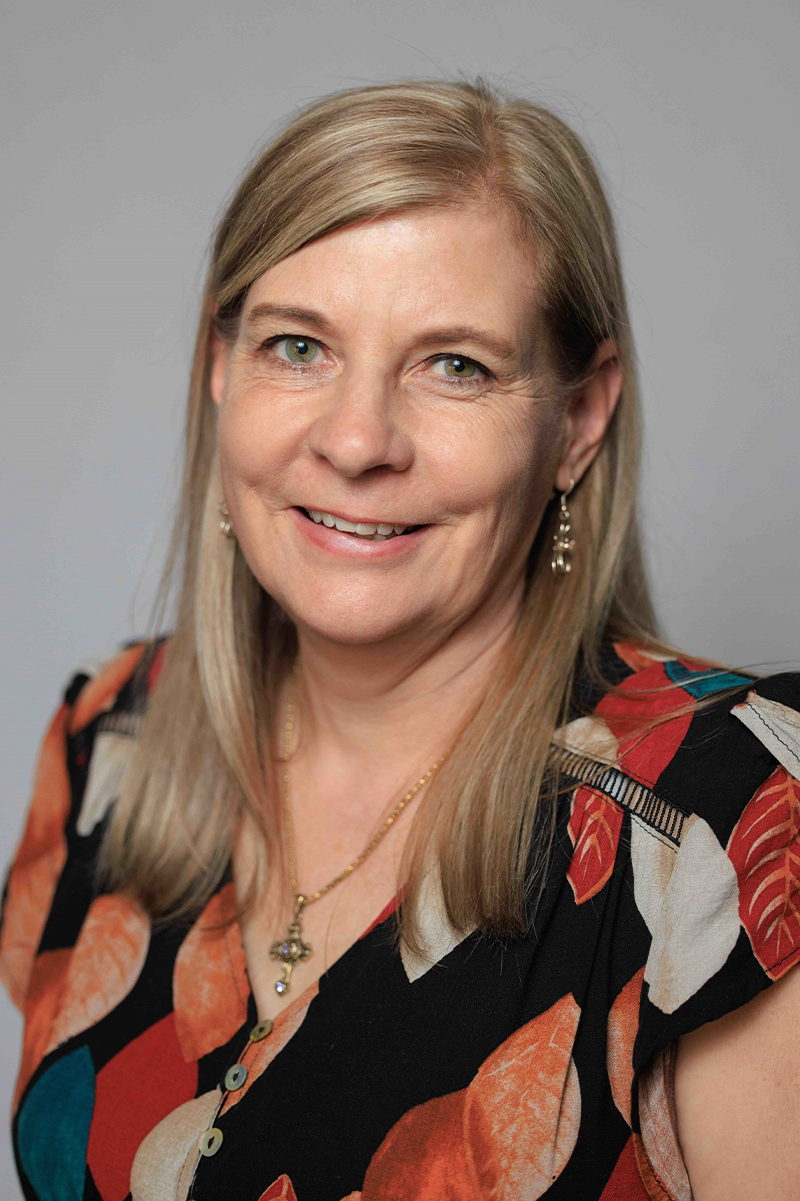
Prof. Linda du Plessis, senior deputy vice-chancellor of the North-West University (NWU)
By Prof. Linda du Plessis, senior deputy vice-chancellor of the North-West University (NWU)
It is tempting, in South Africa, to speak about basic education in the language of crisis. Has the system collapsed? Have standards dropped? Does matric mean anything? It is an emotive language because many parents, teachers and learners have first-hand experience of overcrowded and under-resourced classrooms.
But perhaps the more uncomfortable truth is this: South Africa’s basic education system has not collapsed. It is still standing. It still enrols millions of children. It still produces dropouts, matriculants, diploma candidates and Bachelor-level passes. The recent True South Africa – evidence series report s report on education makes this clear: the system is under considerable strain, but the evidence does not support a narrative of total collapse. It argues instead for ‘realism without despair’, acknowledging expanded access, improved matric outcomes and persistent inequality simultaneously.
Similarly, the oft-repeated claim that learners ‘only need 30% to pass’ is labelled misleading because the National Senior Certificate is a tiered qualification with Higher Certificate, Diploma and Bachelor-level outcomes, each signalling a different level of achievement. The report also notes that Bachelor-level passes have increased significantly as a proportion of all National Senior Certificate passes.
This matters. It is wrong to tell a young person who has worked hard for a Bachelor-level pass that the achievement is worthless. It is wrong to erase progress simply because it is incomplete. It is also dangerous to tell a country that nothing works, because despair quickly becomes an excuse for inaction.
But here is the critical question: what if ‘not collapsed’ becomes the new standard?
A bridge does not have to collapse to be unsafe. A hospital does not have to close to be failing its patients. A school system does not have to fall apart completely before it begins to betray its children. The greatest danger in South African education may not be collapse. It may be corrosion: the slow normalisation of mediocrity, the gradual lowering of expectations and the quiet acceptance that ‘at least it still functions’ is good enough.
It is not good enough.
The evidence may show that basic education has not collapsed, but the lived reality of many children remains harsh. The 2023 Progress in International Reading Literacy Study found that 81% of Grade 4 learners could not read for meaning. South Africa ranked last among the 57 participating countries. Poor literacy undermines numeracy, which in turn weakens the STEM pipeline needed for future economic participation.
This is not a minor technical problem. A child who cannot read for meaning by Grade 4 is not merely falling behind at school. That child faces a narrowed future. Reading is not simply a subject; it is the gateway to mathematics, science, history, digital literacy, citizenship and dignity.
The same warning appears in the debate about Mathematics. NSC pass rates conceal a ‘leaking pipeline’, particularly when learners are moved away from gateway subjects such as Mathematics, Accounting and Physical Sciences. In 2025, 464 public schools did not offer Mathematics at all, while only a small proportion of the matric cohort achieved a strong Mathematics result. A country cannot build an innovation economy on generations of children who were never given a genuine opportunity to master numbers. A pass rate offers little comfort to a young person who discovers too late that the subjects passed at school have closed the door to a career after school.
This is why the ‘not collapsed’ argument must be handled with caution. It gives us hope, but it cannot be allowed to become the new normal. We must reject lazy pessimism, but we must also reject polite complacency. If a child passes but cannot compete, certification is not enough. If a school has a teacher, but that teacher is exhausted, unsupported and confronted by overcrowded classrooms, ministerial promises are not enough.
The teacher question is especially urgent. More than 32 000 teachers left the profession over five years, including 30 992 who resigned. These departures have been linked to factors such as retirement eligibility, career changes, migration and overwhelming workloads. More than 50% of primary school learners are taught in classes of more than 40 children, with approximately 15% in classes exceeding 50. We face not only a labour challenge, but also a national capacity crisis.
The world is changing too rapidly for South Africa to treat basic education as yesterday’s problem. Artificial intelligence, automation and digital platforms are already reshaping work and learning. Basic education must therefore do more than teach children to pass examinations. Future-fit education must develop curiosity, cognitive agility, adaptability, resilience, digital fluency, communication, collaboration and critical thinking from the earliest years of life.
The phrase ‘from the earliest years’ is used intentionally. As a society, we cannot outsource education entirely to the state, schools, teachers or universities. The first school is the home. The first curriculum comprises language, conversation, play, routine, affection, discipline and attention. Cognitive scaffolding begins before a child can hold a pencil. What children hear, touch, ask, count, repeat and imagine during their first years shapes their later ability to learn. Parents and caregivers are not optional extras in education; they are a child’s first teachers.
However, this shared responsibility must not become a means for the government to escape accountability. Parents cannot build classrooms or fix procurement failures. Communities cannot appoint enough Mathematics teachers. The state remains constitutionally and morally responsible for upholding the right to basic education. Adequate education is inseparable from dignity, equality, democratic participation and the ability to escape poverty.
South Africa’s youth unemployment crisis makes this even more urgent. Statistics South Africa reported that, in the first quarter of 2026, the national unemployment rate stood at 32.7%, while unemployment among young people aged 15 to 24 was 60.9%, and among those aged 25 to 34 it was 40.6%. Education cannot solve unemployment alone, but weak education almost guarantees that unemployment becomes hereditary.
So yes, let us say it clearly: South Africa’s basic education system has not collapsed. That should give us hope. But it should also make us more demanding, not less. A system that still functions can still be repaired. A system with pockets of excellence can still spread that excellence. A system that has expanded access can still improve quality.
But none of this will happen if ‘not collapsed’ becomes our national comfort blanket. The wake-up call is not only for the government. It is for every parent, every school governing body, every university, every business, every community and every citizen who understands that the future of a country is first written in the mind of a child.


