
Two little boys struggling to find their voices helped their mother find hers and set her on a path from microbiology to research, teaching and the creation of a STEM learning game for African children.
Dr Moleboheng Mokhele, senior lecturer in the Faculty of Education at the North-West University (NWU), shared this journey during an interview with Dr Yvonne Chaka Chaka, South Africa's own Princess of Africa, on Woman Radio on 5 August 2026.
The conversation explored motherhood, education and the experiences that led Dr Mokhele, who is also a researcher in the research unit for Self-Directed Learning and an entrepreneur, to create Renewable Rangers, a game that introduces children to renewable energy through play.
The idea took shape in Dr Mokhele’s family home in Abu Dhabi after her sons, Wavhudi and Rivhavhudi, experienced speech delays. She turned to educational games as part of their routine, with evenings becoming opportunities for the family to learn through play.
As she watched her sons learn and communicate, she began to question why African children had limited access to educational games that reflected their cultures, languages and experiences.
“That season, the one that once broke my heart, became the beginning of my purpose,” Dr Mokhele said. “It led to my PhD, to Renewable Rangers and to a career I never planned for.”
Her path into science had also tested her resolve. In Grade 10, a teacher told her that science was not for her. Her mother rejected that assessment.
“There is no one who is going to choose a career for my child,” Dr Mokhele recalled her mother saying.
She went on to study science, but university brought failed modules and questions about whether she belonged. During her master's-degree studies, while pregnant and raising a toddler as her husband worked on a business in the United Arab Emirates, she considered abandoning her studies.
She called her supervisor and told him she could not continue.
“Think about all the women who come after you. If you give up, what message are you sending them?” he told her.
Dr Mokhele said those words stayed with her and now shape how she supports her postgraduate students when they face setbacks.
The influence of a father
The Woman Radio interview also brought back memories of Dr Mokhele's late father, who carried her school reports with him and introduced her by saying: “This is my daughter.”
She joked during the conversation that he was probably now the “CEO ya di ancestors”, before reflecting on what his support meant to her.
“Papa ... I hope I am still making you proud,” she said.
Dr Chaka Chaka reflected on Dr Mokhele's decision to respond to her sons' needs through play and learning.
“I am not stopping ... I am just trying to absorb everything you are saying,” Dr Chaka Chaka said. “I am visualising this young mother with these games ... and you allowing that to happen instead of doing what we sometimes do, and drug our kids because they are deemed to be too much. But you did not.”
The conversation drew responses from listeners, colleagues and students.
One listener wrote: “From today I call you the Mother of the Nation. You are a Wonder Woman in a red cape.”
Pamoja, a mother raising a 13-year-old son with autism, said Dr Mokhele's story had spoken to her own experience.
“I am crying. I loved this interview and hoped it is recorded on the podcast. You inspired me raising a 13-year-old with autism,” she wrote.
Vuyo Chauke, deputy principal of Nkgodise Primary School in the Free State, said Dr Mokhele had communicated her message with honesty.
“You were absolutely brilliant! You made your point so clearly and with such genuine heart. It felt personal, honest and so completely you, Moleboheng. I am incredibly proud of you. Keep shining,” Vuyo wrote.
Dr Mokhele's students also responded to the interview. Master's-degree student Alice Temo said the discussion showed how perseverance, resilience and faith could help people work through setbacks.
Life Sciences honours-degree student Karabo Pitso drew inspiration from Dr Mokhele's account of her first year at university.
“What inspired me most was hearing about your journey during your first year at university,” Karabo said. “Your story reminds me that success is not determined by how easy the journey is, but by the courage to keep going despite the obstacles.”
Another student, Ian, said the interview showed him that research can begin with compassion and that innovation can emerge from efforts to solve problems in the lives of people.
After the interview, Dr Chaka Chaka sent Dr Mokhele a message that connected the conversation back to the two boys who had started the journey.
“My baby. You are an inspiration and a force to reckon with. I love you. Thank you for allowing us to celebrate you. I hope the boys are proud of you too,” she wrote.
Renewable Rangers is now preparing to reach classrooms beyond South Africa. For Dr Mokhele, however, its origins remain rooted in evenings spent playing games with her sons and asking how learning could speak to the experiences of African children.
What began as a mother's search for ways to help Wavhudi and Rivhavhudi communicate became a research journey and an educational innovation. In helping her sons find their voices, Dr Mokhele found the question that would shape her work: how can African children see themselves in what and how they learn?
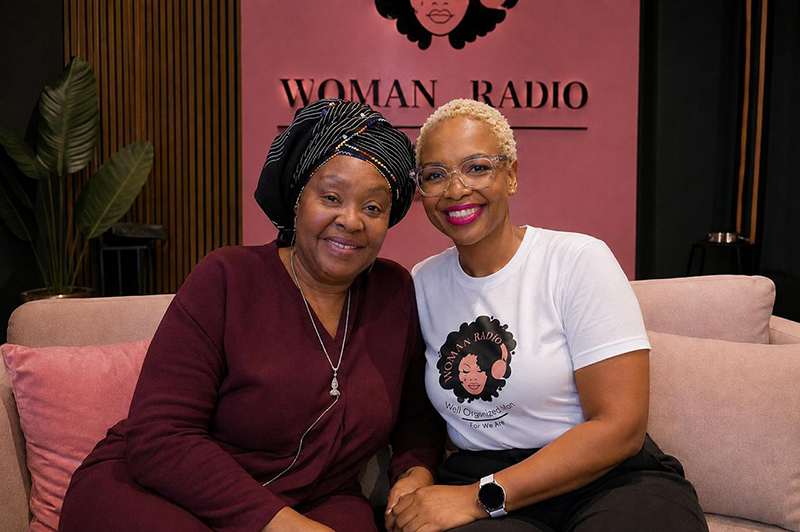
Dr Moleboheng Mokhele shared the story behind Renewable Rangers and how her sons, Wavhudi and Rivhavhudi, inspired her journey into early childhood STEM education during an interview with Dr Yvonne Chaka Chaka on Woman Radio.


