
By: Mafumane Tlhapi and Sthembiso Seyama
Community media must strengthen its finances, improve governance and embrace digital platforms to remain relevant. It must also continue giving local communities a voice and provide young media professionals with practical training. These were among the key messages from a public seminar hosted by the Faculty of Humanities at the Mahikeng Campus of the North-West University (NWU).
Held under the theme, “Community media in South Africa: rethinking sustainability, relevance and democratic participation”, the seminar brought together media practitioners, academics and students. They discussed the pressures facing the sector and ways to secure its future.
Journalist, entrepreneur and community media activist Ananias Ndlovu delivered the keynote address. He also discussed his book, The Real Death of Community Media, which examines challenges in the sector.
Ananias said the title does not mean community media is disappearing. Instead, it reflects the difficult conditions under which many outlets operate. “I am not saying community media is dying. I am saying I give you the reality. The reality is that community media is still existing,” he said.
Funding and advertising remain among the biggest challenges. Ananias also raised concerns about how advertising income reaches community media organisations. Advertising agencies often stand between advertisers and media outlets, which can affect the amount of money that eventually reaches community platforms.
The seminar also explored the role of campus radio in preparing students for careers in journalism and broadcasting. Puso Kgosinkwe, station manager at River FM, said campus radio gives students valuable practical experience. However, many students do not make enough use of these opportunities.
“The problem we are having with campus stations is that the very same students studying media studies and journalism do not take the platform seriously,” he said.
Puso encouraged students to treat campus and community radio as training grounds. These platforms allow them to practise broadcasting, reporting, interviewing and programme production before entering the workplace.
Digital change was another key part of the discussion. Audiences now consume news and entertainment through social media, podcasts, websites and streaming services. Community media must therefore meet audiences on these platforms while keeping its local focus.
Thabo Leping, station manager at Aganang FM, said community media could remain relevant by producing content that reflects the needs of local audiences. Stations must also adapt to new technology. “The sector will always be relevant because we are always evolving,” he said.
Thabo pointed to digital studios, websites, podcasts and online streaming as examples of this shift. These tools allow community stations to reach listeners beyond traditional radio frequencies.
The seminar also encouraged students to volunteer, seek internships and gain practical experience at campus and community media outlets. The discussions showed that technology alone will not determine the future of the sector. Strong management, sustainable funding and relevant local content will remain vital. Community media must combine these strengths with digital innovation while creating space for the next generation of media professionals.
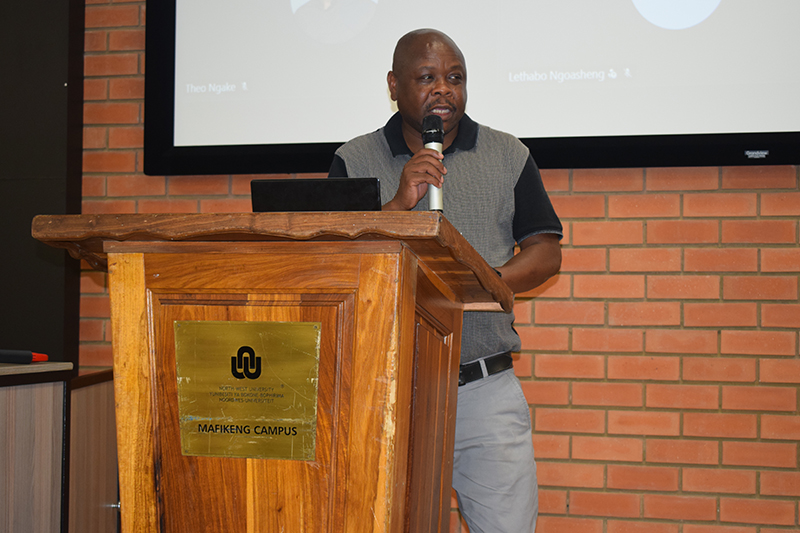
Photo: Journalist, entrepreneur and community media activist Ananias Ndlovu delivered the keynote address at the public seminar on the NWU’s Mahikeng Campus.


