
An opinion piece by Prof Simon Letsoalo
Few sectors in South Africa carry as much historical, cultural and economic importance as the red meat industry. For many communities, livestock is not just a mere commodity but a symbol of wealth, social status, identity and food security. Yet, in recent years, red meat and its production have been thrust into global debates regarding their contribution to cardiovascular diseases, climate change, nutrition, equity and economic transformation. In South Africa, these debates must be grounded in the realities of our people, our land and our developmental priorities.
A pillar of rural livelihoods
The South African livestock sector supports millions of livelihoods – mainly commercial farmers, communal farmers, herders, feedlot workers, auctioneers, transporters and small-scale processors.
In almost all the South African provinces, cattle, sheep and goats remain one of the few reliable economic assets for the sustenance of rural households. Red meat is not simply a product of animal agriculture, but it is one of the most important socio-economic stabilisers in rural South Africa. Therefore, to curtail or marginalise the red meat industry in response to global trends would be to ignore its foundational role in rural economies.
A nutritional anchor and a political target
Although an average global per capita consumption of 29 kg per person annually is recorded, red meat has come under scrutiny in the past decades due to health concerns relating to overconsumption, high levels of saturated fats and non-communicable diseases. These concerns have over the years placed the red meat industry on a collision course with health specialists and health-conscious consumers, especially in high-income countries.
However, in South Africa, the nutritional status of the general citizenry is different due to varying affordability and income levels among the households. Although red meat (beef, mutton and chevon) remains one of the most culturally accepted sources of high-quality protein and micronutrients such as iron, zinc, and B12, it is a known fact that many low-income households struggle with protein deficiency and/or malnutrition. In these households, overconsumption of red meat is not entirely a widespread public health concern, whereas undernutrition remains a challenge due to the affordability of red meat. Poor dietary diversity and limited access to all nutritious foods are therefore the real issues.
Climate and sustainability: a more nuanced debate
South Africa’s rangelands are unique, offering endless biodiversity. The livestock systems are largely dominated by extensive grazing, not the flush-feeding-based feedlot systems as in the global North. Communal grazing systems, particularly in the Eastern Cape, Limpopo and KwaZulu-Natal, to mention but a few, have the potential for low-carbon red meat production when well-managed under climate-smart feeding practices.
The real environmental problems are poor rangeland management, drought vulnerability and water scarcity, and not the livestock per se. With improved genetics, veld management, rotational grazing and climate-smart practices, South Africa could position itself as a sustainable producer of red meat reared under high welfare standards. Therefore, the long-term solution is not abandoning livestock production but investing in better science, extension services and resilience.
Transformation: the unfinished business of the industry
The transformation of the red meat industry remains one of the most urgent issues. Communal farmers own large numbers of cattle, sheep and goats, yet they capture a small fraction of the economic value. Barriers include the following:
* Limited access to abattoirs and formal markets
* Insufficient animal health facilities
* Low extensionist-to-farmer ratio
* Weak cold-chain systems
* Limited access to finance
* Historical exclusion from lucrative export opportunities
If South Africa wants a red meat industry that reflects its demographics, market access, animal-health support and commercialisation, pathways must be re-engineered. The impact would be enormous in terms of higher household incomes, formalisation of rural economies, job creation and greater food-system stability.
A cultural heritage worth preserving
From a family braai to a traditional wedding feast, red meat is woven into the social fabric of the country. Cattle, in particular, play an important role in cultural and community cohesion. Calls for South Africans to abandon red meat therefore ignore centuries of cultural heritage.
As culture evolves with time, nothing should stop South Africans from embracing improved animal welfare practices, humane slaughtering standards and healthier consumption patterns, while still honouring the cultural significance of livestock.
The way forward
Red meat should not be characterised as a health risk and an environmentally irresponsible commodity, but as a national asset that carries economic viability, nutritional importance and cultural value. Therefore, the challenge is to shape the industry in ways that:
* Increase sustainability and profitability
* Expand market access
* Uplift small-scale producers
* Strengthen animal health systems
* Ensure ethical, climate-smart production
South Africa needs high-quality red meat, better managed meat production systems, improved distribution channels of red meat and better alignment with the needs of its people.
If handled wisely, the red meat industry can be one of the engines of rural development and national food security.
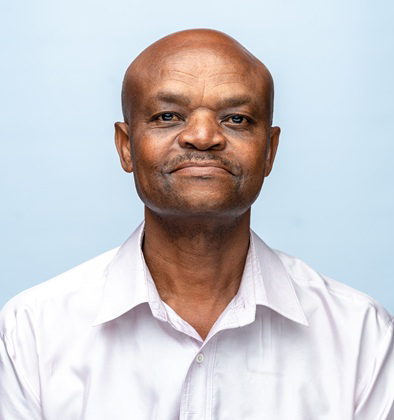
Prof Simon Letsoalo, acting director of the NWU’s School of Agricultural Sciences


