
For generations, indigenous knowledge holders have preserved African healing systems, cultural practices and ways of understanding the world without formal recognition.
A partnership between the Department of Science, Technology and Innovation (DSTI) and three universities has now completed a pilot project aimed at changing that by formally recognising indigenous knowledge practitioners through the Recognition of Prior Learning (RPL) system.
The DSTI, working with the North-West University's (NWU’s) Centre of Excellence in Indigenous Knowledge Systems (CEIKS), the University of KwaZulu-Natal, and the University of Venda, successfully concluded the RPL pilot project at the end of 2025.
The project, which has been led by the NWU CEIKS since its inception, was implemented in KwaZulu-Natal, North West, and Limpopo to recognise indigenous knowledge holders by aligning their knowledge, skills, and expertise with the National Qualifications Framework.
The initiative forms part of the government's broader efforts to redress the historical exclusion of indigenous knowledge systems. The Indigenous Knowledge Systems Policy of 2004 laid the foundation for recognising the value of indigenous knowledge in addressing past inequalities, while the Indigenous Knowledge Act 6 of 2019 provides the legislative framework for protecting, promoting and developing indigenous knowledge in South Africa. Chapter 5 of the Act specifically provides for the accreditation and certification of indigenous knowledge holders and practitioners, particularly those from historically marginalised communities, through structured assessment and recognition processes.
In line with Chapter 5 of the Act, provincial steering committees were appointed by the Minister of Science, Technology and Innovation, and provincial adjudication panels conducted rigorous assessments of indigenous knowledge practitioners during the pilot.
The outcomes of the pilot project were presented during a meeting between the Minister of Science, Technology and Innovation, Prof. Blade Nzimande, and the provincial steering committees for the RPL in indigenous knowledge. The engagement, organised by the DSTI and hosted by the NWU CEIKS, took place on 3 July 2026 at the Southern Sun Elangeni Hotel in Durban.
The RPL initiative follows almost two decades of work by the DSTI and its partners to develop a regulatory framework for recognising indigenous knowledge practitioners. The framework includes competency-based norms and standards for traditional health practitioners in categories such as Mophato (Bojale and Bogwera), Ngaka, Ngaka Tshojwa, and Mmelegisi.
Prof. Nzimande said the initiative represents an important step towards restoring the value of indigenous knowledge and recognising those who have safeguarded it.
"What is important about this day, and what touches my heart, is that this is about bringing back who we are, where we come from, and what we wish to become in the future," said Prof. Nzimande.
"I am happy that you chose to be recognised, assessed, and evaluated so that when you practise what forms part of our indigenous knowledge system, your contribution receives recognition. We, as a department, will continue working with you," he added.
He said the process should continue to be shaped by the communities and practitioners who carry indigenous knowledge.
"Some rules will need to change, but the important thing is that we will make those changes according to your views so that they reflect who you are and who you want to be," he said.
Dr Motheo Koitsiwe, director of the DSTI/National Research Foundation Centre of Excellence in Indigenous Knowledge Systems at the NWU, said the project seeks to institutionalise the recognition of indigenous knowledge holders and strengthen their participation in research, teaching and learning.
"The aim is to institutionalise the recognition of indigenous knowledge holders so that they can participate in the education system and contribute their knowledge to future generations," said Dr Koitsiwe.
He said the consortium-led project focuses on African traditional medicine, astronomy and cosmology, indigenous knowledge-based technology innovation, and entrepreneurship.
According to Dr Koitsiwe, partnerships with traditional leadership and local communities remain central to the success of the initiative.
"Traditional leadership is at the heart of RPL and indigenous knowledge systems. We want to ensure that knowledge holders are recognised and become part of the broader knowledge system," he said.
He also acknowledged the continued support of the DSTI and the leadership of the partner universities, saying their investment has strengthened research, community engagement and the integration of indigenous knowledge into higher education.
The outcomes of the pilot project will inform the national rollout of the RPL system, providing a framework for recognising indigenous knowledge holders while advancing South Africa's scientific, cultural and educational landscape.
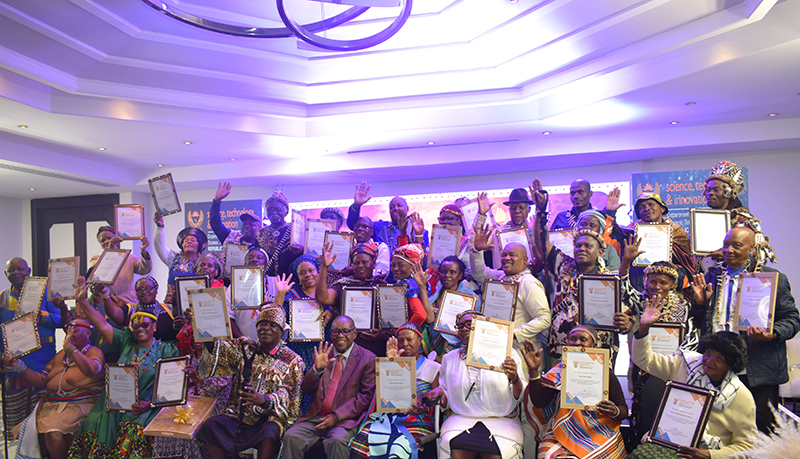
The Department of Science, Technology and Innovation, together with the NWU, the University of KwaZulu-Natal and the University of Venda, has completed a pilot project that will guide the formal recognition and certification of indigenous knowledge holders through the RPL system.


