
The Department of Basic Education’s commitment to increasing psychosocial support for learners and teachers has the potential to deliver long-term gains for education and the country.
At the release of the 2025 National Senior Certificate (NSC) results, South African education officials, including the Minister of Basic Education, acknowledged the emotional strain caused by examinations, academic pressure and social challenges facing many learners and emphasised the urgent need for support.
Dr Khido Ramadie, an educational psychologist in the Faculty of Education at North-West University (NWU), agrees and said psychosocial support should be treated as a core educational priority rather than an optional service.
“There is a clear link between psychosocial well-being, learner behaviour and academic performance. We cannot focus only on pass rates while ignoring the emotional realities learners experience daily,” she said.
“Learners do not leave their emotional burdens at the school gate. Stress, grief, poverty and violence affect concentration, behaviour and motivation. If we want to improve academic outcomes, we must strengthen learner well-being and provide structured support systems for both learners and teachers.”
A timely and necessary investment
The Department of Basic Education’s decision to invest in psychosocial support for learners and educators is timely and necessary. Schools are increasingly confronted with anxiety, trauma, socio-economic hardship and behavioural challenges that directly undermine teaching and learning. Without adequate psychosocial support, these difficulties often manifest as poor academic performance, absenteeism, classroom disruption and educator burnout.
Psychosocial support is significant for boy learners whose emotional needs are frequently overlooked, according to North West MEC for Education, Viola Motsumi. She said rising levels of gangsterism, aggression and risky behaviour among boys point to deeper psychosocial challenges. These may include unresolved trauma, identity struggles, peer pressure and a lack of positive role models. When left unaddressed, these issues destabilise school environments, affecting not only the boys involved but also fellow learners and educators.
Dr Ramadie pointed out that psychosocial support is not only about responding to crises, but it is also about prevention. When learners have access to counselling, mentorship and mental-health education, they learn emotional regulation, resilience and positive coping strategies.
“For boy learners specifically, these interventions are even more critical because their emotional struggles are often hidden or expressed through aggression. If we do not address issues such as trauma, identity struggles and peer pressure, we will continue to see behavioural problems such as gangsterism, violence and risky behaviour in schools,” she said.
“Psychosocial support can help boys develop a sense of belonging, build healthier identities and learn constructive ways of dealing with challenges. This reduces antisocial behaviour and strengthens participation in school activities.”
Educators need support too
Dr Ramadie said educators also stand to benefit directly from stronger psychosocial services in schools.
“Teachers are expected to be educators, counsellors, disciplinarians and social workers all at the same time. That pressure contributes to stress and burnout. Providing professional psychosocial support in schools gives teachers relief and equips them with strategies for classroom management and emotional support.”
She added that effective psychosocial support also strengthens school-home partnerships.
“Parents are part of the solution. When schools work closely with families, emotional and behavioural challenges can be identified earlier. This creates a support network that prevents problems from escalating and improves learning outcomes.”
“With sustained implementation and collaboration with institutions such as the NWU, psychosocial programmes can help create safer, more inclusive and more effective school environments. That is how we support learners to succeed, not only in examinations, but in life,” Dr Ramadie concluded.
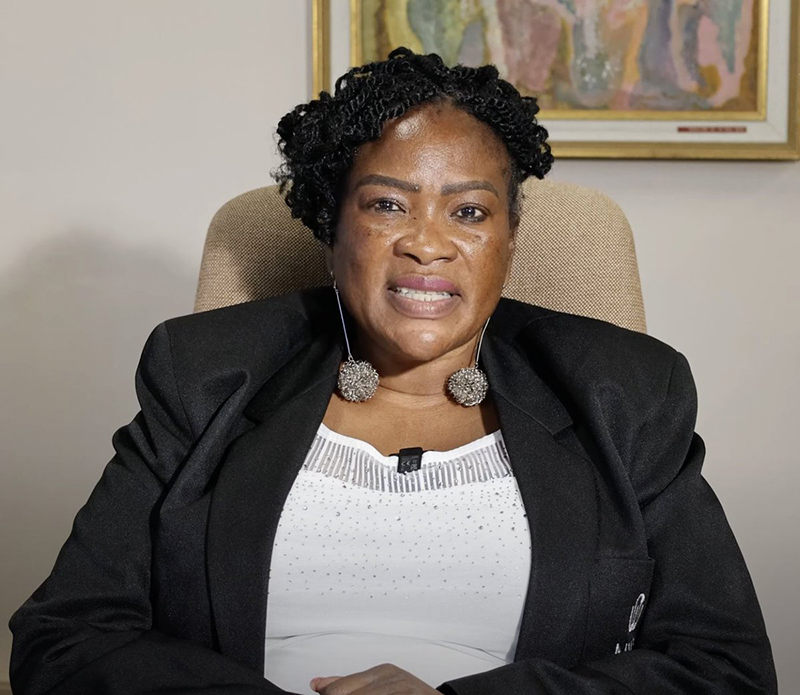
Dr Khido Ramadie


