
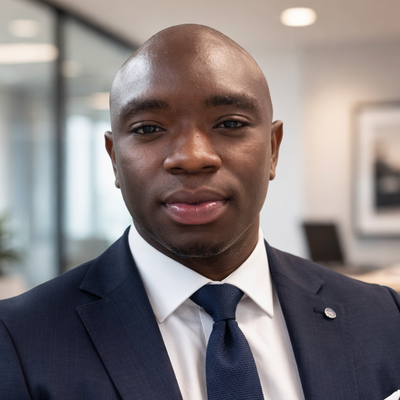
Thabang Motswaledi
The ongoing African tour by Pope Leo XIV has drawn global attention, positioning the continent as a key player in international relationships and peacebuilding efforts at a time when several regions continue to face conflict, governance pressures and social divisions.
The Pope is on a 10-day, four-country visit - 13 to 23 April - focused on peace and interfaith dialogue. He has already visited Algeria and is currently in Cameroon, with scheduled stops in Angola and Equatorial Guinea.
According to Thabang Motswaledi, an academic in the North-West University’s (NWU’s) School of Government Studies, the inclusion of African states in the Pope’s early international engagements signals a shift in global focus.
He says the visit highlights the growing significance of the continent in global politics and reflects the intention of the Catholic Church to strengthen relationships with African nations.
“The visit shows that Africa is not marginal to global affairs. It reflects the value placed on strengthening relationships between the continent, the church and the rest of the world,” he says.
Thabang notes that religion continues to play a central role in African societies, extending beyond spirituality into socio-economic and political spheres. He says the Pope’s visit places issues such as poverty, governance and inequality at the forefront, while also encouraging the church to take an active role in addressing these challenges.
“Religious institutions are not only platforms for awareness but can also contribute to intervention measures as part of their social responsibility,” he explains. “Religious diplomacy can highlight challenges while also proposing mechanisms to address them.”
He adds that such engagements can complement state-led efforts by opening dialogue platforms that may be difficult to achieve through conventional political channels, particularly in regions experiencing instability or limited trust in formal institutions.
The visit to Algeria, a predominantly Muslim country, is significant in advancing interfaith dialogue. Thabang says this demonstrates that religious differences in Africa do not necessarily lead to conflict but can instead promote social cohesion.
“In many African contexts, religion remains a strong social institution. The engagement between Christian and Islamic communities shows that coexistence is possible and can support peacebuilding,” he says.
He adds that the visit sends a message that collaboration across religious lines can strengthen unity and stability on the continent, while reinforcing the position of Africa
as a space where interfaith cooperation can contribute to development and nation-building.
Looking ahead, Thabang believes the long-term impact of the visit could extend to fostering harmony and reinforcing the role of religious institutions in conflict resolution. He says the church has a role to play in promoting peace, development and international cooperation, particularly in regions facing instability.
“The broader message is that despite differences, societies can work together. Religious institutions can contribute to peacebuilding and support national development efforts across Africa,” he says.


