
North-West University (NWU) PhD candidate Modjadji Mandy Rasehlomi took her research on indigenous food systems to an international audience in Berlin, Germany, where she participated in four major events focused on global health, research and healthcare collaboration.
Modjadji, a doctoral candidate at the Centre of Excellence in Indigenous Knowledge Systems (CEIKS) of the NWU at the Mahikeng Campus, attended the 8th International Young Researchers’ Symposium on Global Health2026 – Satellite Symposium of the World Health Summit. It was held at the Institute for Research in International Assistance at Akkon University on 10 and 11 October 2026.
The CEIKS formally nominated her to participate, while Akkon University assisted with the arrangements that enabled her to travel to Berlin and take part in all four events.
At the symposium, Modjadji presented a paper titled “Socio-cultural imperatives of indigenous food systems: the case of Batswana in South Africa” in the youth category. Her research highlights the importance of understanding food systems beyond nutrition and food security, considering the cultural practices, social relationships and indigenous knowledge that influence how communities produce, prepare, share and consume food.
As global discussions increasingly focus on food security, nutrition and sustainable health systems, her research highlights the value of culturally grounded approaches to understanding food practices and developing inclusive responses to health and nutrition challenges.
“Understanding how communities relate to food requires consideration of the social and cultural contexts that shape food choices and practices. This perspective reinforces the importance of inclusive research approaches that recognise communities as knowledge holders and partners in developing meaningful solutions,” Modjadji reflected.
Engagement across four international events
In addition to presenting her research at the symposium, Modjadji attended three other events during the week: the Virchow Prize Ceremony on 10 October, the World Health Summit from 11 to 13 October, and the 10th German African Healthcare Forum on 14 October.
The Virchow Prize Ceremony recognised the contributions of Prof. Jean-Jacques Muyembe-Tamfum and Prof. Peter Piot to the fight against Ebola. The World Health Summit brought together stakeholders engaged in addressing global health challenges, while the German African Healthcare Forum provided another opportunity to engage with discussions on healthcare cooperation between Germany and African countries. Participation in these events gave Modjadji an opportunity to engage in broader conversations about research, scientific innovation, healthcare systems and the role of collaboration in addressing complex global challenges.
Reflecting on the experience, she described it as transformative, reinforcing the importance of collaboration among researchers, scientists, communities, policymakers, practitioners, academic institutions and international partners.
She emphasised that meaningful progress requires more than individual research efforts. “Collaboration cannot remain an aspiration; it must inform how research is conducted, how policies are developed and how health interventions are designed and implemented,” she said.
For Modjadji, this means ensuring that research responds to real-world challenges, scientific innovation advances knowledge, and communities are recognised as essential partners whose experiences and knowledge help shape relevant solutions.
Advancing indigenous knowledge through global engagement
Modjadji’s participation reflects the importance of creating opportunities for emerging researchers to share their work internationally and contribute perspectives grounded in African communities and knowledge systems. Her research places indigenous food systems in wider discussions on health, sustainability and food security, demonstrating why the cultural and social dimensions of food deserve attention in research and policy development.
She expressed her appreciation to Dr Mayashree Chinsamy, Dr Motheo Koitsiwe, the Akkon University organising committee, Gaby Feldmann and Dr Timo Ulrichs for their support and contributions to the experience.
Through CEIKS, the NWU continues to provide a research environment in which indigenous knowledge can contribute to academic inquiry and conversations on contemporary societal challenges.
Modjadji’s engagement in Berlin highlights the value of connecting indigenous knowledge research with international dialogue, while ensuring that the experiences and perspectives of local communities remain part of the search for inclusive and sustainable health solutions.
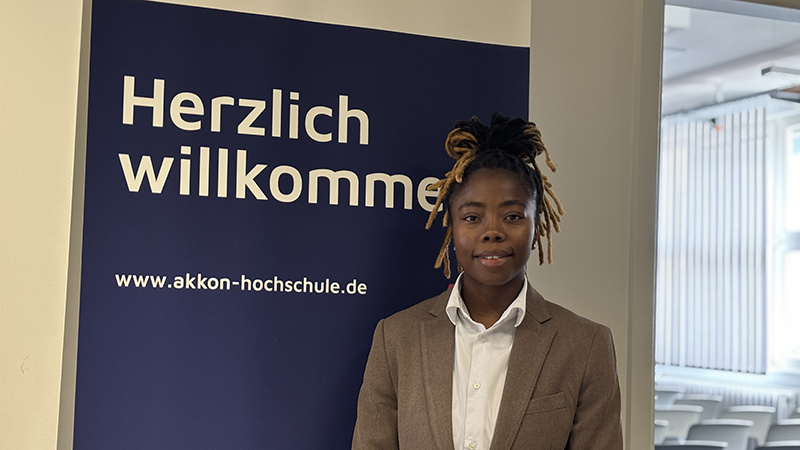
NWU PhD candidate Modjadji Mandy Rasehlomi attended the 8th International Young Researchers’ Symposium on Global Health2026 – Satellite Symposium of the World Health Summit.


