
The North-West University (NWU) has always taken pride in its history. Safeguarding this legacy for future generations has now taken another step forward with the reopening of the refurbished museum on the Potchefstroom Campus.
The museum, which celebrates the complete history of the NWU, officially reopened on 5 November, marking the latest chapter in a vision that has been decades in the making.
According to Jacoline Jansen van Vuuren, head of Records, Archives and the Museum on the Potchefstroom Campus, the idea of establishing a museum to preserve the university's history dates back to 1977.
“It was a journey marked by important milestones along the way. These include the opening of the PU-Kana Museum in 1989 and the establishment of a dedicated museum space in 2009. The refurbished museum now brings these efforts together in an integrated heritage space that reflects both the histories of the institutions that preceded the NWU and the developments since the 2004 merger,” Jacoline explains.
This single, integrated space creates an opportunity for students, staff, alumni and visitors to better understand the journey that has shaped the NWU we know today.
Two floors house exhibitions from different perspectives
The new museum comprises exhibitions that are spread across two floors, enabling visitors to explore the NWU's past from different perspectives.
On the ground floor, visitors can view the histories of the NWU’s three campuses. Another display on the same floor shows the development of the NWU’s identity, logo, leadership and anthem through the years.
Exhibitions adjacent to the foyer focus on the legacy of the institutions that preceded the NWU, including the former Potchefstroom University for Christian Higher Education, the Potchefstroom Teachers' College and the University of Bophuthatswana.
The exhibitions on the second floor shift the focus to the story of the NWU since the merger. Here, displays highlight the university's growth and development, significant achievements and memorable moments that have shaped the institution over the past two decades. This includes a collection of historical publications, the academic attire of chancellors and vice-chancellors, and the evolution of minute books from handwritten to typewritten and now digital.
Visitors can also look back at residence life through exhibitions that use photos, artefacts and historical information to show the traditions and experiences of generations of students.
Adding an interactive element to the visitor experience, themed display cabinets throughout the museum invite guests to open drawers and uncover additional stories that are connected to various aspects of the university's history.
Reopened museum connects the past, present and future
“The completion of the physical museum formed part of the NWU’s strategic priorities and reflects our commitment to preserving institutional memory,” Jacoline says.
More than just a repository of historical artefacts, the museum serves as a place where staff, students, alumni and visitors can connect with the people, events and achievements from the past.
“The museum represents the realisation of a vision that has been nurtured over many years, and we are proud to share this important part of our collective story with future generations.”
Jacoline says looking ahead, the NWU plans to expand access to its heritage through digital and virtual initiatives such as a virtual online tour, allowing broader audiences to engage with the university’s history and ensuring that these stories remain accessible for generations to come.
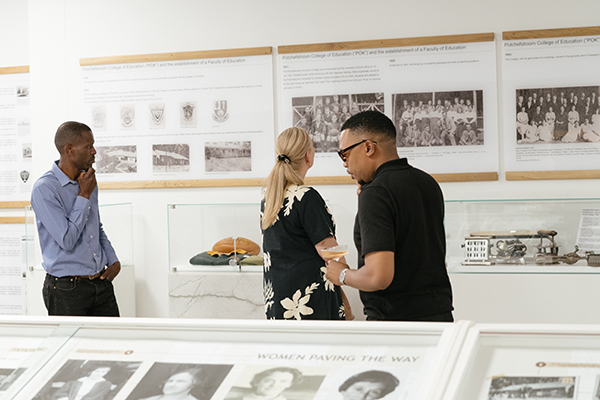
The NWU’s refurbished museum brings together the histories of its predecessor institutions and the story of the NWU in a single integrated heritage space.
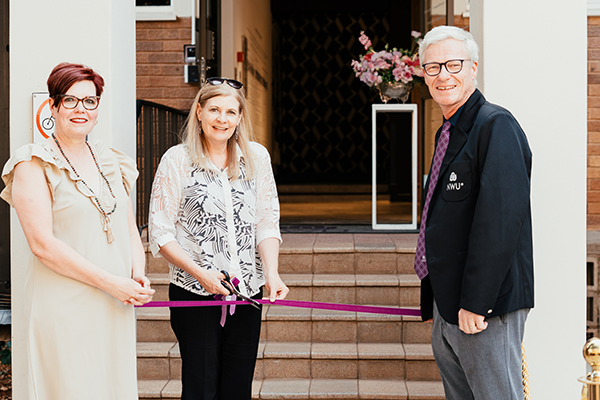
Jacoline Jansen van Vuuren, head of Records, Archives and the Museum on the Potchefstroom Campus, Prof. Linda du Plessis, senior deputy vice-chancellor for teaching and learning, and Prof. Hennie Goede, registrar, during the official reopening of the refurbished museum.
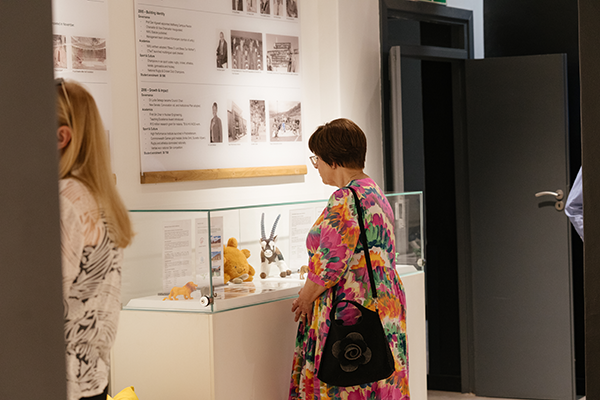
Guests had the opportunity to explore some of the precious historical artefacts that are part of the NWU’s rich history.
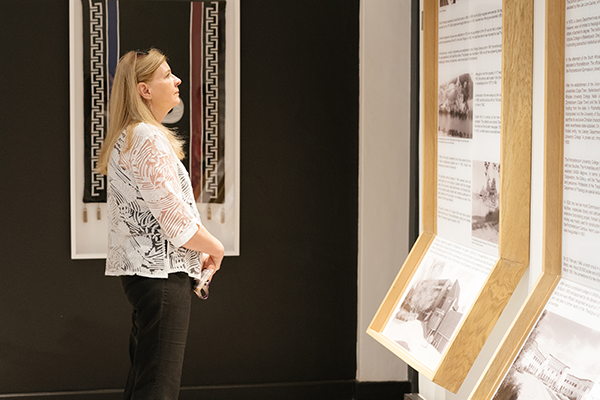
Various exhibitions give valuable information about developments in the history of the NWU.


