
The North-West University (NWU), through its Centre for Health Professions Education (CHPE), recently played a key role in a major continental initiative to strengthen the quality of health professions education across Africa.
From 16 to 18 March 2026, the NWU hosted the World Health Organization (WHO) Stakeholder Consultation on Africa Health Professions Education Quality Standards (AHPEQS). The consultation followed an intensive working session held from 9 to 13 March at the Faculty of Health Sciences, where the CHPE collaborated with the WHO Health Workforce Team and the AFREhealth network to finalise the draft standards.
The consultation brought together health professions regulatory bodies, education leaders and technical experts from 17 African countries. Representatives included organisations such as the World Medical Association, the International Association of Medical Regulatory Authorities, the African Centre for Global Health and Social Transformation, the Health Professions Council of South Africa, the South African Nursing Council, and the National Department of Health.
A shared framework for quality and relevance
At the centre of the engagement was the development and validation of the Africa Health Professions Education Quality Standards, which establish a shared continental framework to strengthen the quality, relevance and responsiveness of the training of health professionals.
The standards, adopted through what has been termed the Potchefstroom Consensus, comprise 35 standards across nine key domains. These include regulatory systems, institutional governance, curriculum and educational processes, student selection and support, academic and support staff, infrastructure and technology, institutional quality assurance, partnerships, and health workforce competence.
According to the WHO, the standards provide a regional reference to strengthen accreditation systems, improve institutional performance and ensure that health professionals are equipped with the competencies required to respond to evolving health needs.
The Potchefstroom Consensus, signed by all participants, is currently undergoing WHO clearance and will be published in due course.
Strengthening collaboration and leadership
The initiative forms part of the broader Africa Health Professions Education Transformation and Harmonisation Initiative of the WHO, which aims to align curricula, quality standards and regulatory systems across the region.
In her opening remarks, Professor Jessica Pool, director of the CHPE, highlighted the significance of the engagement:
“This meeting provides us with an important opportunity to collectively reflect and deliberate on and build consensus around the Africa Health Professions Education Quality Standards. Strong, contextually relevant quality standards are essential to ensure that health professionals across Africa are trained to meet the health needs of our communities.”
Professor Linda du Plessis, senior deputy vice-chancellor for Teaching and Learning at the NWU, emphasised the broader institutional impact:
“We are delighted to host the stakeholder consensus workshop, as these standards will help shape the quality of our existing health professions students and the medical doctors our Desmond Tutu Medical School will produce for the South African health system.”
From a continental perspective, Dr Adelheid Onyango, director of Health Systems Strengthening at the WHO Regional Office for Africa, noted:
“We are collectively shaping a continental architecture for health professions education that reflects African realities, responds to African health priorities and is built on African leadership and consensus.”
Dr James Avoka Asamani, Health Workforce team lead at the WHO Regional Office for Africa, added that the standards will support countries in strengthening accreditation systems, enhancing accountability and improving the comparability of qualifications, while advancing the mobility of health professionals across borders.
Positioning the NWU as a continental leader
The role of the CHPE in leading the evidence synthesis and co-developing the AHPEQS, in collaboration with AFREhealth and under the auspices of the WHO, reflects the growing influence of the centre in shaping health professions education policy across Africa.
This engagement not only strengthens the collaborative footprint of the NWU across the continent but also positions the CHPE as a potential WHO Collaborating Centre, recognising its expertise and capacity in and sustained contributions to advancing health professions education.
Through initiatives such as this, the NWU continues to demonstrate its commitment to developing health professionals equipped to meet the complex and evolving health challenges in the African region.
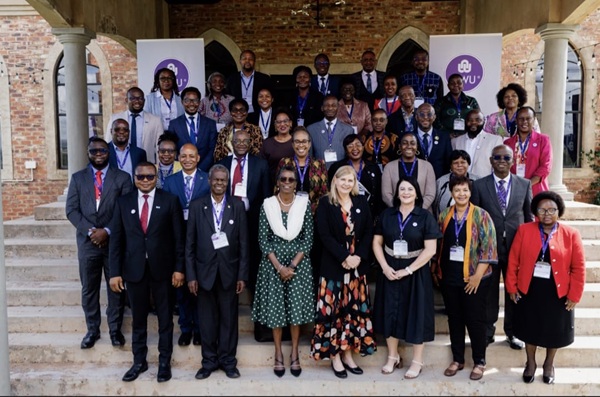
Members of different health professions regulatory bodies, education leaders and technical experts from 17 African countries attended the continental initiative to strengthen the quality of health professions education across Africa.


