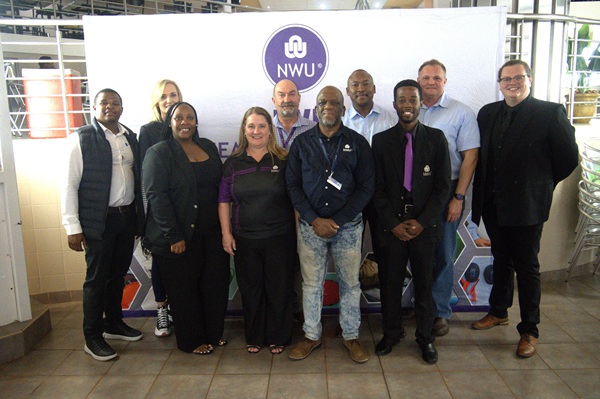
The North-West University (NWU) has taken a bold step forward in its sustainability journey with the unveiling of its first Reverse Vending Machine (RVM). The launch, held at the NWU Student Centre (SS), marked a proud moment for the institution and its commitment to environmental responsibility.
During the event, the NWU's Director of Safety, Health & Environment (SHE), Leslie Barends, delivered the welcoming remarks and explained the initiative. "As Director of Safety, Health & Environment at the NWU, I am delighted to welcome this initiative," he said. "The launch of the Reverse Vending Machine represents a meaningful stride in our university's sustainability journey — not just as a recycling measure, but as a tool for cultivating environmental responsibility among students and staff." He added, "By allowing our campus community to recycle plastic bottles and aluminium cans and earn rewards through the Imagined Earth app, we are making sustainability part of daily campus life. This RVM shows that we are committed to turning environmental values into practical action."
The RVM was introduced through a partnership between the NWU and Imagined Earth. The innovative system empowers students and staff to play an active role in responsible waste management. The machine accepts plastic bottles and aluminium cans, rewarding users via the Imagined Earth app—an incentive-driven approach that puts sustainability directly in the hands of the campus community.
Also speaking at the launch was Ntokozo Kunene, Chief Director: Facilities at NWU. "I am very proud of this initiative," he said. "The launch of the Reverse Vending Machine represents a major step forward in our journey toward sustainability, not only reducing waste on campus but empowering students and staff to take responsibility for our environmental footprint." He continued, "This RVM is more than a machine. It is a tangible expression of the NWU's commitment to sustainable practices. By recycling plastic bottles and aluminium cans and rewarding responsible behaviour through the app, we are embedding a culture of environmental awareness in everyday campus life."
This milestone not only enhances the university's recycling efforts but also aligns with the NWU's broader sustainability goals. And this is only the beginning, the NWU plans to roll out additional RVMs across its other campuses during 2026, expanding the reach of this initiative and reinforcing its vision of cultivating environmentally conscious practices across all campuses. The introduction of the RVM marks a promising step towards a greener future, and the NWU anticipates that this innovation will inspire greater participation in recycling and environmental stewardship among students and staff alike.