
The North-West University (NWU) marked a significant milestone in global media and communication scholarship when it hosted the first regional conference of the International Association for Media and Communication Research (IAMCR) to be held on African soil.
By Oscar Mosiane, Sibusiso Moledi and Ntombikayise Mahuma
Hosted by the Faculty of Humanities at the Potchefstroom Campus from 1 to 2 June 2026, the conference brought together scholars, journalists and media practitioners from South Africa, the African continent and elsewhere in the world, including delegates from the United States.
Convened by the Political Communication Research Section of the IAMCR, the event was held under the theme “Reimagining Media and Political Communication in Africa: Voices, Power and Participation in the Digital Age”.
The decision by the IAMCR, one of the leading organisations for media and communication researchers in the world, to host its first regional conference in Africa represents an important moment for the academic community of the continent and reflects the growing influence of African scholarship in shaping global conversations on media and communication.
Opening the conference, Prof. Dumi Moyo, executive dean of the Faculty of Humanities, highlighted the significance of the contribution made by Africa to contemporary debates on communication and media.
“At a time when digital platforms, artificial intelligence, misinformation and global inequalities are reshaping the communication landscape, Africa offers not only challenges to be studied but perspectives from which the world can reimagine media and communication systems,” he said.
Prof. Moyo noted that the IAMCR plays a critical role in connecting scholars from different regions of the world and fostering meaningful dialogue between the Global North and the Global South.
The conference programme addressed some of the most pressing issues confronting societies globally, including misinformation and disinformation, artificial intelligence in elections, media freedom, protest movements, digital participation and the future of community radio.
Addressing delegates on the second day, Prof. Jeffrey Mphahlele, the NWU deputy vice-chancellor for research and innovation, community engagement, postgraduate studies with assigned function of the Vanderbijlpark Campus, emphasised the value of international academic engagement and collaboration.
“You have African countries, but you also have countries outside Africa, clearly indicating our global reach and relevance in terms of our quest for collaboration,” he said.
He added that the conference theme was particularly relevant in an era increasingly shaped by algorithms, platform power and the rapid spread of misinformation.
The conference featured keynote addresses by leading voices in media and communication. Dr Lungile Binza, chief operations officer of the South African Broadcasting Corporation (SABC), explored the rise of streaming platforms and their potential to promote authentic African stories and content. Prof. Robert B Horwitz from the University of California, San Diego, examined the appeal of Trumpism and its implications for contemporary political communication.
Beyond scholarly exchange, the conference provided a platform for strengthening international partnerships and fostering collaboration among the researchers, practitioners and institutions committed to advancing democratic communication.
As the first IAMCR regional conference hosted in Africa, the event underscored the growing contribution of the continent to global media and communication research, while positioning the NWU as an important hub for international academic dialogue and innovation.
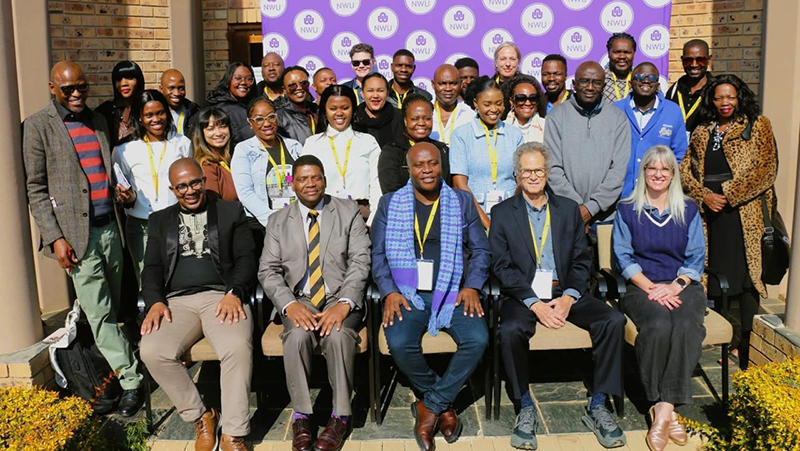
The NWU hosted the first regional conference of the International Association for Media and Communication Research.


