
Rural livestock farmers often travel long distances to access animal healthcare. North-West University (NWU) graduate Tshepo Selaledi is working to change that through a private animal health practice that is bringing preventive healthcare, farmer education and professional animal health services closer to communities in North West.
Tshepo, an animal health technician and founder of Madibogo Animal Health Facility, established the practice three years ago after identifying the shortage of accessible and affordable animal healthcare services in rural areas. Based in Madibogo, the facility serves emerging and small-scale livestock farmers, as well as household animal owners in surrounding communities.
Despite limited resources, Tshepo continues to reach clients by bicycle, ensuring that farmers have access to basic animal healthcare. He says his long-term goal is to expand the facility and improve services for rural communities.
The practice offers primary animal healthcare services, including vaccinations, deworming, parasite control, heartwater prevention, wound management, nutritional support, animal health advice, and the supply of animal health products and supplements. Farmer education on disease prevention, livestock management and responsible animal care also forms part of its work.
Tshepo says his decision to enter the profession was shaped by the realities he witnessed while growing up.
"My passion for helping rural farmers and improving animal welfare inspired me to pursue a career in animal health. Growing up, I witnessed the challenges farmers face in accessing animal healthcare services, and I wanted to be part of the solution. Today, I am committed to providing affordable primary animal healthcare, educating farmers and promoting disease prevention to improve livestock productivity and support rural communities," he says.
After completing his Animal Health qualification at the NWU’s Mahikeng Campus, Tshepo used the knowledge and practical skills acquired during his studies to establish his own business. He says the university equipped him with expertise in disease prevention, diagnosis, treatment and livestock management, while also emphasising professionalism, ethics and community service.
His entrepreneurial journey was not without obstacles. Operating without external funding meant that every rand generated by the business had to be reinvested into purchasing medicines and equipment and expanding services. Building trust among farmers also required persistence and consistent service delivery.
The registration of the facility with the South African Veterinary Council remains one of his proudest milestones. He says it demonstrates that the practice meets the professional and ethical standards required for animal healthcare and gives farmers confidence that they are receiving services from a qualified and accountable animal health technician.
His professional development has also been strengthened through participation in the Phase 2 programme of the Food and Agriculture Organization, How to Build a Successful Primary Animal Health Care Business, which provided additional business development skills.
Beyond treating animals, Tshepo believes animal health professionals play an important role in strengthening the agricultural sector in South Africa. By preventing disease outbreaks, improving livestock productivity and educating farmers, they contribute to food security, animal welfare and sustainable livestock production.
He encourages current NWU students to embrace practical training and consider entrepreneurship as a career path.
"Do not wait for the perfect opportunity to start making a difference. If employment opportunities are limited, consider creating your own path through entrepreneurship. Start small, remain committed, and reinvest in your growth. Success takes time, but consistency and perseverance will open doors," he says.
Tshepo says support from partners and sponsors would help him expand the reach of Madibogo Animal Health Facility and improve access to professional animal healthcare in underserved rural communities.
"Those who are willing to sponsor the facility are more than welcome," he says.
For enquiries or support, Tshepo can be contacted on 084 319 5022 or via email at tslarmp@gmail.com.
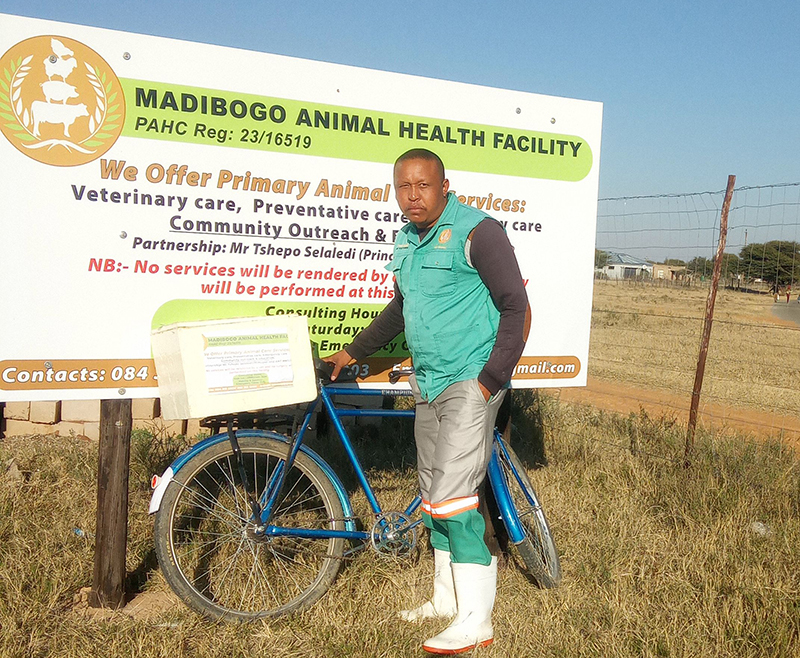
NWU Animal Health graduate Tshepo Selaledi is expanding access to primary animal healthcare for livestock farmers in Madibogo and surrounding rural communities, often travelling by bicycle to reach farmers.


