
Technical and Vocational Education and Training (TVET) colleges and universities are central to solving South Africa’s skills crisis, bridging the gap between practical training and academic knowledge to drive economic growth.
It is within this context that the North-West University (NWU) and Vuselela TVET College held high-level talks on 23 March 2026, setting the stage for a strategic partnership aimed at reshaping skills development, strengthening research collaboration and expanding socio-economic impact.
Leading the engagement were NWU principal and vice-chancellor, Prof. Bismark Tyobeka, and Vuselela TVET College principal Priscilla Lehoko. The discussions focused on how the two institutions can combine their strengths to respond more effectively to the country’s urgent skills shortages.
Prof. Tyobeka made it clear that collaboration is no longer optional, but essential.
“We are intentional about building collaborative frameworks that respond to national priorities,” he said. “We are also able to direct resources from our budgets to support infrastructure upgrades where possible, ensuring that partnerships such as this one lead to real outcomes.”
He stressed that stronger alignment between universities and TVET colleges could unlock new postgraduate pathways while directly addressing the shortage of skilled artisans.
“There is a clear gap in skills, especially in artisan development,” Prof. Tyobeka said. “By formalising relationships and identifying priority areas, we can work together to close these gaps.”
He also pointed to the NWU’s planned School of Mines and Mining Engineering as a key opportunity, highlighting the critical role TVET colleges play in producing the technical skills required by the mining sector.
Speaking from a TVET perspective, Priscilla said the partnership could be a turning point in strengthening research and innovation capacity.
“Research and innovation are areas where universities can provide important support,” she said. “Our focus remains on technical skills development, and working with the NWU would strengthen our efforts.”
She highlighted the urgent need to expand student exposure to occupational programmes and improve employability through stronger partnerships. Infrastructure challenges, along with declining participation in mathematics and science, remain pressing concerns.
Ntsikie Kote-Nkomo, executive director for strategy and strategic projects, brought a broader economic lens to the discussion, calling for collaboration that directly responds to industry and value-chain demands.
“We must continue asking what our economy needs and how we respond together,” she said. “Entrepreneurship is still underdeveloped, and we need to position it not only as an alternative to employment, but as a driver of economic participation.”
She pointed to the NWU’s growing entrepreneurship ecosystem as a platform that could support high-performing TVET students and artisans, while also calling for greater recognition of TVET institutions' role in the economy.
The conversation also opened the door to broader partnerships, including collaborations with local municipalities to strengthen service delivery by improving technical skills pipelines.
Nkosinathi Tom, director for strategic partnerships, highlighted existing connections between student leadership structures at the two institutions and proposed formalising these engagements, including opportunities for Vuselela student leaders to participate in the NWU’s Student Leadership Academy.
Both institutions agreed that formalising the partnership would unlock structured collaboration across key areas, including skills development, infrastructure support, entrepreneurship, and student development.
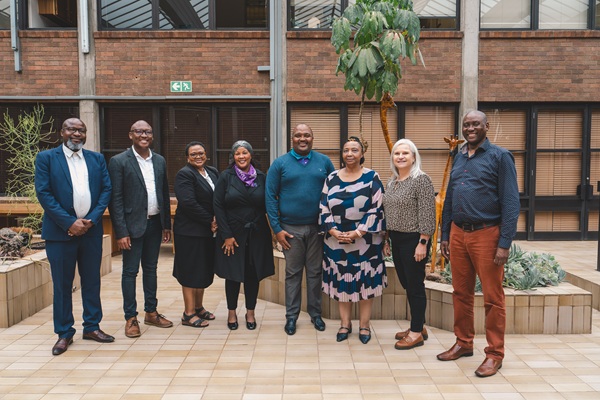
Strengthening pathways for the next generation


