
By Ashleigh Kootzen
The School of Agricultural Sciences in the Faculty of Natural and Agricultural Sciences (FNAS) of the North-West University (NWU) and Grain SA brought together representatives from more than 30 organisations at Pienaarskamp on Friday, 16 October 2026, to explore how closer collaboration between academia and the agricultural industry can strengthen research, support producers and prepare graduates for the workplace.
The NWU–Grain SA Academia and Industry Collaboration Workshop focused on aligning agricultural research and education with the needs of grain and row-crop producers. Discussions covered graduate employability, curriculum development, collaborative research, access to specialist expertise and ways to translate research into practical value for the sector.
The FNAS deputy dean for research and innovation, Prof. Stuart Piketh, emphasised the importance of collaboration between industry, government and academia in advancing sustainable agriculture and strengthening food security in South Africa. He also highlighted the need to ensure graduates are equipped to contribute meaningfully when they enter the workplace.
Turning research into practical impact
Prof. Gerhard du Preez, deputy director of the School of Agricultural Sciences, outlined the development at Pienaarskamp and its potential to support long-term agricultural trials, postgraduate research, practical student training and industry-led initiatives. Participants welcomed progress at the site and noted the value of repeatable trials across research locations to strengthen findings.
Participants also stressed that research findings need to reach producers and industry stakeholders through targeted communication, industry publications, social media and events. They called for universities and industry organisations to share knowledge more openly and demonstrate the practical value of research.
Preparing graduates for the realities of agriculture
Prof. Nomali Ngobese presented an overview of the academic offerings and future programme considerations of the school, prompting discussion about the knowledge and competencies graduates need. Areas identified for further curriculum consideration included seed biology and health, regulatory requirements, sustainable agriculture, biodiversity, crop protection, data interpretation and precision farming.
Industry representatives emphasised that graduates need to apply scientific knowledge in the field, interpret data, understand regulatory requirements and work effectively with producers and industry professionals. Digital agriculture and artificial intelligence were also highlighted as technologies students should encounter earlier in their studies. Internships, work-integrated learning, industry presentations and practical exposure were proposed as ways to strengthen the transition into employment.
Postgraduate funding and training opportunities were also discussed.
Balancing industry needs with academic research
Mike Ellis, manager of Research Coordination and the NAMPO Academy at Grain SA, presented the perspective of the organisation on the needs of grain and oilseed producers and the role universities can play in addressing sector challenges.
Participants agreed that partnerships should deliver practical value while preserving the broader responsibility of universities to advance scientific knowledge. Fundamental research and technologies with benefits across the sector remain important, while collaboration can give industry access to expertise, infrastructure and research capacity.
Potential areas included sustainable production systems, soil health, crop protection, disease and weed resistance, climate resilience, digital agriculture and improved data integration.
The importance of clear agreements was also highlighted. Project scope, timelines, costs, confidentiality, data ownership, intellectual property and publication arrangements should be discussed before work begins. Flexible models are needed to suit different projects.
Turning discussion into collaboration
Participants explored opportunities involving fourth-year research projects, postgraduate partnerships, company-managed trials, student exposure and training and shared infrastructure at Pienaarskamp. They noted that student projects can address specific industry questions when objectives, timelines and communication arrangements are clear. Agricultural seasonality may also require some research to begin outside the conventional academic calendar.
Proposed research opportunities included investigating the feasibility of canola production in North West, addressing crop-protection challenges and exploring how digital technologies and artificial intelligence could improve access to agricultural information. One concept was an intelligent platform offering producers tailored weather information and agricultural guidance based on their production circumstances. Participants also stressed the importance of incorporating producers’ experience and indigenous knowledge into research.
The workshop considered an industry advisory panel to provide ongoing input into academic offerings, emerging industry needs, graduate quality and employability. While formal curriculum changes must meet accreditation and institutional requirements, short learning programmes, targeted training and smaller projects could provide more immediate responses. Participants noted that the panel would need to be representative, focused and committed to tangible outcomes.
Building sustainable partnerships
Closing the workshop, Prof. du Preez reiterated the commitment of the NWU to industry engagement and the strategic importance of agriculture to the university.
The discussions at Pienaarskamp highlighted a shared interest in strengthening the links between agricultural research, education and industry practice. Turning ideas into action will require clear objectives, appropriate funding, defined responsibilities and continued engagement. The next steps are to refine the opportunities identified, explore suitable research and training partnerships and determine the practical arrangements needed to move them forward.
Through its engagement with Grain SA and other industry stakeholders, the NWU aims to connect academic expertise with agricultural practice, support research, develop future-ready graduates and contribute to a more resilient agricultural sector in South Africa.
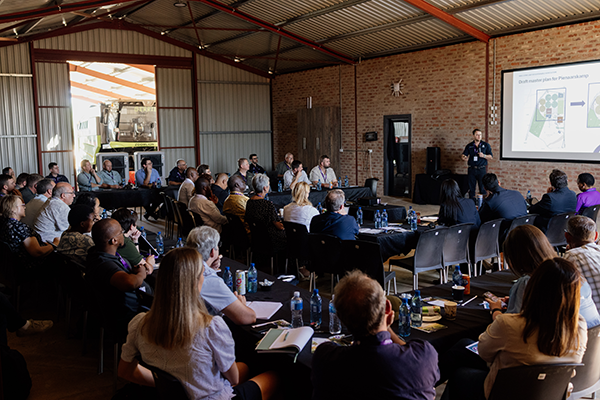
Delegates from more than 30 organisations attending the workshop between the School of Agricultural Sciences and Grain SA.


