
The North-West University (NWU) has strengthened its contribution to South Africa’s multilingualism agenda with three university-affiliated language experts now serving on the National Task Team Towards a Unified National Language Action Plan.
Prof. Herculene Kotzé, an associate professor of Language Practice in the Faculty of Humanities, was recently appointed by the Minister of Sport, Arts and Culture, Gayton McKenzie, to serve on the national task team. She joins Prof. Langa Khumalo, chief director of the South African Centre for Digital Language Resources (SADiLaR) and an extraordinary professor at the NWU, who has been appointed as deputy chairperson of the task team, as well as Juan Steyn, SADiLaR operations director, who also serves as a member.
The appointments follow resolutions adopted at the National Language Summit held in Cape Town in March 2026, which highlighted the need for a coordinated national response to challenges affecting the implementation of multilingualism in South Africa. The National Task Team comprises experts from government, academia, business and civil society who have been tasked with developing and guiding the implementation of a unified national language action plan aimed at strengthening multilingualism and improving language access across the country. For Prof. Kotzé, the appointment represents both recognition and responsibility. “This appointment is an honour, and I believe it is a great responsibility,” she said. “Personally, it represents an opportunity to contribute to a cause that is closely linked to human dignity, inclusion and social justice. Professionally, it aligns strongly with my work in higher education and my interest in community engagement, societal justice and impact.”
The task team will focus on developing strategies to improve the implementation of multilingualism and ensure that citizens can access information, services and opportunities in languages they understand. According to Prof. Kotzé, one of the biggest challenges facing South Africa is the gap between progressive language policies and their implementation. “South Africa has progressive language policies, yet many citizens still encounter barriers when accessing information, services and opportunities in languages they understand best,” she said.
She added that advances in language digitisation, translation technologies and artificial intelligence present significant opportunities for expanding the use of indigenous languages in education, government communication and public services. “The challenge is to translate our policy aspirations into experiences of inclusion,” she said. Prof. Khumalo, who has been appointed deputy chairperson of the task team, is widely recognised for his leadership in language policy development, digital language technologies and the intellectualisation of African languages. His appointment reflects national recognition of his contribution to language transformation and multilingualism. Juan brings extensive experience in digital language resource development and language technology innovation through his work at SADiLaR.
Prof. Kotzé believes the work of the task team will help create a practical and coordinated framework that translates language policy into action. “The inclusion of indigenous languages should not be viewed only as a cultural imperative but also as a developmental one,” she said. “Citizens are better able to access services, exercise their rights, participate in democratic processes and engage with educational opportunities when communication occurs in languages they understand.” She said her work at the NWU has prepared her well for the national role through engagement with diverse communities and stakeholders across different linguistic and social contexts.
She also highlighted the university’s long-standing collaboration with the Department of Sport, Arts and Culture through a language bursary scheme that has benefited students over several years. Encouraging students, researchers and language practitioners to remain committed to multilingualism, Prof. Kotzé said language diversity should be viewed as a driver of inclusion and social development. “The linguistic diversity of South Africa is one of its greatest strengths, and each of us has a role to play in ensuring that it remains a source of opportunity, understanding and social cohesion,” she said.
The appointments of Prof. Kotzé, Prof. Khumalo and Juan place the NWU and SADiLaR at the centre of national efforts to advance multilingualism, language development and equitable access to information and services for all South Africans.
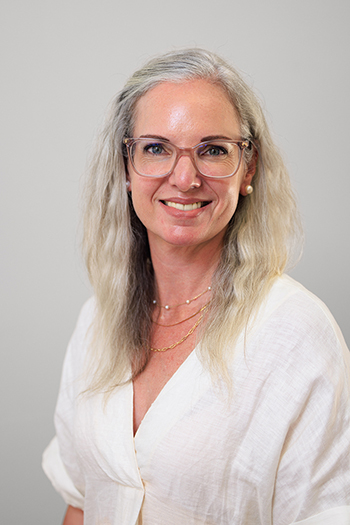
Prof. Herculene Kotzé
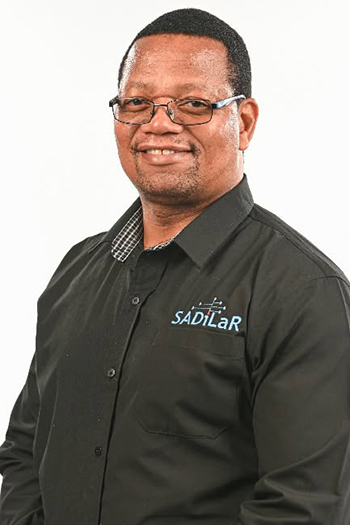
Prof. Langa Khumalo

Juan Steyn


