
My participation in a side event on nuclear power in Africa at the IAEA General Conference in Vienna, followed by the International Ministerial Conference on Nuclear Power hosted by the Republic of Korea in Incheon from 27 to 29 October, reinforced my conviction that a nuclear renaissance is taking shape. Across these discussions, energy security, industrial development, decarbonisation and the people needed to deliver nuclear programmes have moved to the centre of the conversation.
The momentum extends beyond conference halls. Poland is advancing preparations for its first nuclear power station. Kazakhstan has selected Rosatom to lead the consortium for its first plant. Viet Nam is rebuilding the institutional foundations of its revived programme. Egypt and Türkiye already have reactors under construction. These countries are at different stages, but together they demonstrate a widening determination to include nuclear power in national development strategies.
Africa’s ambitions were also evident at the Russia–Africa Summit held in Moscow in late October 2026 and hosted by President Vladimir Putin. Ghana’s foreign minister subsequently announced cooperation with Russia towards a 2,000 MW nuclear plant. Rosatom reported discussions on large plants with Uganda, Ghana, Ethiopia and Egypt, and on floating plants with Egypt, Tanzania, Togo and Namibia. Rwanda signed a memorandum on assessing and developing its nuclear infrastructure, building on cooperation on a small nuclear plant and a nuclear science and technology centre.
These developments deserve attention and accurate description. Some are government announcements; others are negotiations reported by suppliers or agreements on infrastructure development. They are not all financed projects, construction contracts or irrevocable technology choices. An agreement to explore nuclear cooperation does not produce electricity. The distance between political enthusiasm and an operating plant is precisely where the renaissance could falter.
South Africa’s Integrated Resource Plan 2025 provides for 5,200 MW of new nuclear capacity by 2039. On 10 November 2026, at the well-attended South African Nuclear and Clean Energy Conference in Irene, Centurion, Minister of Electricity and Energy Dr Kgosientsho Ramokgopa reaffirmed the government’s commitment to bringing that capacity onto the grid by 2039. He also raised the possibility of increasing total nuclear capacity to 10 GW beyond 2039.
I moderated a fireside chat on implementing the Integrated Resource Plan and learning from international nuclear programmes. Eskom Group Chief Executive Dan Marokane and Necsa Chief Executive Loyiso Tyabashe were among the panellists. The discussion brought the challenge of execution into focus. South Africa has operating experience, nuclear institutions and a scientific base on which to build. Delivering on the plan will also require credible financing, a capable project owner and a workforce ready to build and operate the plants.
The minister placed particular emphasis on rigorous public participation. He confirmed that Eskom had submitted its feasibility work and that the department was preparing a proposed determination for public comment. That process is an early test of how South Africa intends to deliver its nuclear programme. The consultation gives the public an opportunity to raise concerns while submissions can still inform the decision.
I support nuclear expansion. That is why I believe its potential showstoppers must be discussed openly, while there is still time to address them.
The first is financing that looks attractive when announced but becomes unaffordable during execution. A nuclear project requires substantial capital long before it earns revenue. Delays add to interest costs; foreign-currency debt can become more expensive when local currencies weaken. A competitive construction quotation can therefore coexist with an unaffordable electricity tariff.
Finance ministries must lead the affordability assessment, working with energy ministries, utilities and independent advisers. In South Africa, National Treasury and the Department of Electricity and Energy should require financing options that disclose construction risk, exchange-rate exposure, guarantees and the consequences for consumers. Export-credit agencies, development banks and private investors should help allocate risks to those best able to manage them. No financing model makes risk disappear; any transfer of risk to taxpayers or future electricity users must be explicit.
The World Bank’s renewed engagement with nuclear energy through its June 2025 partnership with the IAEA is encouraging. It creates an opening for stronger institutional and financing support, rather than a promise that every proposed reactor will receive a loan. African governments should use that opening to prepare credible projects and seek instruments to reduce risk.
The second showstopper is weak governance. Nuclear programmes outlast electoral terms and require durable decisions. They also involve contracts large enough to attract political interference and corruption. South Africa’s 2017 nuclear judgment remains a warning: key determinations and decisions concerning international agreements were set aside because the processes were unlawful. Constitutional compliance is part of project viability.
The Presidency and Cabinet must establish clear mandates and ensure continuity, while Parliament exercises scrutiny and Treasury enforces procurement discipline. Following the consultation, the Department of Electricity and Energy can summarise the concerns raised by the public and explain how it considered and addressed them in reaching its decision. Procurement authorities should publish evaluation principles and disclose conflicts of interest. Independent assurance must accompany major spending decisions.
Third, countries can buy technology before developing the capacity to act as competent owners. A vendor can design and construct a plant; it cannot substitute for a national institution capable of specifying requirements, assessing bids, controlling changes and accepting responsibility for safety and performance. An understaffed owner will remain vulnerable even under an apparently comprehensive turnkey contract.
Utility boards and chief executives must therefore fund the project delivery organisation before the main procurement process begins. Eskom needs clear technical authority, experienced project controls and integrated commercial, engineering, legal and construction teams. Its work on large reactors and small modular reactors (SMRs) should draw on shared expertise where appropriate, without blurring accountability. Koeberg can contribute experience, but Eskom must protect the staffing and leadership needed for safe operation. Any transfer of personnel requires an explicit plan to fill the resulting vacancies.
Fourth, regulatory capacity can become a bottleneck if governments fund reactor ambitions while neglecting the institutions that must scrutinise them. The answer is early preparation: sufficient specialist staff, realistic review schedules, sound applications and cooperation between regulators. It is never pressure to issue a licence by a political deadline.
Governments must resource independent regulators; regulators must plan their capacity and cooperate internationally while retaining national responsibility. In South Africa, the National Nuclear Regulator should have a credible workload and skills plan aligned with anticipated applications. The IAEA can support peer reviews and infrastructure development. Its Milestones Approach already provides a framework covering 19 infrastructure issues that newcomer countries must address.
Fifth, the world risks announcing more reactors than its people and factories can deliver. Nuclear construction requires experienced project managers, inspectors, welders, electricians, civil engineers and quality specialists, alongside reactor scientists. These skills take years to develop. Competition for qualified suppliers and scarce expertise can increase costs and undermine schedules.
Employers must lead the development of quantified workforce and supplier plans because they know what each project will need and when. Universities, TVET colleges and training authorities should translate those requirements into education, apprenticeships and supervised experience. Governments must support this pipeline and create the conditions needed to retain skills. For South Africa, this means connecting nuclear education, including our work at the NWU, to funded employment pathways. Localisation should grow through achievable qualification milestones; unsupported percentage targets can create delays rather than industrial capability.
Sixth, enthusiasm for SMRs must be matched by evidence. SMRs could suit smaller systems, industrial applications and phased investment. However, a smaller reactor does not automatically deliver cheaper electricity, a shorter licensing process or an established supply chain. The commercial readiness of different designs varies considerably.
Utilities and procurement authorities should assess design maturity, reference projects, licensing progress, fuel availability and the supplier’s financial strength. Governments should distinguish the objectives and funding of a demonstration project from those of a commercial electricity programme. Where advanced designs require specialised fuels, supply arrangements must be credible before deployment commitments are made. Africa should negotiate partnerships that build capability without transferring disproportionate development risk to electricity consumers.
Seventh, a reactor can be technically sound and still be a poor fit for its electricity system. Some African grids cannot readily absorb the loss of a large generating unit. Weak transmission networks, unreliable electricity purchasers and insufficient demand can make an otherwise promising project unbankable. Cooling-water availability, drought, flooding and coastal hazards also require serious assessment.
System operators and utilities must lead integrated studies of unit size, demand, transmission, reserves and site resilience before technology selection. South Africa’s National Transmission Company must be involved early in planning connections and network reinforcement. Across the continent, regional power pools can help develop larger markets, but cross-border nuclear projects need enforceable purchasing arrangements, clear liability provisions and credible payment security. Regional ambition cannot replace these foundations.
Eighth, nuclear partnerships create obligations that extend across generations and geopolitical changes. Fuel supply, specialist services, software access, export permissions and financing channels can all be exposed to disruption. These dependencies deserve careful examination, whether the partner is Russian, Chinese, American, French, Korean or from any other supplier country.
Energy ministries, foreign ministries, utilities and legal advisers must jointly assess these dependencies. Contracts should address continuity of service, access to technical information, dispute resolution and disruption scenarios. Fuel diversification should be pursued where technically feasible and licensed; inventories and alternative service arrangements should reflect realistic risks. African governments must negotiate as informed owners of national programmes, with independent advice alongside vendor assistance.
Finally, public trust, waste management and security can stop a programme if treated as matters to resolve after procurement. Communities deserve answers about safety, land, water, emergency arrangements, jobs and long-term liabilities. They also deserve honest accounts of costs and uncertainties. Public confidence cannot be sustained by promising that nuclear power has no risks.
Governments and operators must establish ongoing community engagement, transparent environmental processes and properly funded emergency preparedness. Operators remain responsible for safe operation and security, while regulators provide independent oversight. In South Africa, the Department of Electricity and Energy, the National Radioactive Waste Disposal Institute, generators and Treasury must ensure that waste management and decommissioning arrangements have clear responsibilities, credible funding and regulatory scrutiny. Cybersecurity must be built into procurement and operations from the outset.
At the continental level, the African Union and the African Commission on Nuclear Energy should drive practical cooperation: shared training, stronger regulatory networks and access to independent project advice. The African Development Bank and other development-finance institutions should examine how their mandates can support project preparation, grids and institutional readiness. South Africa should contribute its experience through partnerships with measurable outcomes, while recognising that each country retains responsibility for its own programme.
For South Africa, I propose a Cabinet-mandated readiness programme over the next twelve months, coordinated by the Department of Electricity and Energy. Treasury should lead work on financing and fiscal risk; Eskom should lead owner capability and project preparation; the transmission company should lead grid integration; and the education and industry departments should coordinate workforce and supplier development. The regulator must independently report its readiness needs without becoming responsible for promoting the programme. Progress should be reported publicly each quarter, with evidence-based decisions at agreed milestones.
Globally, governments and industry need to reward reliable delivery: mature designs, realistic schedules, repeat construction, qualified suppliers and transparent costs. In Africa, success will depend on building institutions alongside power stations. In South Africa, it will depend on converting accumulated expertise and policy intent into disciplined execution.
The nuclear renaissance is an opportunity we should pursue with confidence and seriousness. Its most dangerous showstopper would be our failure to prepare for the obstacles we can already see. The people who announce nuclear ambitions must now take responsibility for creating the conditions in which those ambitions can succeed.
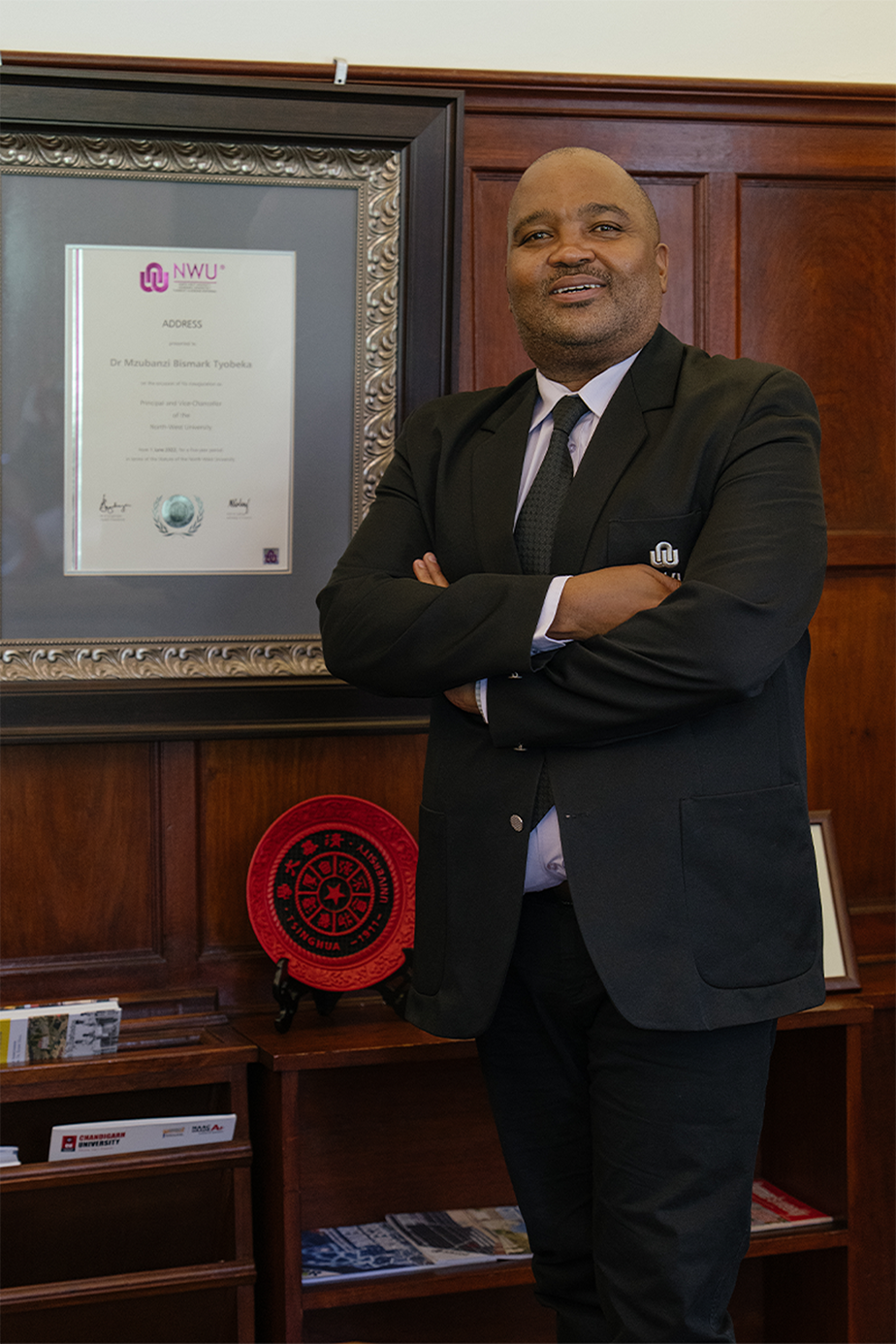
Prof. Bismark Tyobeka, principal and vice-chancellor of the North-West University (NWU) is a former chief executive of South Africa’s National Nuclear Regulator.


