
The term ‘multilingualism’ can often be used as window-dressing to obscure a lack of commitment to our national inclusivity cause. However, proclaiming a commitment to multilingualism is very different from being an active participant in the promotion of multilingualism.
According to Prof. Linda du Plessis, Senior Deputy Vice-Chancellor of the North-West University (NWU), it is imperative that South Africa’s higher education institutions realise that multilingualism is more than policy compliance: it is a critical life skill in an interconnected, multicultural, and digitally driven world.
“To study in a multilingual environment equips students and staff with adaptability, cultural intelligence, empathy, and cognitive flexibility. It nurtures the ability to engage across differences, which is a competency increasingly demanded in workplaces, research collaborations, and civic life. In this sense, multilingualism prepares graduates not only for employment, but for leadership in diverse societies,” she explains.
In this regard, the NWU has distinguished itself as an institution where multilingualism is not only embraced but incorporated into its many facets.
“At the NWU, multilingualism is not an abstract ideal; it is a lived institutional commitment. Our functional multilingual policy ensures that, where possible and not restricted by resources or regulatory factors, classes are offered in more than one language, specifically Afrikaans and English, while materials and communication are provided in the other official NWU languages, namely Setswana and Sesotho, wherever possible. In doing so, we move beyond symbolic recognition of languages and actively embed multilingualism in teaching, learning, communication, and community engagement, while taking into account the diversity and multiplicity of our students and staff. We also ensure that we demonstrate our multilingual commitment across our communication platforms, including websites, and by supporting our deaf staff and students through the provision of South African Sign Language (SASL),” she says, stressing that the NWU recognised this necessity through the establishment of its Language Directorate.
“The Language Directorate was founded to ensure that multilingualism is prioritised both institutionally and operationally. The Directorate provides a coordinated and structured approach to language planning, implementation, and monitoring across faculties and divisions. By embedding multilingualism into governance structures, academic processes, and student support systems, the Language Directorate reinforces the understanding that language is central to academic excellence, equity, and institutional transformation.”
Prof. Du Plessis notes how the rise of multilingualism is embraced both by national and multinational organisations. The United Nations’ Multilingualism Matters campaign and the planned launch of the UNESCO Global Roadmap on Multilingualism in the Digital Era in December 2025 signal a renewed international commitment to language equity. Since the adoption of the UN General Assembly’s Multilingualism Resolution in June 2022, momentum has continued to build worldwide.
“This global movement affirms what South Africa’s Constitution (Section 6(4)), the Official Languages Use Act (2012), and the 2020 Language Policy Framework for Public Higher Education Institutions have long recognised: language equity and respect for all official languages are essential to dignity, inclusion, and meaningful participation.
At the NWU, we take this responsibility seriously. We have expanded our official languages to four — English, Afrikaans, Setswana, and Sesotho — and continue to invest in multilingual teaching, terminology development, interpreting and translation services, and accessible language learning opportunities for staff and students.
Progress since the approval of faculty and support unit language plans in 2019 has been encouraging, particularly in advancing Setswana and Sesotho as languages of learning and teaching. However, the development of African languages for scholarship and innovation remains an ongoing priority requiring sustained investment and collaboration.
Our recent Language Policy review confirms strong institutional support for multilingualism and growing recognition of South African Sign Language as essential to inclusive access. Ultimately, multilingualism is not about favouring one language over another, but about building an equitable language infrastructure that strengthens academic excellence, social cohesion, and inclusive knowledge production.
At NWU, we see language as a unifying force — one that enhances cultural responsiveness, global relevance, and shared intellectual growth."
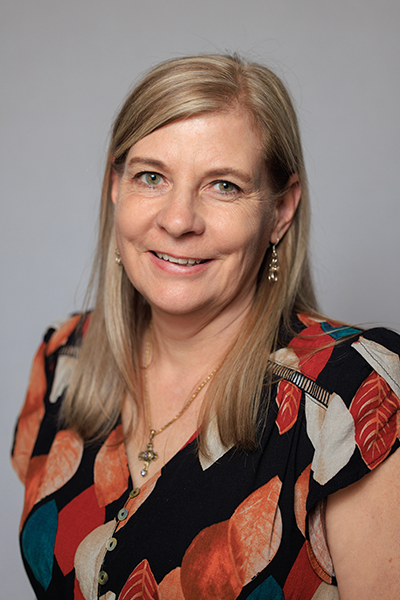
Prof. Linda du Plessis
Senior Deputy Vice-Chancellor: Teaching and Learning


