
As part of the Giving Week activities at the North-West University (NWU), Molelwane Farm at the Mahikeng Campus has turned a fresh harvest into an opportunity to support students who may be facing financial challenges.
In collaboration with the Soil Science Society of South Africa (SSSSA), Molelwane Research Farm harvested and donated cabbages and bunches of spinach on Tuesday, 15 September 2026. The fresh produce was distributed to students who may be experiencing financial difficulties and who could benefit from access to nutritious vegetables.
The initiative demonstrates how the resources of the university, academic programmes and student structures can come together to make a tangible difference in the lives of students.
Hannes Lombard, Molelwane Farm manager, said the initiative reflects the commitment of the farm to contributing to the well-being of the NWU community.
“At Molelwane Research Farm, we are proud that the food we produce can go beyond the farm and directly benefit our students. Giving Week provides us with an opportunity to share what we have harvested with students who may be going through difficult financial circumstances. We hope this initiative will grow and encourage more student structures and residences to work with us so that, where possible, we can continue supporting students with fresh produce,” he said.
The Soil Science student committee also expressed gratitude to the crop production technical supervisor, Thabo Modise, for his support throughout the initiative.
“The committee would like to thank the farm for its support of the initiative on behalf of some of the students who benefited. We are aware of the challenges of food insecurity faced by many of our fellow students due to limited financial resources and it was truly uplifting to witness their smiles and gratitude for the support provided.
“We hope that this initiative continues to grow, enabling us to reach and assist an even larger number of students and members of the community. We are also grateful to Thabo for his invaluable contribution of land, seeds and moral support, which played a vital role in the success of this initiative,” said representatives of the committee.
From the farm to the student community
Molelwane Research Farm is an important part of the agricultural activities of the NWU, providing opportunities for teaching, learning and practical engagement. Through initiatives such as this, the farm is also demonstrating how agricultural production can contribute to the well-being of the broader university community.
The donation of fresh vegetables provides students with access to locally produced food while giving practical expression to the spirit of Giving Week – encouraging the NWU community to look at how available resources, skills and opportunities can be shared to make a difference.
The collaboration of the farm with the Soil Science student committee also highlights the important role that students can play in identifying needs in their community and connecting those needs with available university resources.
An invitation to collaborate
The successful harvest and donation have opened the door for more collaborations between Molelwane Research Farm and student structures.
Student committees, residences and other relevant structures that identify students who may need fresh vegetable support could explore opportunities to collaborate with Molelwane Research Farm, subject to the availability of produce and the appropriate university processes.
Such partnerships could help strengthen a culture of care and mutual support across the NWU, while also showcasing the commitment of the university to using its resources to contribute meaningfully to student success and well-being.
The Molelwane Research Farm initiative serves as a reminder that giving does not always have to be measured in monetary terms. Sometimes, it can begin with something as simple and meaningful as a freshly harvested vegetable.
From the soil to the student – Molelwane Research Farm is helping grow a culture of giving at the NWU.
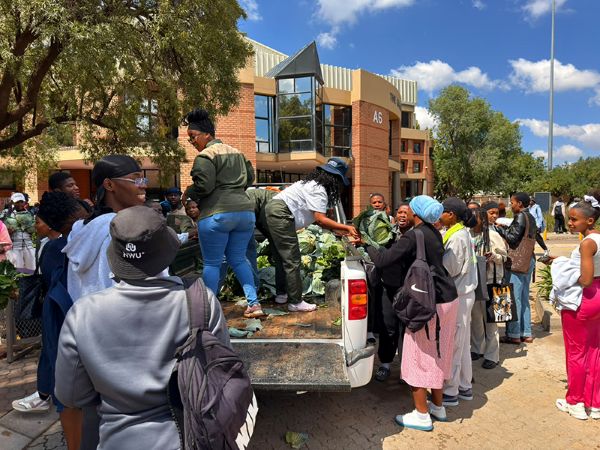
Photo: The Molelwane Research Farm harvested and donated cabbages and bunches of spinach and distributed it to students who may be experiencing financial difficulties and who could benefit from access to nutritious vegetables.


