
By Mafumane Tlhapi and Bongile Nonyukela
While gaining practical experience through community engagement, social work students and nursing teams from the North-West University (NWU) are using menstrual health education to address barriers that prevent girls from fully participating in school.
The Ubudlelane Menstrual Hygiene Programme recently visited Bodiri Primary School in Mahikeng, where students facilitated discussions on menstrual health, dignity and well-being before distributing sanitary pads to learners. The initiative is part of the community engagement activities of the NWU and brings together students from the Faculty of Health Sciences to address needs identified by the school.
According to Dr Mzukisi Xweso, senior lecturer in the Social Work subject group, the programme was developed around the principle of Ubudlelane, which promotes caring, sharing and collective responsibility.
“The Ubudlelane Menstrual Hygiene Programme is a student-led community engagement initiative developed through a collaboration between social work and nursing students at the Mahikeng Campus. Guided by the values of Ubudlelane, which emphasise caring, sharing and collective responsibility, the programme aims to promote menstrual health awareness, restore dignity and support learners who may experience barriers to accessing menstrual hygiene products,” he said.
Dr Xweso explained that Bodiri Primary School was selected after the school management identified psychosocial challenges affecting learners, including concerns around menstrual health, well-being and access to appropriate support. These needs created an opportunity for the university and the school to work together while allowing students to apply their academic knowledge in a community setting.
He said the programme reflects the commitment of the university to community engagement by moving learning beyond lecture halls into communities where students can respond to real social challenges.
“The collaboration between social work and nursing students highlights the importance of interdisciplinary practice. Nursing students contribute health education and information on menstrual hygiene, while social work students provide psychosocial support, promote awareness of learners' rights and well-being, and encourage open discussions that reduce stigma. By working together, students develop teamwork, communication, empathy and community engagement skills while making a positive contribution to society,” he added.
While sanitary pad distribution forms part of the intervention, Dr Xweso said the broader objective of the programme is to equip learners with knowledge and confidence while challenging misconceptions about menstruation.
“Beyond the distribution of sanitary pads, we hope the programme will empower learners with knowledge, build their self-confidence and encourage them to view menstruation as a normal and healthy part of life. We also hope it will reduce the stigma and silence that often surrounds menstruation, allowing learners to seek support when needed and remain fully committed to their education,” he said.
Looking ahead, the initiative plans to include boys in future discussions on menstrual health, respect and shared responsibility. It also aims to incorporate indigenous knowledge systems by involving community members in future activities, thus strengthening partnerships between the university, schools and families to support young people.
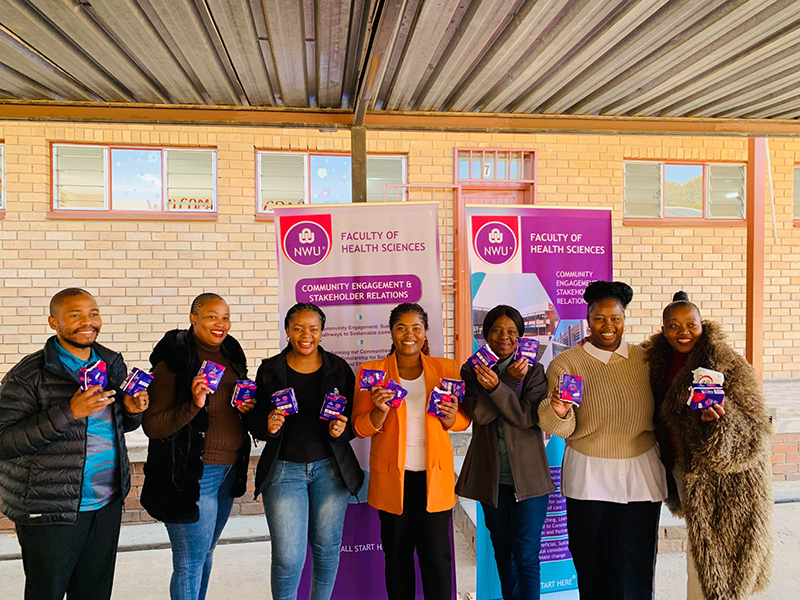
Social work and nursing students from the NWU engaged learners at Bodiri Primary School through the Ubudlelane Menstrual Hygiene Programme.


