
A Mandela Day initiative by the North-West University’s (NWU’s) Faculty of Education has left more than fresh paint and renovated classrooms at Ipeleng Primary School in Montshiwa Township.
The project aimed to improve the learning environment of the school while reinforcing the long-term commitment of the university to community engagement beyond the campus.
Staff, students and partners from the faculty spent several days renovating parts of the school before officially handing over the upgraded facilities on Mandela Day. The work included installing new classroom doors and windows, repainting the administration block and revamping the school garden.
Dr Gordon Sekano, a senior lecturer in the faculty, said the project forms part of the annual Mandela Day outreach programme of the faculty, which identifies a school in need and works with its leadership to address priority challenges.
"The main purpose of the Mandela Day project of the Faculty of Education is to create an enabling and inspiring learning environment for learners while supporting schools in our surrounding communities," he said.
"Each year, the faculty identifies a school in need, engages with its leadership to determine its most pressing needs, and then mobilises staff, students and partners to address those needs. The selection of Ipeleng Primary School was based on the needs identified by the school and the opportunity to make a meaningful and lasting difference to the learning and teaching environment."
For the Faculty of Education, the project is part of a broader strategy to strengthen its relationship with surrounding communities while allowing staff and students to put the values of the university into practice.
"Community engagement is a core pillar of the mission of the Faculty of Education," said Dr Sekano.
"As a faculty dedicated to preparing future educators and contributing to educational development, we believe that our responsibility extends beyond the university campus and into the communities we serve."
He said the initiative allows staff and students to demonstrate active citizenship while helping schools address infrastructure challenges.
"The Mandela Day project provides a practical way for staff and students to demonstrate active citizenship and social responsibility while supporting schools that face infrastructure and resource challenges," he said. "It reflects our commitment to improving educational spaces, strengthening partnerships with communities and contributing to positive social change."
Rather than treating Mandela Day as a once-off event, the faculty has incorporated it into its annual community engagement programme by working with a different school each year.
Dr Sekano said the improvements at Ipeleng Primary School are expected to benefit learners, teachers and the broader community long after Mandela Day has passed.
"We hope that learners will benefit from a safer, more welcoming and motivating environment that enhances their educational experience and instils pride in their school," he said.
"For teachers, we hope the improvements will create a more pleasant and functional working environment that supports effective teaching and learning."
He added that the project also sends a message about the value of partnerships in improving education.
"For the wider community, we hope the project serves as a reminder of the value of collective action and partnership. By working together, we can uplift schools and create lasting benefits for future generations," he said.
Dr Sekano noted that while Mandela Day is commonly associated with 67 minutes of service, the Faculty of Education often extends its outreach over several days to ensure that projects deliver meaningful, sustainable improvements for schools.
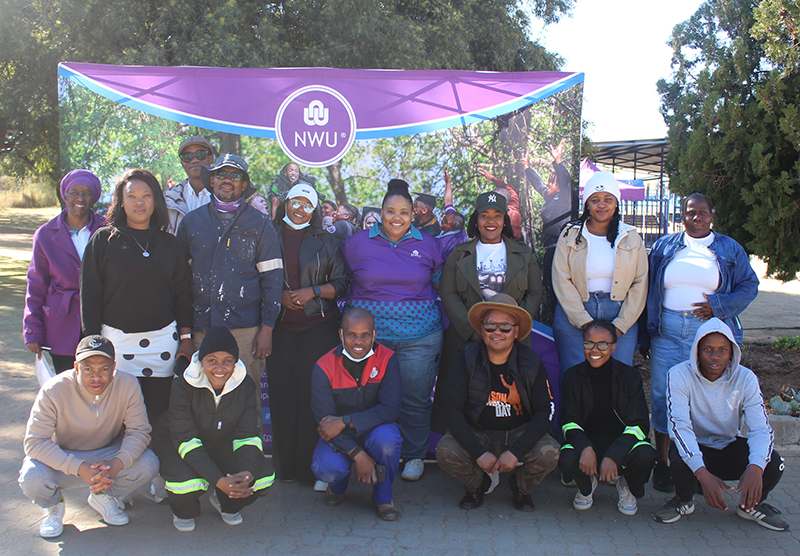
Staff, students and partners from the NWU’s Faculty of Education joined Ipeleng Primary School in Montshiwa Township for the handover of renovated facilities as part of the annual Mandela Day community engagement initiative of the faculty.


