
For Keolebogile “Keo” Matsi, becoming an author of a chapter in an international academic publication represents far more than an academic achievement. It is another milestone in a journey shaped by his roots, resilience, faith, Setswana language and literature, creativity, community engagement and passion for indigenous knowledge.
Keo is an administrative officer for postgraduate funds management in the Research and Postgraduate Support department of the North-West University (NWU). He recently authored a chapter in the international academic book Indigenous Medical Knowledge in Contemporary Healthcare, published by IGI Global Scientific Publishing.
His chapter, titled “Documenting indigenous postnatal care practices of traditional birth attendants in rural South Africa: Preserving maternal health knowledge systems”, documents indigenous postnatal-care practices among traditional birth attendants in Lekung village in North West.
The publication is particularly meaningful because Lekung village is where Keo was born.
Returning to his roots through research
Keo’s research explores indigenous postnatal-care practices, including Botsetse – the use of medicinal plants and culturally grounded approaches to maternal and postnatal care. Using a qualitative research approach involving interviews and observation, the study documents knowledge and practices that have been passed down through generations.
For Keo, returning to Lekung as a researcher was more than an academic exercise. It provided an opportunity to reconnect with his community while contributing to the preservation of knowledge at risk of being lost or marginalised as communities experience modernisation, migration and generational change.
His work contributes to the broader recognition of indigenous knowledge and demonstrates how community-based knowledge can become part of wider academic discourse.
A life-changing experience that shaped his resilience
Keo’s journey has not been without challenges. In 2016, while completing a learnership at a retail store in Mahikeng, he experienced a sudden health crisis with approximately a month remaining on his contract. After travelling home to be with his family, he woke up one morning and discovered that the left side of his body was not moving properly. Initially, he thought he had simply slept on his arm.
Despite his condition, he attended church that Sunday. His father is a pastor, and Keo was involved in preaching. When it was his turn to preach, however, he realised that he could no longer continue normally and instead asked the congregation to pray for him.
His condition deteriorated over the following days. He eventually required assistance with basic daily activities, including bathing, eating, moving around and using the bathroom.
After further medical assessment, a doctor suspected Guillain-Barré syndrome and advised that he should receive urgent hospital care. His family ultimately cared for him at home, and he spent almost a year heavily dependent on others. Throughout this difficult period, his family and partner provided crucial emotional and practical support.
For Keo, the experience became a lesson in faith, resilience, perseverance and the importance of support.
Turning adversity into inspiration
The experience also inspired one of Keo’s gospel singles, “Mphodise”. The song emerged from a period characterised by prayer, uncertainty, hope and a desire for healing and restoration. For Keo, “Mphodise” is more than a song; it represents a deeply personal chapter of his life and how he used faith and creativity to navigate adversity.
The experience did not define his story. Instead, he gradually rebuilt his life and continued pursuing his interests in education, literature, music, motivational engagement and indigenous knowledge research.
A passion for Setswana literature and creativity
Keo’s journey as a published author began before his academic publication.
In 2022, he contributed two Setswana short stories, “Phesegelo Ya Ga Lerato” and “Tiro Ga E Fele”, to Peo Ya Setswana, launched on 23 April 2022 at the Mahikeng Museum. The publication emerged from the Bakgwadi LitFest & Book Launch and the Backward Young Writers Development Programme, exploring the impact of Covid-19 on society.
His literary contribution reflected his passion for using Setswana as a medium of storytelling, cultural expression and social reflection.
Keo’s creativity extends into music. Performing as Keo Matsi, he has released gospel singles including “Mphodise”, “E Sale Ole Modimo” and “Modimo O re File Sebaka”. He also shares Setswana motivational and life-guidance content through his TikTok platform, Thotloetso ka Keo Matsi.
Across his writing, music, motivational work and research, a common thread emerges: using language, knowledge and creativity to inspire others and preserve aspects of culture and community heritage.
From Lekung to NWU
Keo’s professional journey has brought him to the NWU. Being part of an environment that supports research and postgraduate development complements his own journey as a researcher and published author. His story demonstrates how personal experiences, cultural roots and professional opportunities can intersect to create meaningful contributions to society.
From Lekung village to the NWU, and from Setswana storytelling to international academic publishing, Matsi has continued to build on his passion for knowledge and communication.
Acknowledging collaboration
Keo acknowledges Dr Monicca Bhuda for her leadership, coordination, encouragement and dedication throughout the publication journey. He credits her for bringing contributors together around a shared commitment to indigenous knowledge systems and creating an environment that supported the development of the publication. The experience, he says, also highlights the importance of collaboration in ensuring that indigenous knowledge receives greater recognition in academic and scholarly spaces.
Preserving knowledge for future generations
At the heart of Keos research is a simple but important objective: preserving knowledge for future generations. Traditional birth attendants carry knowledge that has developed in communities over generations. Documenting these practices helps to ensure that such knowledge is not lost and provides opportunities for further research and discussion.
For Keo, the fact that his research takes place in the town of his birth makes the achievement particularly meaningful. His journey demonstrates that communities can be both the source of knowledge and the inspiration for research that reaches audiences beyond their immediate surroundings.
A journey of resilience and purpose
From a life-changing health crisis in 2016 to becoming a contributor to Setswana literature and, ultimately, an author in an international academic publication, Keo’s journey is one of resilience, faith, creativity and purpose.
His chapter in Indigenous Medical Knowledge in Contemporary Healthcare represents an important academic milestone, but it is also part of a much bigger story – one rooted in Lekung village and shaped by his commitment to language, culture, knowledge and community.
His journey from Lekung village to an international academic publication demonstrates how personal experiences and cultural roots can become sources of inspiration, research and meaningful contribution.
Ultimately, Keos story is a reminder that where we come from can shape what we contribute, and that even difficult chapters in life can become sources of strength, creativity and purpose.
Publication details
Book: Indigenous Medical Knowledge in Contemporary Healthcare
Publisher: IGI Global Scientific Publishing
Chapter: “Documenting Indigenous Postnatal Care Practices of Traditional Birth Attendants in Rural South Africa: Preserving Maternal Health Knowledge Systems”
Author: Keolebogile “Keo” Matsi
Affiliation: North-West University, South Africa
DOI: 10.4018/979-8-2600-2885-8.ch004
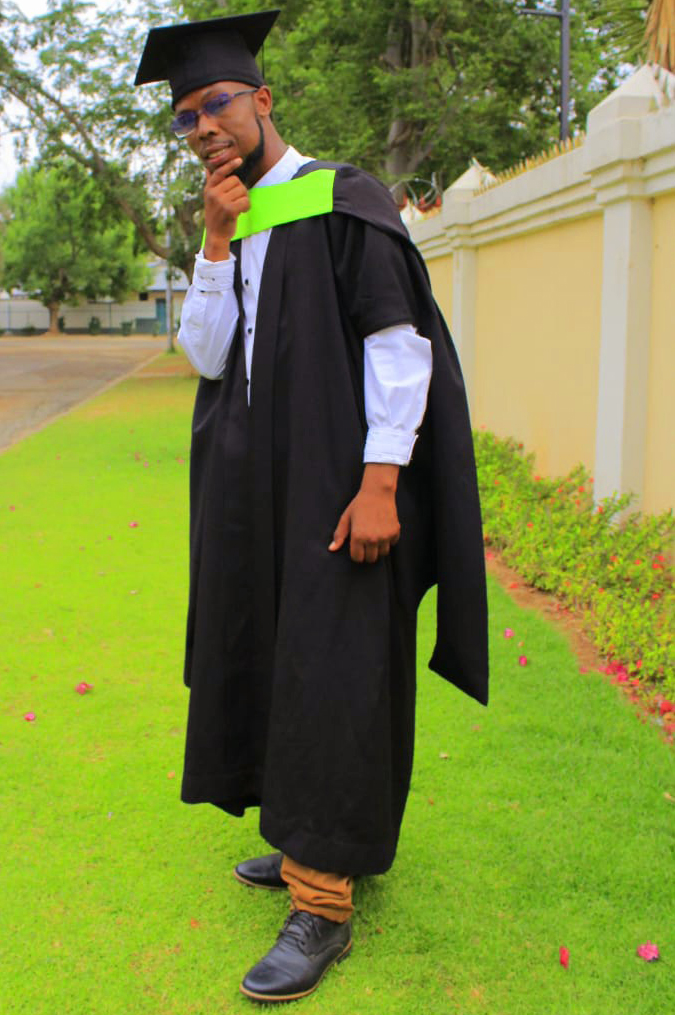
Photo: Keolebogile “Keo” Matsi


