
The North-West University (NWU) proudly congratulates History Education lecturer Dr Mojuta Motlhamme on receiving a PhD in History from the University of the Witwatersrand.
His doctoral research makes a significant contribution to South African historiography. By presenting a comprehensive political biography of Kgosi Lucas Manyane Mangope, the study examines his life from his early years in Lehurutshe through his rise to become the President of Bophuthatswana and his eventual removal from power during the 1994 democratic transition in South Africa.
Drawing on extensive oral interviews and archival sources, Dr Motlhamme's thesis explores the historical, political and social factors that shaped Mangope's leadership and the development of the former homeland of Bophuthatswana.
The study traces Mangope's emergence as leader of the Tswana Territorial Authority in 1968 and his presidency following the establishment of Bophuthatswana in 1977. It examines how his royal upbringing, the history of land dispossession experienced by the Bahurutshe boo Manyana, his apprenticeship in Botswana and his early career in the Native Affairs Department influenced his political ideology and leadership style.
A central theme of the research is the role of ethnicity and separate development in shaping both Mangope's political vision and the trajectory of Bophuthatswana. The dissertation analyses his efforts to transform the homeland into a modern, economically viable state while seeking international recognition during the apartheid era.
At the same time, the research critically examines the opposition to the homeland system Mangope faced from traditional leaders, political activists and local communities. It explores how tensions surrounding governance, political authority and resistance intensified throughout the 1980s and early 1990s, culminating in his removal from office in 1994 as South Africa transitioned to democracy.
Importantly, the dissertation moves beyond simplistic portrayals of Mangope as a puppet of the apartheid government. Instead, it offers a nuanced historical analysis that recognises his political agency, developmental ambitions and strategic decision-making, while also acknowledging the authoritarian and repressive aspects of his administration.
Dr Motlhamme's research argues that understanding Mangope's leadership requires a balanced examination of both his vision for development and the broader political realities of apartheid South Africa. In this way, the study contributes to ongoing scholarly debates about the Bantustan system, homeland governance and the complexities of political leadership during one of the most contested historical periods of the country.
The thesis also raises broader questions about the socio-economic legacy of the former homelands. It encourages renewed discussion on how the dismantling of homeland economies after 1994 affected employment and development in rural communities and suggests that these issues remain relevant in contemporary conversations about inclusive economic growth and national development.
Reflecting on his achievement, Dr Motlhamme said the research was motivated by a desire to deepen understanding of the complex political history of South Africa through careful historical analysis.
"History often presents us with figures who are remembered in simple terms. My research sought to move beyond those simplified narratives by examining Lucas Mangope within the broader historical, political and social context of his time. It is through this balanced approach that we can better understand both the individual and the system in which he operated," he said.
The NWU congratulates Dr Motlhamme on this significant academic milestone. His achievement reflects the commitment of the university to advancing scholarship that promotes critical inquiry, enriches historical understanding and contributes meaningfully to global academic discourse.
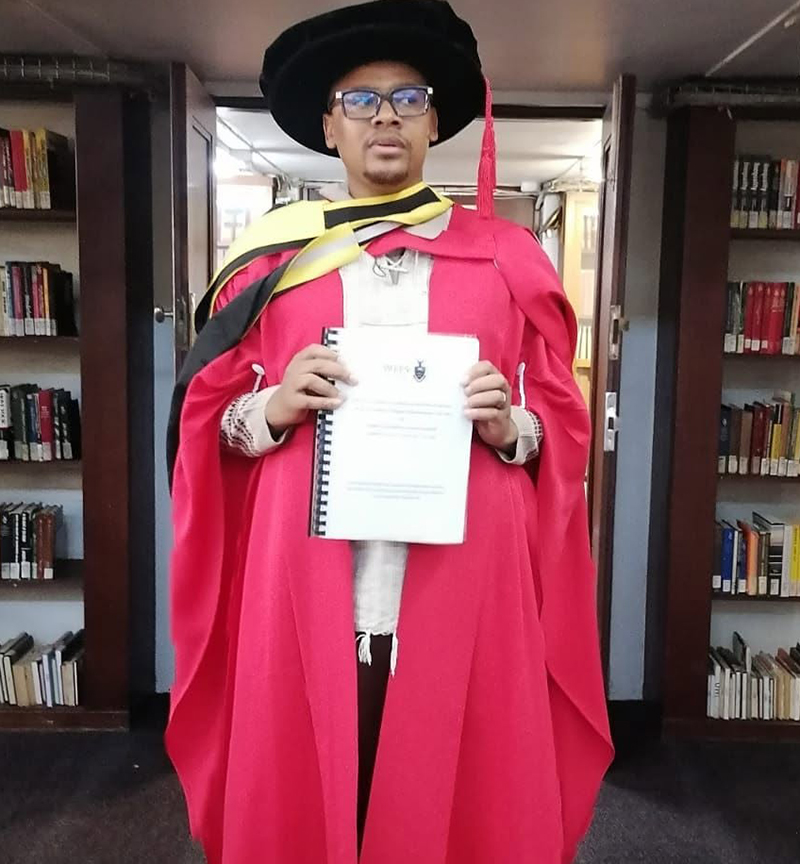
Dr Mojuta Motlhamme


