
First-year law students from the North-West University (NWU) took part in the annual Law and Diversity (LAD) Excursion from 17 to 19 April 2026 at Mocoseng Sundown Resort, where they were exposed to experiential legal learning beyond the traditional classroom environment.
The three-day programme was designed to strengthen students’ practical legal skills while building a strong ethical foundation early in their studies. It also created space for critical engagement on issues such as social justice, diversity, and the role of legal professionals in society.
A central feature of the excursion was a mock trial exercise, where students assumed courtroom roles and applied legal principles in simulated proceedings. The activity strengthened advocacy, reasoning, and teamwork skills while providing valuable insight into courtroom dynamics and professional conduct.
The programme included contributions from prominent legal and professional figures. Deputy Judge President of the North-West Division of the High Court, Tebogo Djaje, delivered a judicial address on the practice and ethics of law, engaging students on the responsibilities of legal practitioners. Advocate de Bruin guided students through trial procedures during mock sessions, while Roland Govender shared insights on financial independence as part of broader professional development.
In addition to courtroom simulations, students participated in workshops covering ethics, mental health, emotional intelligence, and the role of language in access to justice. Team-based activities, including the “Amazing Race: FLAW Edition”, encouraged collaboration and problem-solving, while discussions on inclusivity and gender diversity prompted reflection on the responsiveness of the legal system to societal needs.
Day two focused on practical application, with students preparing and presenting cases in trial simulations. Top-performing teams were recognised during a prize-giving session, reinforcing academic excellence and peer learning. Informal “Chat & Chill” sessions also provided space for dialogue and peer engagement.
On the final day, students reflected on their experiences through creative posters and newspaper-style presentations that captured key learning moments. The closing session encouraged reflection on the broader purpose of legal education, including integrity, empathy, and social responsibility.
“The excursion is regarded as an important part of the faculty’s approach to developing well-rounded law graduates by combining academic learning with real-world exposure and social awareness. It equips students to engage with both the technical demands and human dimensions of the legal profession,” says Omphile Kgati, personal assistant to the deputy dean of Faculty of Law.
As universities continue to adapt their teaching approaches, initiatives such as the LAD Excursion highlight the growing importance of experiential, skills-based learning in preparing future lawyers for the complexities of South African society.
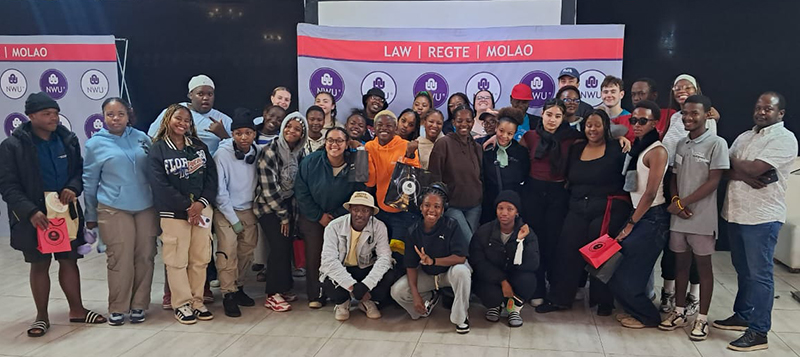
First-year law students took part in the annual Law and Diversity Excursion.


