
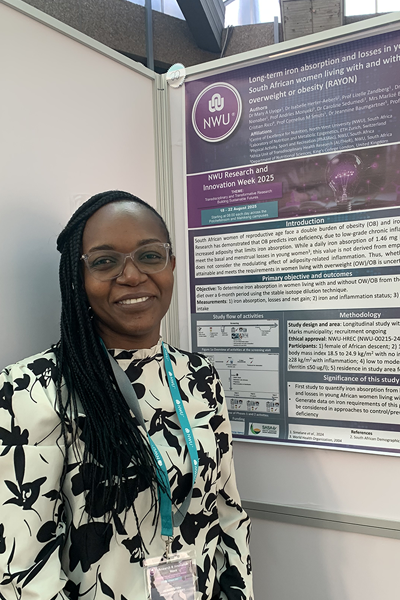
Dr Mary Uyoga
Fatigue, poor concentration and declining physical performance are easily blamed on stress, demanding schedules or a lack of sleep. For many young women, however, these seemingly ordinary symptoms may point to an overlooked nutritional problem: iron deficiency.
Researchers at the North-West University’s (NWU’s) Centre of Excellence for Nutrition (CEN) are working to establish how much iron young South African women need, and whether current dietary recommendations adequately reflect their circumstances.
The RAYON study is investigating long-term iron absorption and iron losses among young women living with and without overweight or obesity. According to Dr Mary Uyoga, senior lecturer at the CEN and a nutritional epidemiologist, locally relevant evidence is essential to understanding and addressing the problem.
“Iron deficiency remains one of the most common nutritional deficiencies worldwide, and young women are especially vulnerable because of the increased iron demands associated with growth, menstruation and, later, pregnancy,” she says.
In South Africa, the challenge is compounded by the high prevalence of overweight and obesity, which affects two out of every three young women. Dr Uyoga explains that higher levels of body fat may stimulate low-grade chronic inflammation, potentially limiting the body’s ability to absorb and use iron effectively.
This creates a complex public health challenge in which women may experience micronutrient deficiencies while simultaneously living with overweight or obesity.
“Much of the current guidance on iron requirements is based on international data and does not take contextual factors such as habitual dietary patterns and inflammation associated with high adiposity into account,” she says.
“By investigating long-term iron absorption and iron losses in young women, our research aims to provide a clearer understanding of how much iron is actually needed to maintain good health in this context.”
The RAYON study will examine the iron requirements of young South African women living with and without overweight or obesity, determine whether these requirements are being met through their habitual diets, and compare the findings with current recommended iron intakes. The results could also contribute to improving the management of iron deficiency among women of reproductive age.
The consequences of insufficient iron can extend well beyond tiredness. Low iron status may impair concentration and memory, reduce physical performance and weaken immune function. Importantly, these effects can emerge even before iron deficiency progresses to anaemia.
“Iron deficiency can negatively affect learning capacity, academic achievement and overall quality of life,” Dr Uyoga says. “Women who enter pregnancy with inadequate iron stores are also at greater risk of complications such as severe anaemia, poor maternal health and pregnancy outcomes, as well as adverse effects on infant development.”
Despite its potentially far-reaching effects, iron deficiency can remain undetected because its symptoms are often vague. Fatigue and difficulty concentrating may be dismissed as the consequences of stress, overwork or everyday life, while early-stage deficiency may present without obvious clinical signs.
“Nutritional deficiencies also tend to receive less attention than more visible health challenges, even though they are widespread and can have long-term consequences for health and development,” she says.
Evidence from the study could help shape nutritional interventions, healthcare policy and dietary guidance that more accurately reflect South African women’s diets, health conditions and living environments.
“Ultimately, the findings could contribute to preventing iron deficiency and anaemia, improving women’s health, increasing educational attainment and productivity, and supporting maternal wellbeing,” Dr Uyoga says.
The research forms part of the CEN’s broader effort to address pressing nutritional and public health challenges throughout the different stages of life. Its work is aligned with national and international priorities and includes research into micronutrient deficiencies, maternal and child nutrition, diet-related conditions and non-communicable diseases.
“A major strength of the CEN is its focus on generating locally relevant evidence that not only informs nutrition and public health policy and healthcare practice, but is also shaped by the lived experiences of South Africans,” Dr Uyoga says.
By accounting for the social, economic and environmental conditions that influence nutrition, the centre seeks to develop practical, evidence-based responses suited to the local context. It also trains future nutrition scientists, dietitians and public health researchers, helping to build the expertise South Africa needs to confront increasingly complex nutrition challenges.


