
In villages across North West, livestock owners still turn to roots, bulbs and leaves to treat infections, wounds and reproductive problems in cattle, goats and sheep. A new study now shows that several of those remedies used by Batswana traditional healers and farmers also carry measurable antioxidant properties linked to disease treatment.
The study documented 80 medicinal plants from 42 plant families used to manage 38 livestock ailments, ranging from gastrointestinal infections and skin diseases to parasite infestations.
North-West University (NWU) master’s student Tswelelopele Mpolokeng found strong agreement among participants on which plants work best, while laboratory analysis identified several species with high levels of compounds associated with biological activity and disease control.
The research highlights the role of ethnoveterinary medicine in rural livestock systems where plant-based remedies remain part of animal healthcare and food production. The findings also point to concerns over sustainability as many remedies rely on roots and bulbs collected from wild plant populations.
Frequently used plants included Aloe ferox, Drimia sanguinea, Hypoxis hemerocallidea, Senna italica and Ziziphus mucronata. Tswelelopele found that traditional preparation methods often combined several plants and included additives such as salt and ash.
“The reliance on these remedies remains deeply rooted in indigenous knowledge systems and community livestock practices,” her study notes. “This knowledge continues to support rural livelihoods and food security.”
The study recorded high informant consensus factor values ranging from 0,68 to 0,89, indicating that participants shared similar views on the effectiveness of the remedies used for specific animal diseases.
Ten plants with the highest use value and citation rates were selected for further laboratory analysis. Among them were Bulbine abyssinica, Securidaca longepedunculata, Ipomoea ommaneyi and Tarchonanthus camphoratus.
The findings showed that Hypoxis hemerocallidea recorded the highest total phenolic content, while Ipomoea ommaneyi produced the highest flavonoid content. Tarchonanthus camphoratus recorded the highest condensed tannin levels.
Tswelelopele also found strong antioxidant activity in Bulbine abyssinica and Drimia sanguinea, with low EC₅₀ values linked to antioxidant effectiveness. The study states that these properties support the traditional use of the plants for conditions associated with inflammation and infections.
“These findings confirm a relationship between secondary metabolite richness and biological activity,” her study states. “The results provide scientific support for the ethnoveterinary use of these species.”
Tswelelopele say the study adds to efforts to preserve indigenous knowledge that remains vulnerable to loss as older generations pass on. They also warn that continued harvesting of roots and bulbs from wild populations could threaten some species over time if conservation measures are not introduced.
The study calls for further pharmacological testing, safety assessments and conservation strategies to support the inclusion of ethnoveterinary medicine in sustainable livestock healthcare systems.
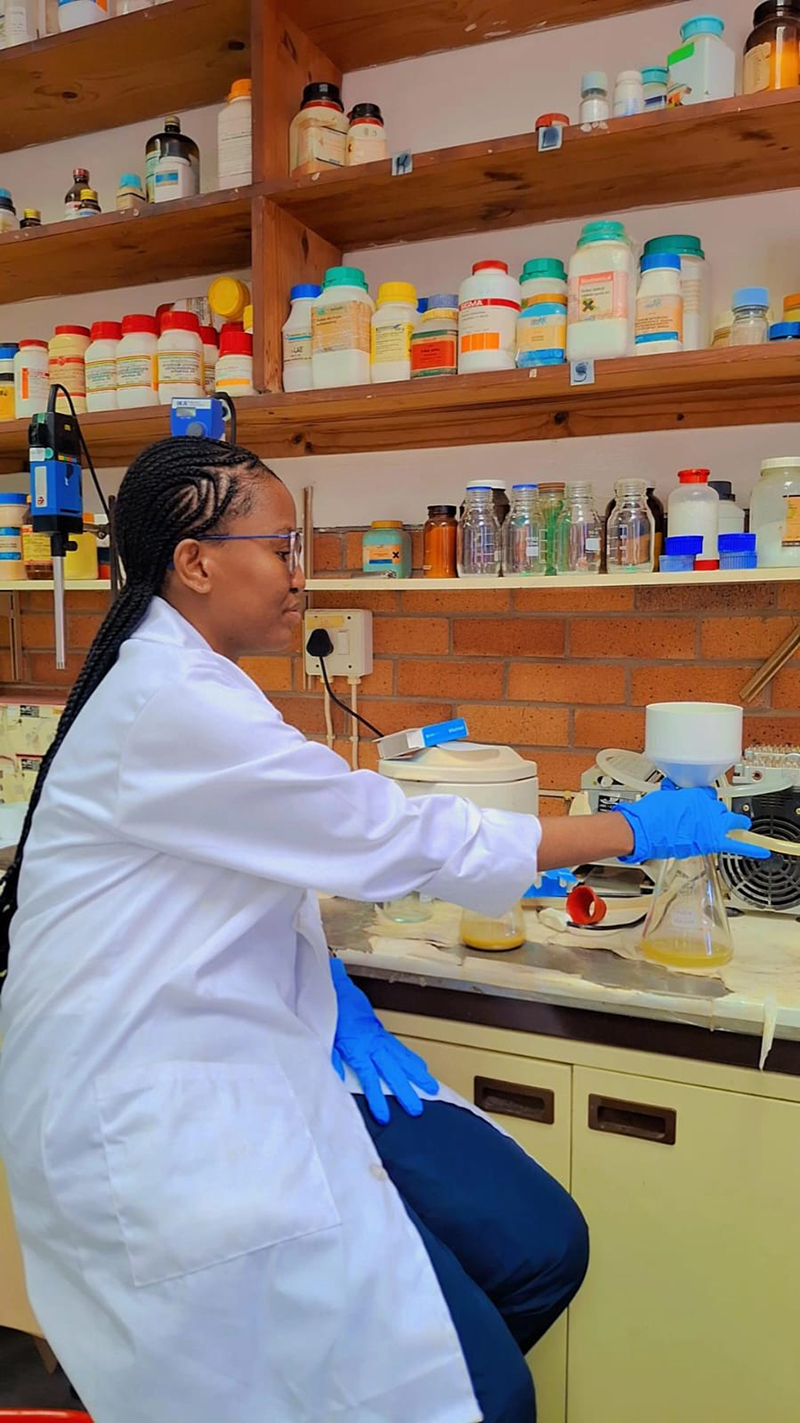
Tswelelopele Mpolokeng’s study found that several of the remedies used by Batswana traditional healers and farmers also carry measurable antioxidant properties.


