
If African languages are to thrive in a digital world, it is essential that these languages be part of the artificial intelligence (AI) revolution sweeping society.
Natural language processing, which enables computers to understand, interpret and generate human language, could play a significant role in enabling African language speakers to benefit from technology advances.
Strengthening research readiness in African language natural language processing was the purpose of a collaborative five-day retreat held at the Mahikeng Campus of the North-West University (NWU) from 3 to 7 February 2026.
The hosts were the NWU’s Language Directorate and the School of Computer Science and Information Systems, in collaboration with the South African Centre for Digital Language Resources (SADiLaR).
The retreat, an annual event for language practitioners, computer scientists, students and researchers from across Southern Africa, is titled Hundzula, a Xitsonga word for change and transformation. It has a strong focus on developing practical solutions for low-resource African languages.
Promoting the growth of Southern African languages
“The Hundzula retreat established a networking and collaboration platform for both humanities and computer science researchers and enthusiasts,” said Marrisa Griesel, project manager and node co-manager at the SADiLaR Unisa Node. “The ethos of the event centres on open and shared discussions to promote the growth of Southern African languages in natural language processing and digital humanities.”
Dr Keaobaka Seshoka, director of the Language Directorate, said the partnership between the Language Directorate and SADiLaR provided expert guidance and grounded conversations within active research environments.
She said that the retreat directly supported the NWU’s mission to develop student and researcher capacity in African language technologies. “Hundzula served as a pipeline programme, connecting undergraduate curiosity, postgraduate research preparation and leadership development in African language natural language processing.”
The School of Computer Science and Information Systems participated as a technical partner, contributing expertise in artificial intelligence and data science to support language digitisation and tool development.
“As the NWU, we shared our expertise in artificial intelligence and data science to explore how African languages can be digitised and supported through natural language processing technologies,” said Reorapetse Molose, lecturer in the subject group Computer Science. “This engagement helped identify collaborative pathways for developing datasets, language tools and future computational research initiatives.”
He said the work done at the retreat would have a lasting impact on research, tool development and student training. “From a research perspective, it created a strategic entry point into African language natural language processing grounded in real-world challenges. In terms of tools, the retreat provided direction for building annotated corpora, localised language models, speech-processing systems and machine translation tools.
“Students and emerging researchers gained exposure to interdisciplinary problem-solving, socially responsive artificial intelligence design and culturally grounded computing applications.”
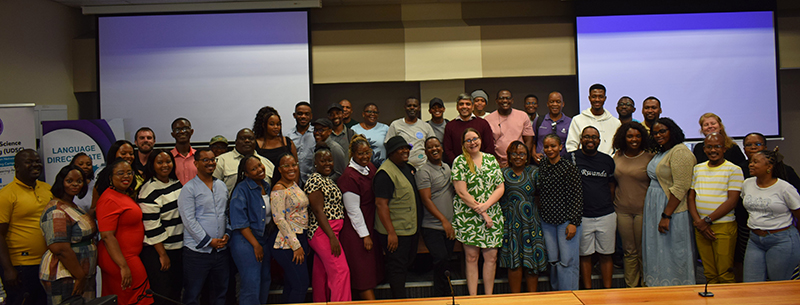
Language practitioners, computer scientists, students, and researchers from across Southern Africa unite at the Hundzula retreat to advance African language AI and digitisation.


