
Prof Ephrem Redda’s recent presentation at the United Nations Institute for Training and Research (UNITAR) is offering fresh insight into how digital transformation is changing the face of higher education in South Africa and what this shift means for achieving Sustainable Development Goal 4 (SDG 4), which calls for inclusive, equitable, and quality education for all.
Prof Redda, representing the North-West University’s WorkWell Research Unit travelled to Brussels, Belgium, where he presented at the 3rd UNITAR International Research Conference from 3 to 4 December 2025. His paper, “Advancing SDG 4 through Digital Transformation: Building Resilient and Equitable Higher Education in South Africa,” brought important questions to the table about how universities can better support students in an increasingly digital world.
For Prof Redda, the conference was more than just an academic gathering; it was a space filled with diverse voices, new perspectives, and meaningful conversations, he says.
“What really struck me was how global the room felt,” he shared. “I connected with colleagues from countries like Turkey, the USA, the UK, Uganda, and Zambia, among others. These interactions were inspiring and opened the door to potential collaborations across continents.”
In his presentation, Prof Redda explored how the COVID-19 pandemic pushed South African universities into fast-tracking digital transformation. His study found that while digital innovation had started before the pandemic, many institutions faced barriers such as limited infrastructure, financial challenges, and uneven digital readiness among staff and students.
But once the pandemic hit, universities had no choice but to adapt. Academics quickly upskilled, curricula were redesigned for online and hybrid teaching, and technology became central to how learning happened. This moment of crisis also revealed the potential to create a more accessible and equitable higher education system, if the digital shift is approached thoughtfully and with fairness in mind.
Prof Redda’s research shows that digital transformation is not just a technological move; it is a chance to rethink how universities can support more students, strengthen teaching, and ensure no one is left behind.
His findings contribute to a bigger global conversation on how do we create higher education systems that are both future-ready and fair? As many countries face similar questions about access, inequality, and digital readiness, Prof Redda’s work offers valuable lessons from the South African context.
Prof Redda’s participation in this international conference reflects the growing global presence of NWU’s research community and highlights the important work being done to improve educational access and quality.
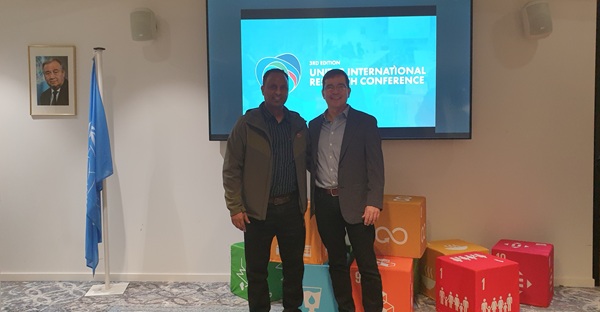
Prof Ephrem Redda and Prof Ricardo Lozano, Associate Professor of Educational Leadership at Texas A&M International University | Fulbright Specialist -Adaptive Leadership.
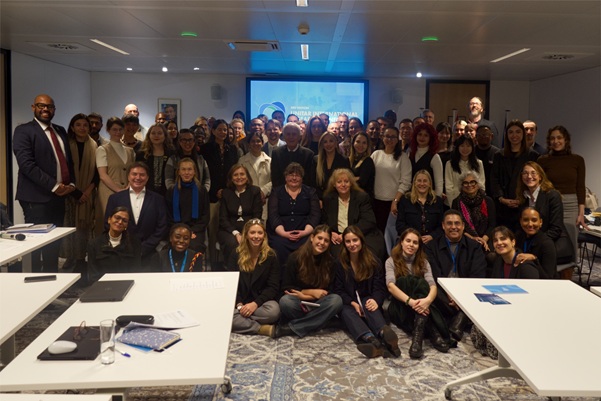
UNITAR conference participants


