
When human resource management (HRM) meets heritage, the classroom becomes a stage, students become performers, and learning gets a beat.
Heritage Day came alive in a uniquely creative way as HRM students transformed their classroom into a vibrant celebration of culture, creativity and human resource management. What began as an academic activity quickly evolved into an energetic experience filled with music, different languages, cultural expression, laughter, costumes, teamwork and meaningful HR lessons.
The activity was facilitated by Kholiswa Mogoeng, a North-West University (NWU) lecturer and programme leader for Human Resource Management. She encouraged students to move beyond conventional classroom presentations and explore innovative ways of demonstrating their understanding of HR concepts.
The students were divided into groups and presented with workplace scenarios focusing on key human resource management concepts, including recruitment and selection, internal staffing and performance management and appraisal. Their task extended beyond identifying challenges in the scenarios, they were required to think like HR professionals, develop appropriate solutions and creatively communicate their understanding of the concepts.
There was an added twist: Instead of delivering conventional classroom presentations, the students were challenged to develop their own themes and turn their HR solutions into songs. They rose to the challenge enthusiastically.
From HR scenarios to musical performances
Each group took its assigned workplace scenario and developed a creative performance around it, using rhythm, lyrics, movement and drama to demonstrate how HR professionals could respond to workplace challenges.
In doing so, recruitment and selection became more than a theoretical concept, internal staffing became a story that could be sung, while performance management and appraisal were transformed into memorable musical performances. The classroom was filled with different languages as students incorporated their cultural identities into their performances. The multiple South African languages added another layer of meaning to the activity, demonstrating how diversity and cultural expression can be celebrated while working towards a common learning objective.
For Kholiswa, the activity was about creating an environment in which students could connect academic theory with practical and memorable experiences. “As HRM teachers, we want our students to understand that HR is ultimately about people. This activity gave them an opportunity to engage with HR concepts in a creative way while celebrating who they are, their languages and their cultures. When students are actively involved in the learning process, they can connect theory to experiences that are meaningful to them,” she said.
The performances demonstrated that learning does not always have to take place through textbooks, PowerPoint presentations and written activities. Sometimes, a beat, a song and a little creativity can make a concept unforgettable.
When gender roles were swapped
Adding another dimension to the activity was a creative gender-role swap incorporated into some of the performances. Male students confidently stepped into traditionally feminine clothing and roles, while other students embraced characters that challenged conventional gender expectations. While the performances generated plenty of laughter and excitement, they also created an opportunity for students to reflect on gender roles, stereotypes, diversity and inclusion in the workplace.
What made the activity particularly significant was that students were not merely discussing diversity and inclusion as theoretical concepts. Through their performances, they were able to explore and creatively demonstrate how people can challenge conventional expectations and embrace different perspectives.
Learning that extends beyond the classroom
At the heart of the activity was a simple but powerful principle: students learn effectively when they are actively engaged in the learning process. The hope is that when these students eventually sit for their examinations and encounter questions relating to recruitment and selection, internal staffing or performance appraisal, they will not remember only definitions from their textbooks.
This reflects the value of experiential learning – creating meaningful experiences that can become learning anchors, helping students connect theoretical concepts with practical experiences.
Kholiswa believes that activities such as these can also help students develop skills that are essential beyond their academic studies. “The students had to work together, communicate, solve problems, allocate responsibilities, think creatively and present their ideas with confidence. These are not only classroom skills; they are skills that future HR professionals will need in the workplace. We wanted them to learn, but also to enjoy the learning process,” she said.
A heritage celebration to remember
The energy, creativity and confidence displayed by the students made the activity a memorable celebration of both heritage and learning. By incorporating different languages, different characters, workplace scenarios, original songs, traditional presentations and gender-role swaps, the students proved that there is more than one way to learn, and that sometimes, the most memorable lessons come with a beat. As the music played and students performed, one thing became clear: classroom learning can be engaging, collaborative and culturally meaningful.
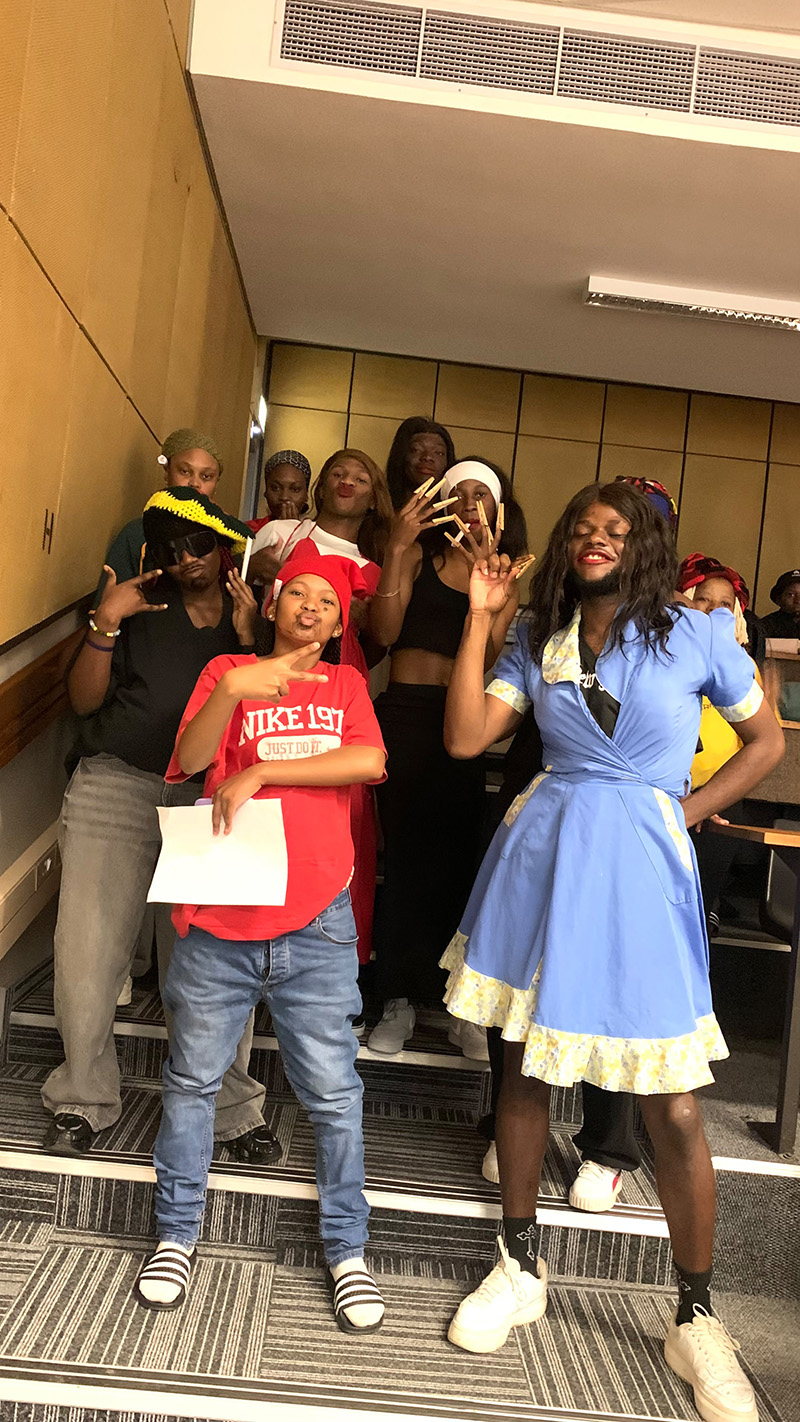
Photo: These students turned their HR lessons into music, culture and creativity.


