
At the North-West University (NWU), Nthabiseng Maseko's journey is a testament to how personal pain can become a powerful source of purpose.
What began as a search for healing after the breakdown of a long-term relationship, has evolved into a mission to help others confront their wounds, reclaim their voices and find hope beyond their pain.
Nthabiseng, a faculty librarian and house parent, was introduced to the Institution for Healing of Memories (IHOM) at a time when she was struggling to process the emotional impact of separating from the father of her children. She joined the workshops seeking healing for herself, unaware that the experience would eventually transform her into a facilitator helping others navigate their own journeys.
“I joined the IHOM because I needed help processing my own pain,” she recalls. “At that stage, I never imagined that my story would one day help others heal.”
As she progressed through the programme, facilitators recognised her ability to connect with people and encouraged her to train as an IHOM facilitator. Today, she has facilitated numerous workshops across Gauteng, sharing her story with hundreds of people from diverse communities.
In the process, she discovered that healing was not only something she received, but something that grew each time she helped another person find the courage to speak.
“There was a time when I told my story from a place of hurt,” she shares. “Today, I tell it from a place of hope. The pain no longer controls the narrative. Instead, the story has become a source of encouragement for others.”
Through the IHOM, Nthabiseng has worked with members of the Sharpeville Six families, survivors and families affected by the Sebokeng and Boipatong massacres, refugees and asylum seekers, people living with HIV/AIDS, youth groups, women's organisations and interfaith communities seeking healing and reconciliation.
These encounters have reinforced her belief that healing begins when people are given the space to share their stories without judgement.
“Whether someone has experienced political violence, displacement, stigma, loss or family breakdown, the common need is often the same,” she explains. “People need acknowledgement. They need to know that their experiences matter and that healing is possible.”
This philosophy has profoundly shaped her work as a house parent at the NWU, where she encounters students carrying challenges that often remain hidden behind the demands of university life. From grief and family conflict to financial hardship, anxiety, loneliness and academic pressure, she understands that students sometimes need more than advice – they need someone willing to listen.
“As a house parent, I meet students from very diverse backgrounds. Many are facing challenges that are not visible to others. My journey with the IHOM has taught me the importance of listening with empathy and creating safe spaces where people can share their stories.”
Alongside her residence responsibilities, Nthabiseng serves as a faculty librarian, supporting teaching, learning and research. Across both roles, her commitment to people and their growth remains at the heart of her work.
The woman who once entered a healing workshop searching for restoration has become a source of encouragement for others. Her journey is a reminder that pain, while never easy, can become a catalyst for compassion, purpose and meaningful service.
“My story did not end with pain. It became a story of healing, growth, and helping others discover that they, too, can heal.”
At the NWU and beyond, Nthabiseng continues to demonstrate that sometimes the most powerful gift we can offer another person is the courage to listen, the grace to acknowledge their pain and the hope that healing is possible.
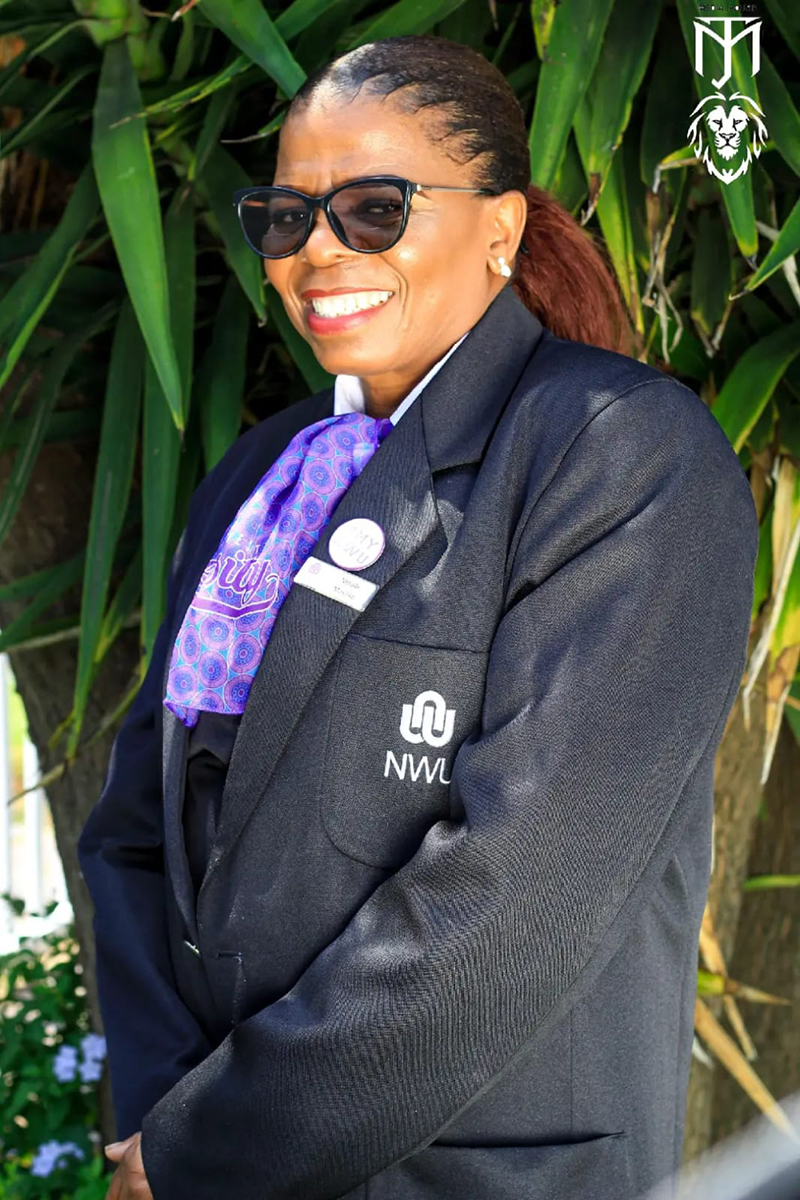
Photo: Nthabiseng Maseko


