
High blood pressure, also known as hypertension, remains the leading preventable cause of premature death worldwide. The Hypertension in Africa Research Team (HART) at the North-West University (NWU) is making it their mission to educate people on and raise awareness about the dangers of this “silent killer”.
Sister Adéle Burger, head nurse at the Hypertension Research and Training Clinic on the Potchefstroom Campus of the NWU, says their annual May Measurement Month (MMM) and World Hypertension Day activities help to raise awareness and educate people about this significant health challenge.
“According to the World Health Organization (WHO), an estimated 1,4 billion people are living with the condition. This means it affects roughly one in three adults. With knowledge comes power, and by raising awareness and advocating sustained action, we can create meaningful change for individuals who are affected by hypertension. It empowers people to make better health and lifestyle decisions.”
This year’s activities took place on 15 May and involved staff and students of the Faculty of Health Sciences, particularly from HART, Biokinetics and Nutrition. “Hypertension is easy to diagnose and can be effectively treated, but many people remain unaware that they have it. Alarmingly, only one in four people with high blood pressure has their condition under control.”
Prof. Carina Mels, director of HART, says that since the launch of the 2026 MMM campaign on 1 May, HART has already screened more than 1 400 participants across various community sites. “Initiatives such as May Measurement Month (MMM), led by the International Society of Hypertension, play a critical role in promoting early detection, treatment and control. World Hypertension Day, which is observed every year on 17 May, forms part of this global campaign. This year’s theme, ‘Controlling Hypertension Together: Check Your Pressure Regularly, Defeat the Silent Killer’, highlights the shared responsibility of individuals, communities and healthcare systems in tackling hypertension.”
Taking awareness beyond the clinic
The screenings form part of a broader effort to make healthcare more accessible and to reach individuals who may not routinely seek medical care.
“It is vital that we create opportunities for early detection,” says Prof. Carina Mels, director of HART. “Many people only discover they have high blood pressure once complications develop. Simple screening can make a life-saving difference.”
The campaign reinforces that managing hypertension is a long-term commitment requiring consistent monitoring and healthy habits.
A simple step today can protect your heart tomorrow
Prof. Mels says that improving heart health does not require drastic changes, but consistent daily action.
“We often wait for the perfect time to start exercising, but heart health begins with simple movement. Walk more, take the stairs, dance, cycle, play with your children, or do any form of physical activity you enjoy. Every step matters. Research consistently shows that regular physical activity can help lower blood pressure and reduce cardiovascular risk. This May, I encourage our communities to move more, sit less, and make heart health a daily priority.”
The MMM campaign encourages individuals to not only check their blood pressure regularly and know their numbers, but to also recognise that hypertension can be prevented and controlled through lifestyle choices. It is important to prioritise early detection through routine screening and to commit to treatment plans and follow-up care where needed.
“Managing hypertension is a lifelong commitment,” adds Sister Burger, “but it can significantly improve quality of life and prevent serious complications.”
Prof. Mels commended their postgraduate student team for their role in organising the campaign, as well as collaborators from the Faculty of Health Sciences and the South African National Blood Service.
As the campaign continues, the message is clear: small, consistent actions can make a significant difference.
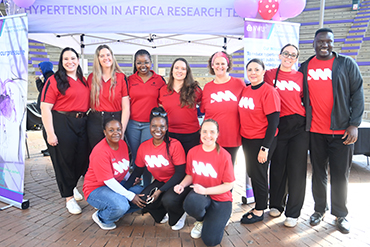
The dedicated team of staff and students include (in front) Aiden Spalding, Clementine Tsiane and Tendainyasha Zinyemba. At the back are Monique Labuschagne, Michelle Roux, Nonku Navise, Chilene Vorster, Lisa Uys, Sr Adéle Burger, Shandrika Martins and Jonathan Nsamba.
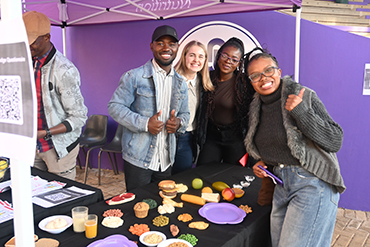
The team from Nutrition gave staff and students advice on healthy eating. They are Kelebogile Mokoena, Salome Smit, Billy Mlouda and Zelda Luvha.
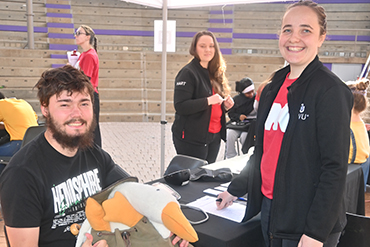
Mihàly Mayer got his blood pressure measured by Aiden Spalding.
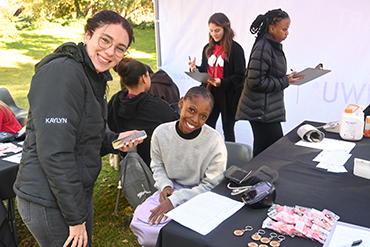
Kaylyn Veitenten and Koketso Tsele.
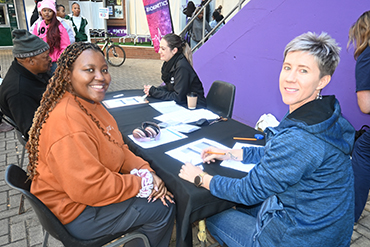
Elizabeth Nthimo and Mariette Swanepoel (lecturer in Biokinetics).
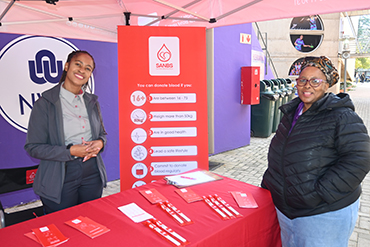
Lebo Moremi, donor educator of the South African National Blood Service, and NWU staff member Lydia Tutubala.


