
The North-West University (NWU) Green Team is turning small environmental actions into sustained community impact, with recent initiatives showing how student-led efforts are reshaping public spaces while building a culture of responsibility among young people.
A tree-planting initiative and a large-scale clean-up campaign, both held in March 2026 with support from the Safety, Health and Environment (SHE) department, have highlighted the focus of the group on environmental awareness, collaboration and long-term sustainability.
The Green Team, based in the School of Mathematics, Science and Technology Education (SMSTE) in the Faculty of Education, was established more than a decade ago. It continues to mobilise students around environmental issues through practical interventions such as planting trees and removing waste from community spaces.
At the heart of its work is the belief that small actions can lead to meaningful change. “Planting a singular tree might not seem significant, though it plays a critical role in empowering students and the local community,” said Green Team chairperson Kristen Weyers. She added that these initiatives create a sense of ownership, encouraging participants to take responsibility for the environment and remain engaged beyond the event itself.
The tree-planting activity, held on 5 March at the Heilige Akker public park in Potchefstroom, faced early disruption due to rain and thunder. After a short delay, conditions improved, allowing the event to proceed. The softened ground, caused by the rain, ultimately made digging easier, a lesson the team plans to apply in future by bringing water to assist with planting.
Reflecting on the experience, Kristen said, “The rain actually helped soften the ground and made the digging process easier, which is something we will plan for in future initiatives.” She noted that safety remains a priority, particularly when working with metal equipment in open spaces during uncertain weather conditions.
Support from the SHE department proved essential. By providing additional tools such as shovels, the department enabled more people to take part and reduced the time
required to complete the activity. “The equipment provided did not just help with time but made it possible for more people to attend and contribute,” Kristen said.
Sustainability remains a central focus. The Green Team conducts monthly follow-ups to monitor planted trees and ensure they continue to grow. The group also aims to expand its impact through community partnerships, including plans to plant fruit trees in public parks and shade trees at schools, despite ongoing funding constraints.
“In addition to the immediate impact, we focus on follow-ups to ensure that what we plant continues to grow and make a difference,” Kristen said. “We are not just planting trees, we are building long-term environmental responsibility.”
A week later, on 12 March, the team led a community clean-up in Ikageng, where turnout exceeded expectations. Students from the Villagers and Siya Kolisi men’s residences joined community members, demonstrating what Kristen described as a growing sense of civic responsibility among students.
“We expected fewer participants because the event took place during the week, but the turnout showed that students are willing to take responsibility and give back to communities,” she said.
The clean-up resulted in the removal of approximately 40 bags of waste, clearing about 7 to 8 metres of heavily affected space. Particular attention was given to removing glass near a crèche to improve safety for children. “It is visually cleaner, smells better and creates a safer environment,” Kristen said, adding that the work contributes to improved hygiene and reduced health risks.
While the impact was visible, challenges remain. Waste disposal emerged as a key issue, with organisers relying on a community skip as a temporary solution. “The logistics of transporting waste were not feasible, and we are exploring alternatives such as arranging trucks or coordinated municipal support,” she said.
Despite these challenges, the Green Team views clean-ups as part of a broader effort to address systemic issues such as illegal dumping. By engaging communities directly, the initiatives aim to discourage further waste accumulation and promote environmental stewardship.
“At the heart of it, waste in communities is a systemic issue, but these clean-ups are meant to empower communities to take action and responsibility,” Kristen said.
Follow-up activities are already planned, including another clean-up in May and potential landscaping interventions. These efforts are designed to maintain progress and encourage communities to take ownership of their surroundings.
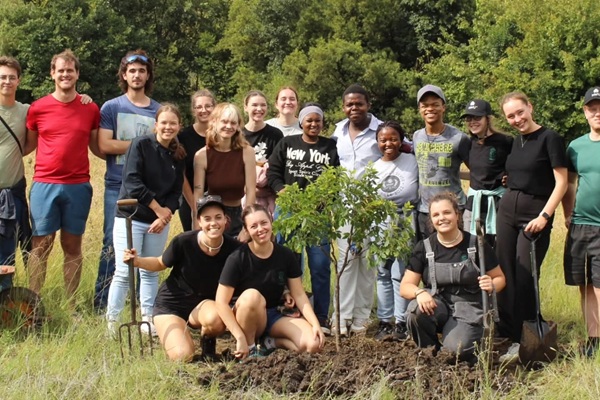
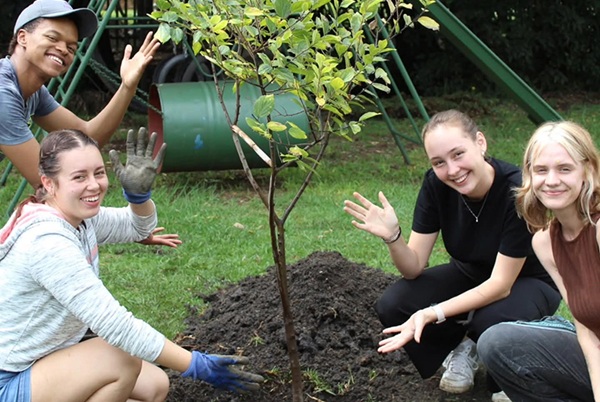
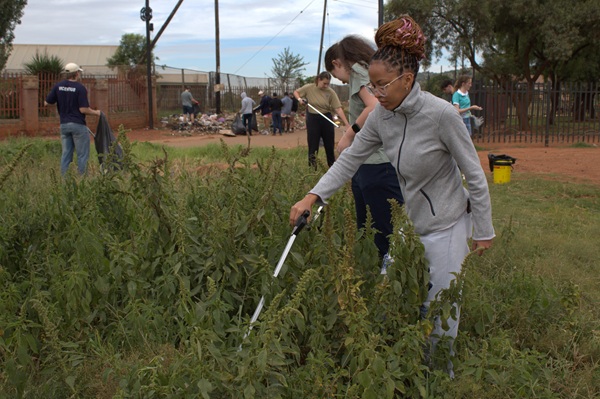
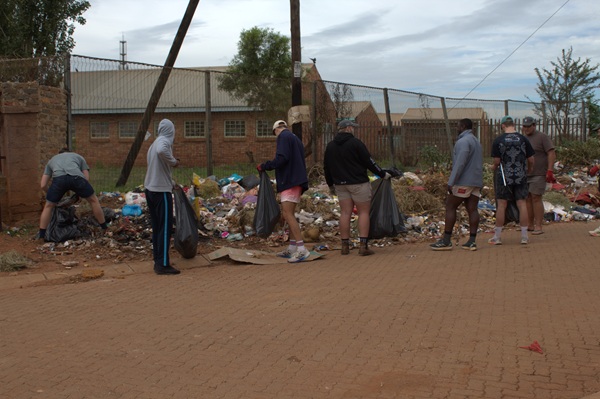
NWU Green Team chairperson Kristen Weyers leads student volunteers and community members during tree-planting and clean-up initiatives aimed at improving public spaces and strengthening environmental responsibility.


