
By Prof. Bismark Tyobeka, principal and vice-chancellor of the North-West University (NWU).
I am the father of six beautiful children. They shape me every day. They shape what I value and how I see the future. I think of them when I walk on my cattle farm in the heart of the North West, where the earth is red and the skies stretch wide. I think of my family and the soil that will one day belong to them. Few things bring as much joy as being a father and a farmer, but with those responsibilities also comes a deep concern for the future.
What I’ve learned in these dual roles is that you need to invest in tomorrow. That you don’t sell the cow for a cup of milk, and that short-term thinking breeds long-term regret.
It frustrates me that we often fail to approach our country’s energy future with the same mindset. Energy is not just another sector of the economy. It underpins almost every form of productive activity. Without reliable electricity we cannot manufacture or mine, sustain digital infrastructure, operate water systems, expand transport networks or support urban development. Nor can we meet the growing demands of AI-driven data centres or sustain an agricultural sector that helps feed a population of more than 63 million people.
Stable energy production capacity is therefore more than infrastructure. It is a long-term strategic asset capable of generating economic value across generations. It is a pillar for the future to lean on.
This is one of the reasons why countries across the world are increasingly investing in the long-term operation and life extension of nuclear power plants.
Life extension has become a mainstream global nuclear strategy. In the United States, the US Nuclear Regulatory Commission allows subsequent licence renewals that can extend reactor operations from 60 to 80 years, with plants such as Oconee approved to operate into the 2050s and V.C. Summer until 2062. South Africa’s Koeberg Nuclear Power Station forms part of this same international trend. Koeberg Unit 1 received a long-term operating licence until July 2044, while Unit 2 was also granted a 20-year extension following extensive refurbishment work, including steam-generator replacement, inspections and refuelling activities, allowing the station to continue supplying roughly 1 860 MW of baseload power for another two decades.
France is similarly extending parts of its fleet beyond 40 years, with Tricastin 1 becoming the country’s first reactor authorised for extended operation beyond that threshold, while discussions around possible 60-year operation continue. Canada has pursued a refurbishment-led approach, with Bruce Power’s upgrades expected to add 30 to 35 years of operating life to several CANDU reactors.
Koeberg’s extension places South Africa alongside countries such as the United States, France and Canada in preserving strategic nuclear capacity at a time when new-build projects remain slower, more expensive and politically contested.
A society grows great when old men plant trees whose shade they know they shall never sit in. Will we show ourselves to be a great society?
We should aspire to be, because we do not inherit the Earth from our ancestors; we borrow it from our children.
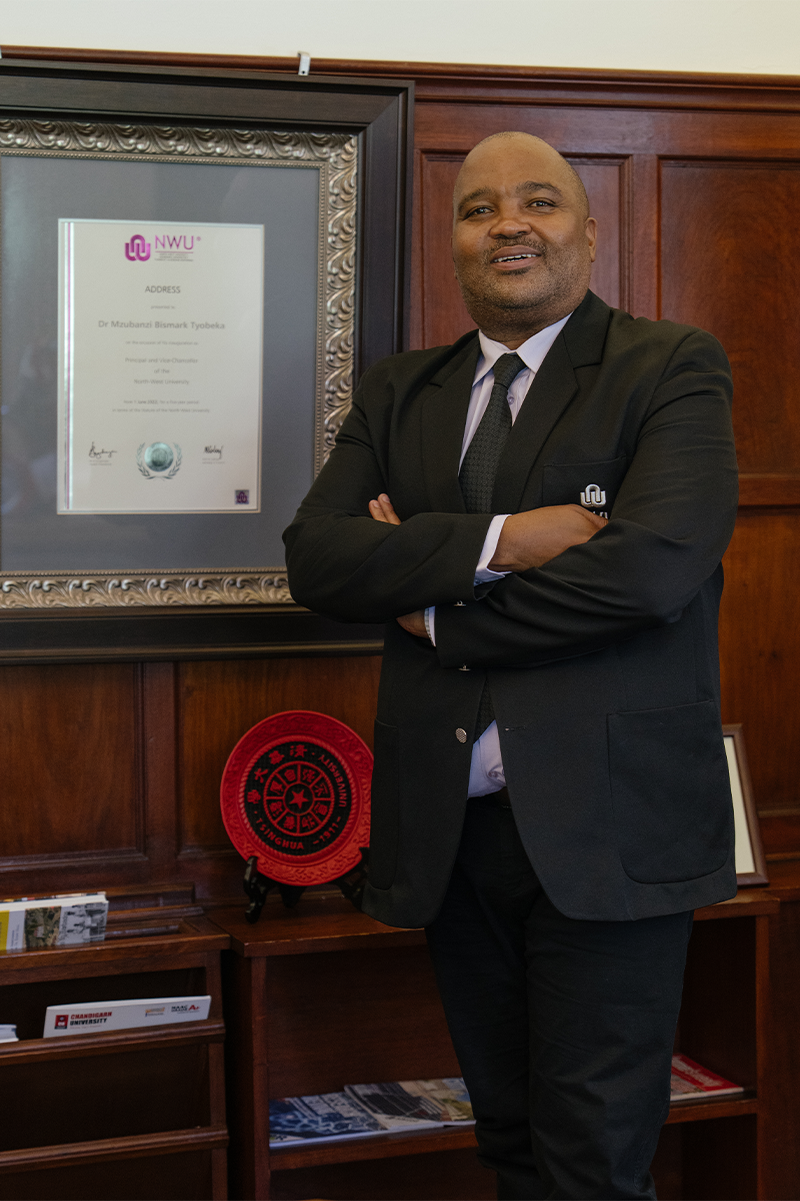
Prof. Bismark Tyobeka.


