
The North-West University (NWU) Faculty of Law reunion recently brought together distinguished alumni who are legal practitioners, academics and institutional leaders for an evening of engagement, reflection and knowledge-sharing. The event was held at the Seven Villa Hotel and Spa in Sandton, Johannesburg.
The reunion formed part of the ongoing efforts of the NWU to strengthen alumni relations and reinforce professional networks in the legal sphere, while also exploring contemporary issues shaping the legal profession.
The programme was led by Silvanus Welcome, director for stakeholder development and fundraising, who served as programme director. He encouraged alumni to give back to the university through active participation, mentorship of students and financial contributions to support faculty development initiatives. He emphasised that sustained alumni involvement remains vital to strengthening institutional growth and ensuring the continued success of the Faculty of Law.
Prof. Kathleen van der Linde, executive dean of the Faculty of Law, reflected on the academic achievements of the faculty, expanding inter-university collaborations and growing community engagement initiatives.
Prof. Van der Linde emphasised the essential role of alumni in strengthening the reputation and global relevance of the faculty. “You are ambassadors; your achievements are a reflection of our faculty as we focus on building a globally relevant institution,” she said, expressing appreciation for continued alumni support. She further highlighted the commitment of the faculty to innovation, research excellence and meaningful societal engagement.
The keynote address was delivered by Judge Elmarie van der Schyff of the Gauteng division of the High Court in Pretoria, herself an NWU Law alumnus. Speaking on the theme “Ethics, Artificial Intelligence, and the Litigating Counsel”, she examined the rapid integration of artificial intelligence into legal practice and its implications for professional conduct and the justice system.
Judge Van der Schyff noted that AI tools such as ChatGPT are increasingly being used in legal research and drafting, offering notable efficiencies and saving practitioners valuable time. However, she cautioned strongly against overreliance on such technologies, warning that AI systems are prone to hallucinations and inaccuracies that may have serious consequences in legal proceedings.
She stressed that legal practitioners carry a non-delegable duty to independently verify all AI-generated outputs and ensure that no confidential client information is compromised when using digital tools. “AI cannot replace professional judgment
infused with ethics. It lacks empathy and contextual understanding,” she said, adding that technological literacy is now an essential competence for modern legal professionals.
During the event, NWU alumnus Judge Leonie Windell was congratulated on her recent appointment as judge to the Supreme Court of Appeal of South Africa, marking a proud milestone for the Faculty of Law alumni community.
Nicolize van der Walt, section head for Alumni Relations, confirmed that the gathering reflected strong engagement with and continued commitment from the alumni network.
“The event was a success in every sense. It demonstrated the strength of our alumni community and the value of maintaining strong, active connections with the Faculty of Law,” said Nicolize.
A vote of thanks was delivered by Frik van Deventer, deputy president of the NWU Convocation, who expressed appreciation to all speakers, organisers and attendees for their contributions to the success of the event.
The evening concluded with networking and dinner, providing alumni with an opportunity to reconnect, exchange ideas and strengthen professional and social ties in the legal community.
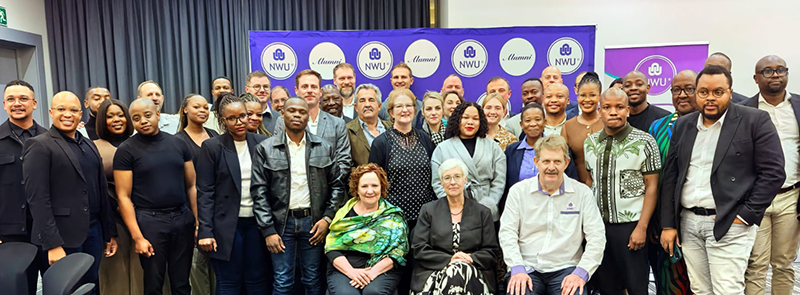
NWU Law alumni came together for an evening of engagement, reflection and knowledge-sharing.


