
From predicting droughts and floods to helping farmers plan planting seasons, space-based technologies are becoming practical tools for addressing some of Africa's development challenges, according to a North-West University (NWU) space scientist.
Prof. Amare Abebe, director of the Centre for Space Research (CSR) at the NWU, and president of the African Astronomical Society, says the continent already has access to satellite technologies that can improve agriculture, disaster management, climate adaptation and connectivity. The next step, he says, is ensuring that African countries develop the skills and institutions needed to turn satellite data into decisions that improve people's lives.
His comments come as African countries increase investment in space science and strengthen collaboration between governments, researchers and industry. This trend was reflected at the second African Space Solutions Market, held in Abidjan, Côte d'Ivoire, from 7 to 9 July, where African stakeholders discussed the use of space technologies to support economic development, food security, disaster management and climate resilience.
Using space data for decisions on the ground
About practical applications of space science, Prof. Abebe said during the interview that Earth observation satellites provide information that governments and communities can use to respond to environmental and economic challenges.
"Earth observation satellites give us continuous, continent-wide data on rainfall, soil moisture, vegetation health and crop conditions, which allows early warning of drought and better planning of agricultural seasons."
The same technologies support flood mapping, wildfire monitoring and disaster response, while satellite communications improve access to education, financial services and digital connectivity in areas where conventional infrastructure remains limited.
"The challenge for Africa is less about access to space technology than about building the capacity to turn space data into decisions on the ground," he said.
South Africa has established a foundation for space science through national investment in research infrastructure and partnerships between universities and government, Prof. Abebe said. However, the decisive factor in determining whether these technologies produce broader social and economic benefits is closer collaboration with communities.
"Applications must be developed with the end users, whether farmers, municipalities or disaster management agencies, rather than handed down to them."
He added that universities play a central role in developing the scientists and engineers needed to grow Africa's space sector. At the CSR, postgraduate students are trained in space physics and astrophysics and contribute to research conducted through facilities such as the South African National Space Agency and the Square Kilometre Array, while collaborating with researchers from institutions in South Africa and abroad.
Space data has strong job creation potential
Prof. Abebe said the sector offers opportunities beyond engineering and physics. "The downstream sector, meaning the applications built on space data rather than the satellites themselves, is where most African jobs will be created," he said. "The barrier to entry there is a laptop and skills, not a launch vehicle."
He encouraged students to build strong foundations in mathematics, physics, computer science and engineering while developing programming, data analysis and collaboration skills needed in an international research environment.
Reflecting on the growing number of continental space initiatives, Prof. Abebe said platforms such as the recent African Space Solutions Market demonstrate that Africa is building its own space ecosystem.
"They connect African startups and researchers directly with governments and investors, shortening the path from innovation to deployment."
Prof. Abebe stressed that the long-term success of these initiatives will depend on whether African institutions invest in technologies developed on the continent. "When African countries design, build and use their own space technologies, they create local expertise, support innovation, generate high-value jobs and develop solutions that respond directly to African challenges.
He also stressed that we need continental coordination: “National investments go further when data, infrastructure and expertise are shared, which is why bodies like the African Space Agency and the African Astronomical Society exist. The framework is largely in place; the task now is consistent implementation and funding. If we get that right, space becomes not a symbol of ambition but an engine of it."
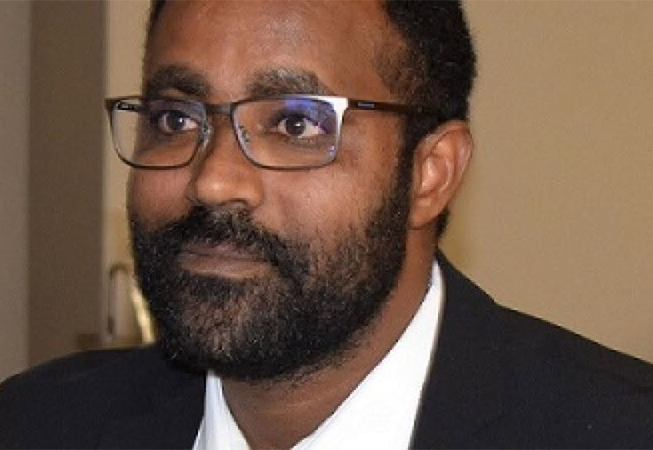
Prof. Amare Abebe


