
Against the backdrop of national conversations on governance, accountability and ethics, students from the School of Industrial Psychology and Human Resource Management at the North-West University’s (NWU’s) Mahikeng Campus recently hosted a thought-provoking panel discussion that explored the realities of labour relations in contemporary South Africa.
Organised by the HRMA 311 (Labour Relations) students in partnership with the South African Board for People Practices (SABPP) Student Chapter, the event was held under the theme “Labour Relations in Post-Apartheid South Africa: Ethical in Principle, Contested in Practice”.
The discussion came at a time when public discourse was increasingly focused on ethical leadership and accountability, providing an ideal opportunity for students to examine how similar issues manifest in workplaces and labour relations systems.
The initiative was inspired by Dr Dorcas Lesenyeho, deputy director of the School of Industrial Psychology and Human Resource Management and lecturer for the HRMA 311 module. Recognising the importance of exposing students to real-world labour challenges beyond the classroom, Dr Lesenyeho conceptualised the panel discussion and worked closely with students to bring the event to life.
The panel created a platform for critical engagement on the ethics dimensions of labour relations by examining the complex relationship between labour legislation, employee rights, organisational sustainability and social justice. In doing so, it reflected the objectives of the HRMA 311 module, which encourages students to move beyond theoretical learning and participate in reflective, evidence-based and professionally relevant dialogue.
A unique feature of the discussion was the diverse range of stakeholder perspectives represented by the student panellists. Participants assumed roles commonly found in the labour relations environment, allowing for a balanced and multifaceted exploration of workplace challenges.
Among the panellists were students representing policy and regulatory perspectives, human resource practitioners, employee and trade union representatives, employer representatives and employee voices. Through their various roles, they examined ethical leadership, workplace justice, labour market inequality, transformation, collective bargaining, worker representation and the future of labour relations in a rapidly evolving world of work.
The discussion was facilitated by final-year student Lebone Tlhagiso, who served as panel lead and moderator. His guidance ensured constructive engagement and encouraged participants to critically analyse competing viewpoints while exploring practical solutions to contemporary labour challenges.
Throughout the session, panellists highlighted the ongoing tensions between policy and practice, emphasising that while labour legislation in South Africa is founded on principles of fairness and equity, workplace realities often present complex ethical dilemmas that require thoughtful and responsible leadership.
The event demonstrated the value of creating academic spaces where students can engage with pressing societal and workplace issues through multiple perspectives. It also reinforced the commitment of the school to producing graduates who possess not only technical knowledge of labour legislation and human resource management, but also the ethical reasoning, professional judgement and critical-thinking skills required to lead effectively in modern organisations.
The success of the initiative was made possible through the support of several staff members whose contributions ensured a seamless event experience. Special appreciation was extended to Lesego Rampagane for securing and coordinating the venue, Sally van den Brink for overseeing venue preparations and April Manala for providing essential information technology support.
Recognition was also given to the dedicated student organising team, whose commitment and teamwork played a crucial role in the successful execution of the event.
As the School of Industrial Psychology and Human Resource Management continues to embrace innovative teaching and learning approaches, initiatives such as this panel discussion highlight the importance of experiential learning in higher education. By engaging directly with contemporary labour relations challenges, students gain practical insights that prepare them to navigate complex workplace environments with competence, integrity and a strong commitment to ethical leadership.
The panel served as a powerful reminder that ethical labour relations remain central to building fair, inclusive and sustainable workplaces. More importantly, it showcased the ability of the NWU students to contribute meaningfully to conversations that will shape the future of work in South Africa and beyond.
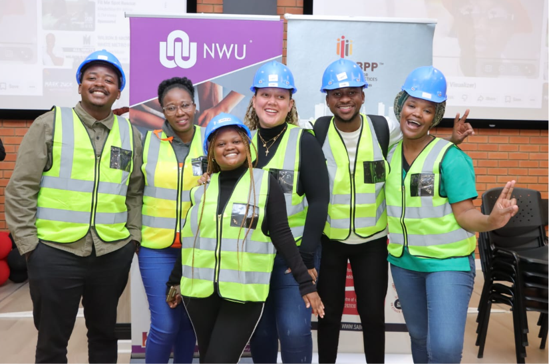
HRMA 311 students from the School of Industrial Psychology and Human Resource Management engaged in a dynamic panel discussion exploring ethics, justice and labour relations in post-apartheid South Africa.


