
- From starlight to South Africa’s energy future: Researchers at the North-West University (NWU) are helping position South Africa to harness hydrogen’s potential as a cornerstone of the global clean energy transition.
- Turning sunshine into exportable energy: Through green hydrogen, South Africa could export its abundant renewable energy resources in the form of hydrogen-derived products such as green ammonia.
- Platinum could power the hydrogen economy: With roughly 70–80% of the world’s platinum reserves, South Africa holds a strategic advantage in hydrogen technologies such as electrolysers and fuel cells.
It is the most abundant element in the universe, also the simplest and lightest. It is the cornerstone of life and the fuel that powers the stars. Although hydrogen plays a fundamental role in energy systems, from hydrogen fuel cells to the production of synthetic fuels, its full potential as a large-scale clean energy carrier has not yet been realised.
From a South African perspective, our hydrogen economy is not just about clean energy. It is about industrial competitiveness, mineral beneficiation, energy security and economic transformation.
Through the national Hydrogen South Africa (HySA) flagship programme and the HySA Infrastructure Centre co-hosted by North-West University (NWU), the country is building research capacity, technological infrastructure and industrial partnerships that align directly with South Africa’s unique resource base and developmental priorities. HySA’s focus includes hydrogen production, storage, delivery technologies and fuel-cell innovation designed to leverage South Africa’s world-leading platinum group metal resources while supporting the transition to a low-carbon economy.
Prof Dmitri Bessarabov, Director of HySA Infrastructure at the NWU and CSIR, explains that hydrogen already plays a critical role in modern industrial systems.
“Hydrogen is both an energy carrier and a critical industrial chemical commodity,” he says. “Without hydrogen, modern society would not be able to produce ammonia and fertilisers, refine petrochemical feedstocks, manufacture methanol, or support numerous industrial processes essential to food security and economic development.”
He adds that hydrogen also offers a strategic pathway for countries rich in renewable resources.
“If hydrogen production is linked to renewable energy sources such as wind and solar, it becomes green hydrogen — enabling countries like South Africa to effectively export
their abundant renewable resources. In practical terms, we can export our ‘sunshine’ in the form of hydrogen-derived products such as green ammonia to regions with limited renewable capacity.”
For hydrogen to play a meaningful role in reducing long-term reliance on coal, however, its production must become economically competitive. This is one of the key areas where the HySA Infrastructure Centre of Competence, hosted by NWU and co-hosted with the Council for Scientific and Industrial Research, is focusing its research.
The centre is developing advanced water electrolysis systems, next-generation components and innovative hydrogen storage technologies designed to support the growth of a competitive green hydrogen economy.
Another challenge lies in the geography of energy production and industrial demand.
“A key challenge for hydrogen as an energy carrier is the geographic gap between production and consumption,” says Bessarabov. “In South Africa, high renewable energy potential exists in regions such as the Northern Cape, while major industrial demand is concentrated in Gauteng.”
Bridging this distance requires new infrastructure and technologies.
“Efficient compression, storage, transport and conversion technologies are essential. These include pipelines, high-pressure systems, liquefaction and chemical carriers such as ammonia and liquid organic hydrogen carriers.”
Addressing these technical and economic challenges, he says, could unlock multiple strategic benefits for South Africa.
“Enabling a competitive green hydrogen economy strengthens energy security, supports platinum group metal beneficiation, stimulates industrial development and positions South Africa as a global exporter of clean energy derivatives.”
South Africa’s mineral resources provide a particularly powerful advantage in the hydrogen value chain.
“South Africa holds roughly 70–80% of global platinum reserves and a significant share of iridium and platinum ” Bessarabov explains. “The challenge is capacitating South Africa with technology manufacturing within the hydrogen value chain.”
These metals are essential for several key hydrogen technologies, including PEM electrolysers that use platinum and iridium, hydrogen fuel cells that rely on platinum catalysts, hydrogen purification systems using platinum and palladium, electrochemical hydrogen compressors that use platinum, and ammonia production technologies that use ruthenium.
Within the HySA framework, North-West University plays an important role in supporting research and skills development.
“North-West University provides significant support in the form of co-funding, in-kind contributions and logistical support as a host of the HySA Centre of Competence,” says Bessarabov.
The collaboration has already produced a number of technologies and demonstrators that illustrate the progress being made.
“We have developed a large number of demonstrators and prototypes,” he says. “These include water electrolyser systems, key components such as catalyst-coated membranes, and a hydrogen refuelling system developed together with Toyota South Africa.”
Hydrogen could also play a broader role in future energy systems beyond electricity generation.
“Hydrogen can be used effectively for long-term energy storage, particularly in cases where batteries become too expensive,” Bessarabov explains.
Looking beyond South Africa’s borders, the continent itself presents significant opportunities for hydrogen development.
“Africa’s hydrogen opportunity is not only about exports to Europe or Asia,” he says. “It is about building an African hydrogen ecosystem that strengthens energy access, industrialisation and skills development across the continent.”
Several natural advantages support this vision, including world-class solar irradiation in countries such as Namibia, Botswana, Egypt and Morocco, strong wind corridors in Morocco, Kenya and South Africa, abundant critical minerals such as platinum group metals, manganese, copper and cobalt, and a young technical workforce.
In recognition of the HySA centre’s expertise, the Mining Qualifications Authority has appointed the HySA centre at NWU to host a Green Hydrogen Centre of Specialisation aimed at advancing skills development for the emerging hydrogen economy.
Together, these initiatives position South Africa not only as a participant in the global hydrogen transition, but potentially as one of its leaders.
The Advanced electrolysis laboratory at the HySA Infrastructure Centre of Competence hosted by North-West University, where researchers develop next-generation hydrogen production technologies.
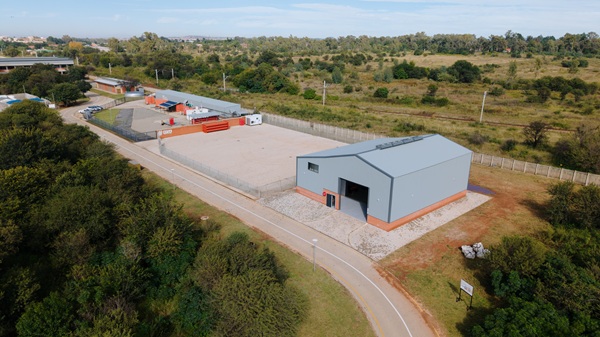
.jpg) The hydrogen piloting area at the HySA Infrastructure Centre of Competence at North-West University, used to test and demonstrate hydrogen production, storage and refuelling technologies.
The hydrogen piloting area at the HySA Infrastructure Centre of Competence at North-West University, used to test and demonstrate hydrogen production, storage and refuelling technologies.


